Iran Criticizes Trump–FIFA Dispute, Raises Concerns Over Politics Influencing 2026 FIFA World Cup
Iran has criticized comments linked to Donald Trump and FIFA, accusing international football authorities of double standards and raising concerns about politics influencing the 2026 FIFA World Cup.
 SANJANA DUTTA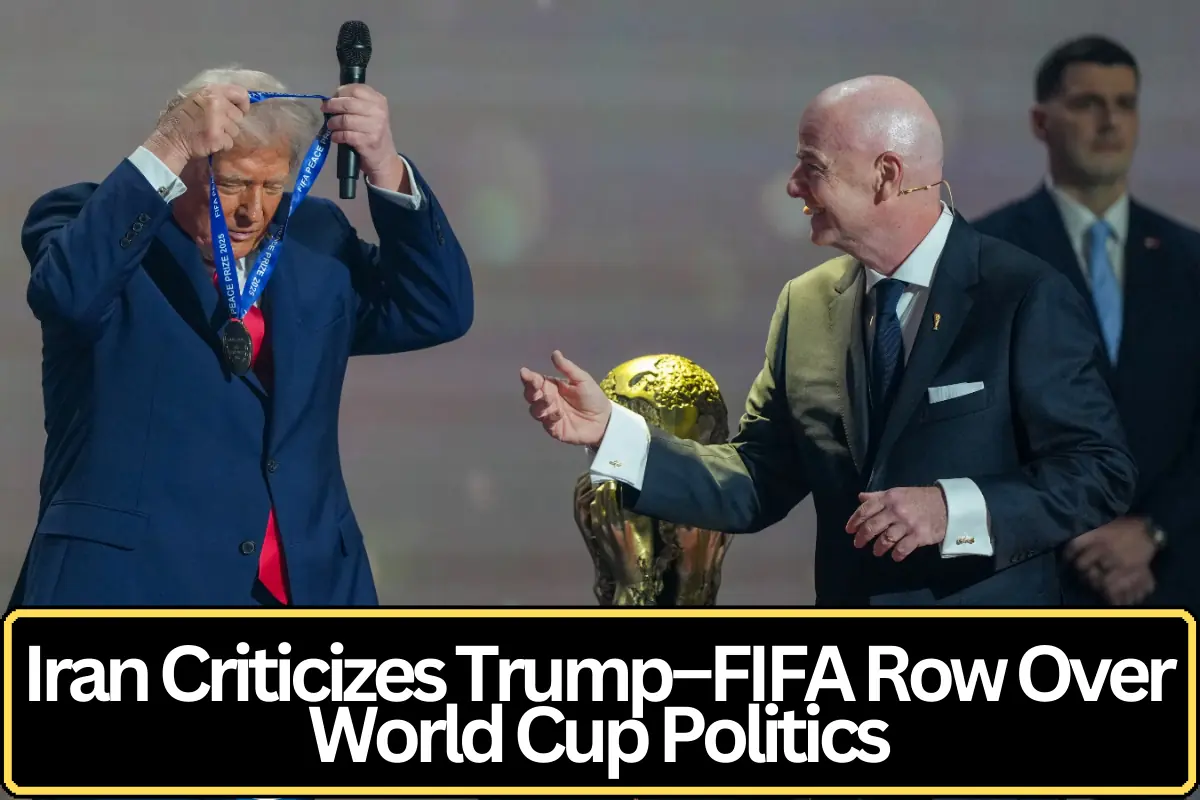
Iran Criticizes Trump–FIFA Dispute as Debate Over Politics and Football Intensifies
Iran has criticized a political dispute involving former United States President Donald Trump and global football governing body FIFA, accusing international institutions of applying double standards when politics intersects with global sports. The criticism comes as debate grows over whether geopolitical tensions could influence participation and treatment of national teams ahead of the 2026 FIFA World Cup.
The issue has drawn attention because the 2026 World Cup will be hosted jointly by the United States, Canada, and Mexico. Iranian commentators and officials have argued that international sports organizations often claim neutrality while political pressures sometimes shape debates surrounding teams, countries, and participation in major tournaments.
The discussion reflects broader concerns about the role of politics in global sporting events, particularly when diplomatic tensions exist between participating countries. Analysts say the situation highlights how international competitions such as the FIFA World Cup can become linked to wider geopolitical discussions.
Political Reactions Following Trump–FIFA Controversy
The controversy began after remarks associated with Donald Trump triggered a public debate about football governance and international politics. Iranian commentators responded by accusing Western political figures and institutions of hypocrisy and inconsistent standards when dealing with countries involved in geopolitical disputes.
According to Iranian media commentary, international sporting institutions frequently emphasize that sports should remain separate from politics. However, critics argue that political narratives sometimes emerge when certain countries are involved in international competition.
The debate has focused largely on the upcoming FIFA World Cup scheduled for 2026. With the United States acting as a major host country, analysts say the political relationship between Washington and Tehran could attract attention during preparations for the tournament.
Iranian commentators have stated that global sports organizations must ensure that political disagreements between governments do not influence the treatment of national teams, athletes, or participation in international competitions.
2026 FIFA World Cup and Global Attention
The 2026 FIFA World Cup is expected to be one of the largest international sporting events ever organized. The tournament will feature 48 national teams, expanding from the previous format of 32 teams. This expansion is designed to increase participation from more regions and strengthen global representation in football.
The event will be hosted across three North American countries: the United States, Canada, and Mexico. Matches will be played in multiple cities across the region, with millions of spectators expected to attend games and related events.
Because of the tournament’s scale, political discussions involving participating countries often receive international attention. Large sporting events frequently become platforms where sports, diplomacy, and international relations intersect.
Observers say the debate involving Iran highlights how global tournaments can sometimes become part of wider political narratives even before qualification rounds are completed.
Iran’s Position on Sports and Political Neutrality
Iranian commentators have argued that sports organizations should maintain strict neutrality in international competitions. According to these views, international tournaments should be governed primarily by sporting rules rather than political considerations.
The criticism directed toward the Trump–FIFA dispute reflects concerns that geopolitical tensions can influence the way countries are discussed in global sporting forums. Iranian voices have called for consistent standards when dealing with political issues connected to sports.
Officials and analysts within Iran say international sports should remain a platform for competition and cultural exchange rather than political confrontation. They argue that global tournaments such as the FIFA World Cup are meant to unite audiences through sport rather than amplify diplomatic tensions.
The debate also highlights the importance of transparency in international sports governance and the need for organizations to maintain credibility among participating nations.
Background: U.S.–Iran Relations
The political discussion surrounding the World Cup controversy is closely linked to the long‑standing tensions between the United States and Iran. Diplomatic relations between the two countries were severed in 1980 following the Iranian Revolution and the hostage crisis involving the U.S. embassy in Tehran.
Since then, relations have remained strained due to disputes over nuclear policy, regional security issues, economic sanctions, and diplomatic disagreements. These tensions have occasionally influenced cultural exchanges, travel policies, and international interactions involving the two countries.
Despite these challenges, sports competitions have sometimes provided opportunities for symbolic diplomacy. Past international matches involving the United States and Iran have drawn attention as examples of how sports can bring together athletes from countries with difficult political relationships.
The upcoming World Cup tournament could once again place these dynamics in the international spotlight if both countries participate in the competition.
Iran’s Role in International Football
Iran has long been one of the most prominent football nations in Asia. The national team has qualified for several FIFA World Cup tournaments and regularly competes at a high level within the Asian Football Confederation.
The popularity of football in Iran is significant, with national team matches attracting large audiences and strong national support. Participation in the World Cup carries both sporting and symbolic importance for the country.
Qualification for the 2026 FIFA World Cup will take place through regional competitions organized by international football authorities. Teams must earn their place through competitive matches rather than political decisions.
As a result, analysts emphasize that participation in the tournament will ultimately depend on sporting performance in qualification competitions rather than political disputes.
FIFA’s Approach to Political Issues
FIFA has historically stated that football should remain independent from political interference. The organization’s statutes include provisions aimed at preventing governments from influencing the management of national football associations.
However, international football has occasionally been affected by geopolitical tensions, sanctions policies, and diplomatic conflicts. In such cases, sports authorities are sometimes required to navigate complex international circumstances.
Observers note that maintaining neutrality can be challenging when global political debates involve participating nations. Major international events often attract political commentary from governments, media organizations, and public figures.
The debate involving Iran demonstrates how quickly political narratives can emerge in discussions about global sporting competitions.
Sports, Diplomacy, and Global Politics
International sports competitions have historically intersected with diplomacy and international relations. Governments frequently view major sporting events as opportunities to project national identity and cultural influence.
At the same time, sports events often provide rare opportunities for interaction between countries that otherwise have limited diplomatic contact. Athletic competition can create moments of shared international attention that transcend political divisions.
Analysts say this dual role of sports—as both a neutral competition and a symbolic platform—explains why global tournaments sometimes become involved in political debates.
The discussion surrounding Iran, Trump, and FIFA reflects the broader relationship between international politics and global sporting institutions.
International Reactions and Observations
Political analysts observing the debate say similar controversies have occurred during previous Olympic Games and World Cup tournaments. When international events involve countries with ongoing geopolitical tensions, political commentary often becomes part of public discussion.
Observers note that international sports organizations typically attempt to maintain focus on competition, logistics, and governance rather than diplomatic disputes. However, political narratives sometimes emerge from external sources including political leaders, commentators, and media outlets.
The current debate involving Iran highlights how international sporting events can become connected to broader geopolitical narratives even years before the event takes place.
Experts say such discussions are likely to continue as preparations for the 2026 FIFA World Cup move forward.
Looking Ahead to the 2026 Tournament
Preparations for the 2026 FIFA World Cup are already underway across North America. Host cities in the United States, Canada, and Mexico are planning infrastructure, stadium upgrades, transportation systems, and tourism initiatives connected to the tournament.
The expanded competition format means more matches, more teams, and greater global participation than any previous World Cup. Organizers expect the tournament to attract billions of viewers worldwide.
While political debates may continue in the background, football authorities remain focused on organizing the event and ensuring that teams compete under established international rules.
Qualification competitions will determine which national teams ultimately participate in the tournament.
Conclusion
Iran’s criticism of the Trump–FIFA dispute highlights ongoing concerns about the relationship between politics and international sports. As preparations continue for the 2026 FIFA World Cup in North America, discussions about neutrality, governance, and global participation are expected to remain part of the wider conversation surrounding the tournament.
Despite political debates, international football authorities continue to emphasize that sporting competitions should be decided on the field rather than influenced by geopolitical disagreements.