Iran’s Foreign Minister Criticizes U.S. Policy Shift on Russian Oil, Says Washington Seeking India’s Cooperation
Iran’s Foreign Minister Abbas Araghchi criticized what he described as a U.S. policy reversal on Russian oil, saying Washington is now seeking India’s cooperation amid changing global energy dynamics.
 SANJANA DUTTA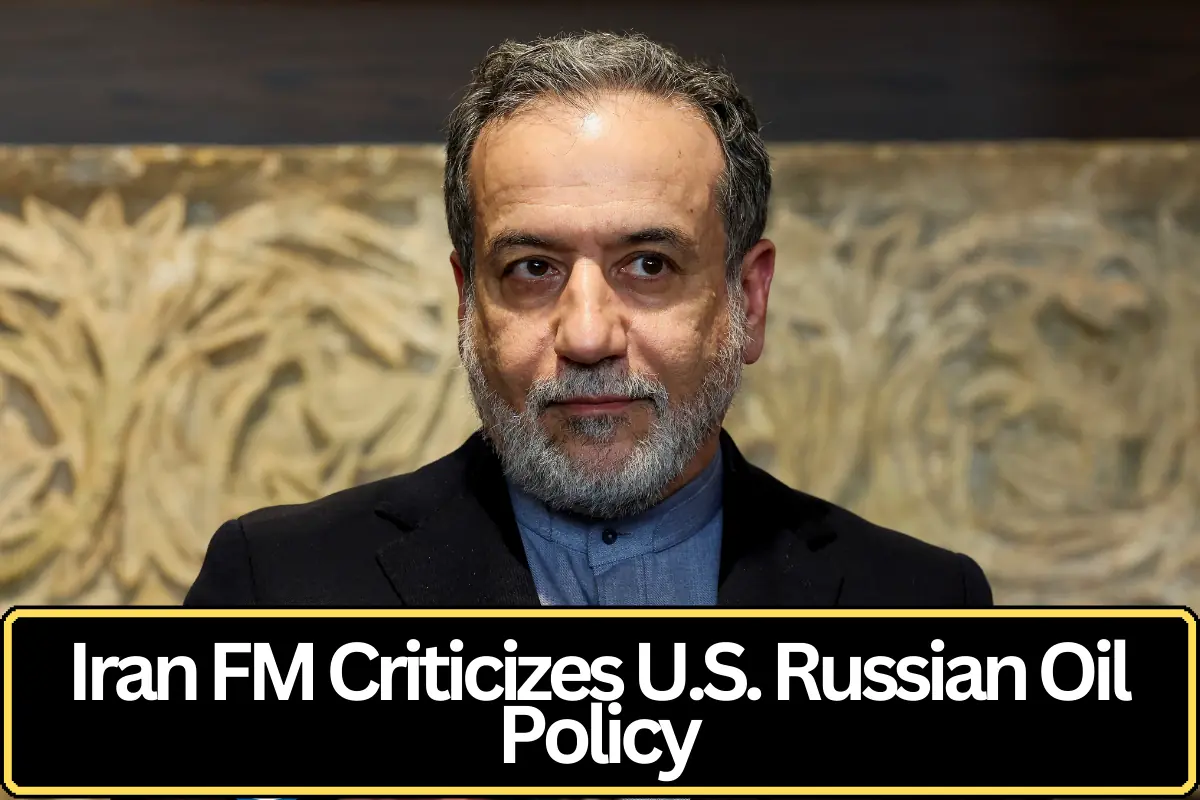
Iranian Foreign Minister Criticizes U.S. Position on Russian Oil
Iran’s Foreign Minister Abbas Araghchi has criticized what he described as a shift in United States policy regarding Russian oil, stating that Washington is now seeking cooperation from India on energy issues despite earlier opposition to purchases of Russian crude. Araghchi made the remarks while commenting on evolving global energy dynamics and diplomatic tensions involving major oil-importing countries. His comments come at a time when geopolitical developments, sanctions policies, and changing energy market conditions continue to shape international relations.
The remarks were made amid ongoing debates about sanctions on Russia and the role of major energy-importing nations such as India in global oil markets. India has emerged as one of the largest buyers of discounted Russian crude since Western countries imposed restrictions following the conflict in Ukraine. According to analysts, these shifts in global oil trade have significantly altered energy supply patterns and diplomatic interactions among major powers.
Comments Highlight Tensions Over Energy Policy
Araghchi’s statements focused on what he characterized as an apparent policy reversal by the United States regarding energy purchases involving Russia. Western countries previously urged nations to reduce or avoid buying Russian oil as part of broader economic sanctions aimed at limiting Moscow’s revenue streams.
However, changing energy market conditions and concerns about global supply stability have complicated the situation. Countries dependent on imported energy have sought to balance diplomatic pressures with domestic economic priorities, including ensuring reliable fuel supplies and managing price fluctuations.
In his remarks, Araghchi suggested that Washington’s approach toward India reflects broader challenges facing international energy diplomacy. His comments appeared to highlight perceived inconsistencies in global policy positions related to sanctions and energy trade.
India’s Role in Global Oil Markets
India has played an increasingly significant role in global oil markets in recent years. As one of the world’s fastest-growing major economies, the country imports a large portion of its crude oil requirements from international suppliers.
Following the imposition of Western sanctions on Russian energy exports, India began purchasing greater volumes of discounted Russian crude. These purchases helped stabilize domestic fuel supplies while also allowing refiners to manage rising global energy prices.
The shift in trade flows has reshaped global oil markets, with Russian exports increasingly directed toward Asian buyers while European countries sought alternative suppliers. This realignment has created new geopolitical and economic dynamics involving energy-producing and energy-consuming nations.
Impact of Sanctions on Global Energy Trade
Sanctions imposed on Russia after the outbreak of conflict in Ukraine significantly altered international energy trade patterns. Restrictions on Russian oil and financial transactions were designed to limit the country’s ability to finance its war effort while encouraging alternative supply arrangements.
However, global demand for energy has remained strong, and several major economies continued purchasing Russian crude at discounted prices. These developments have led to complex diplomatic negotiations and policy debates among governments attempting to balance economic needs with geopolitical objectives.
Energy analysts say such dynamics often produce conflicting pressures for policymakers, especially in countries heavily dependent on imported fuel.
Diplomatic Messaging and International Reactions
Araghchi’s remarks reflect the broader diplomatic rhetoric that often accompanies disputes over sanctions and international trade policies. Governments frequently use public statements to signal their positions on economic restrictions and geopolitical alignments.
For Iran, which has itself faced years of sanctions affecting its oil exports, debates surrounding restrictions on other energy producers are closely monitored. Iranian officials have regularly criticized sanctions regimes imposed by Western powers, arguing that they disrupt global markets and create political tensions.
Such statements also form part of ongoing diplomatic messaging aimed at influencing international opinion and highlighting perceived inconsistencies in foreign policy approaches.
Energy Security and Global Supply Concerns
Energy security remains a critical concern for many countries, particularly those with large populations and expanding industrial sectors. Access to reliable and affordable fuel supplies is often viewed as essential for economic stability and growth.
As global markets respond to geopolitical developments, governments must navigate a complex landscape involving sanctions, trade partnerships, and supply chain considerations. Decisions regarding energy imports can carry both economic and diplomatic consequences.
India, as one of the world’s largest energy consumers, has emphasized the importance of maintaining diversified supply sources in order to protect domestic energy security.
Broader Geopolitical Context
The dispute over Russian oil purchases reflects broader geopolitical tensions between Western powers and countries that maintain independent trade relationships with Moscow. Several nations in Asia, Africa, and the Middle East have continued economic engagement with Russia despite sanctions imposed by the United States and European allies.
This situation has highlighted differing perspectives on how international sanctions should be applied and enforced. While some governments support strict restrictions aimed at isolating Russia, others argue that energy trade decisions must prioritize national economic interests.
The debate also underscores the interconnected nature of global energy markets, where decisions by major producers and consumers can influence prices, supply availability, and geopolitical alignments.
India’s Diplomatic Balancing Act
India has maintained a carefully balanced diplomatic approach throughout the evolving global energy landscape. While strengthening strategic partnerships with Western countries, the country has also continued economic engagement with Russia in areas such as defense cooperation and energy trade.
Indian officials have consistently stated that national energy needs and economic stability remain central considerations when making decisions about oil imports. This pragmatic approach reflects the challenges faced by large developing economies navigating competing geopolitical pressures.
Experts note that India’s growing role in global markets means its energy policy decisions are closely observed by governments, investors, and international institutions.
Current Status
Araghchi’s remarks highlight continuing diplomatic tensions surrounding sanctions, energy trade, and geopolitical alignments, as countries including India navigate complex decisions about oil imports while global markets and international policies continue to evolve.