Iran-Hezbollah Ties Intensify Pressure on Lebanon’s Fragile Political Landscape
Growing ties between Iran’s IRGC and Hezbollah are escalating political tensions in Lebanon, complicating governance and deepening divisions within the country’s fragile political system.
 SANJANA DUTTA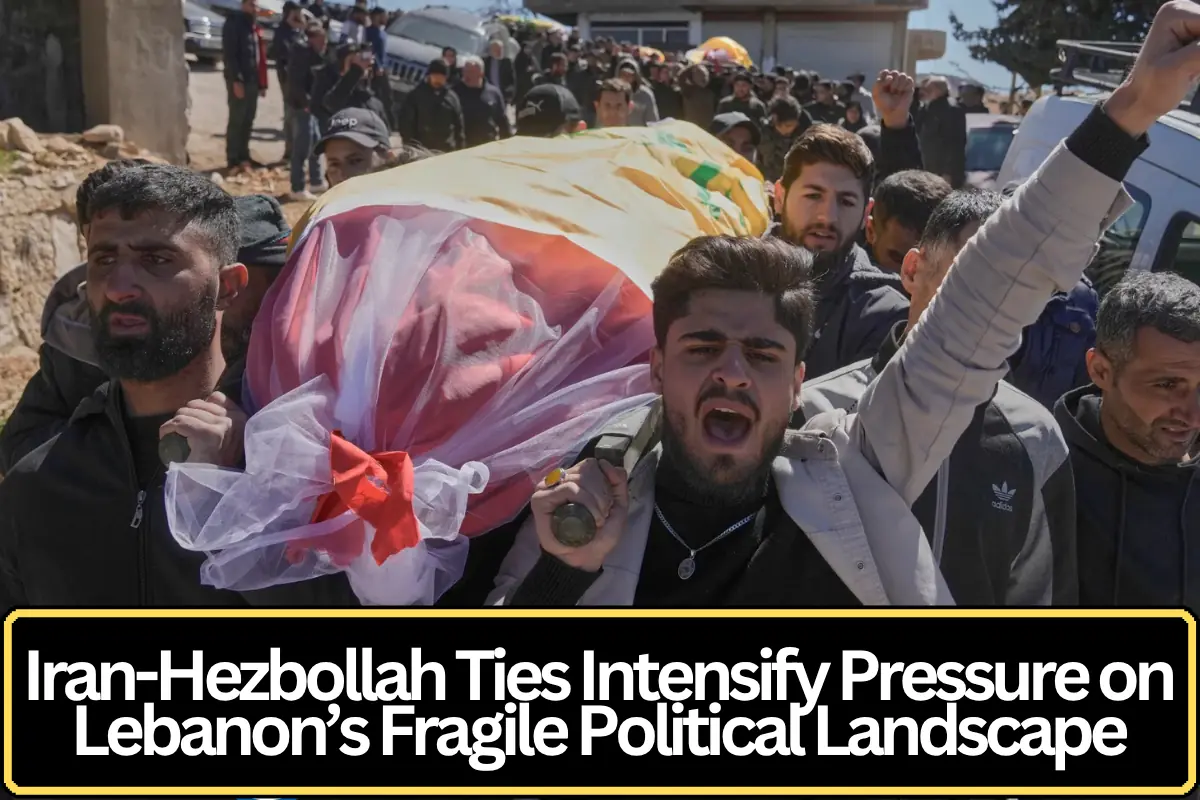
Rising Iran-Hezbollah Alignment Strains Lebanon’s Political Balance
BEIRUT, March 25, 2026 — Deepening ties between Iran’s Islamic Revolutionary Guard Corps (IRGC) and Hezbollah are intensifying political tensions in Lebanon, further complicating governance in a country already grappling with economic crisis and institutional paralysis. The evolving relationship is reshaping Lebanon’s political landscape, raising concerns among domestic factions and international observers.
The strengthening alliance comes amid broader regional instability, with the ongoing Iran-related conflict influencing power dynamics across the Middle East. In Lebanon, where Hezbollah holds significant political and military influence, closer coordination with Iran is amplifying divisions among political groups and heightening fears of further destabilization.
Hezbollah’s Expanding Role in Lebanese Politics
Hezbollah, a dominant political and armed group in Lebanon, has long maintained ties with Iran. However, recent developments indicate a more pronounced alignment, with increased coordination on strategic and political matters. This shift is reinforcing Hezbollah’s position within Lebanon’s political system while drawing criticism from rival factions.
Supporters of Hezbollah argue that the group plays a crucial role in defending Lebanon’s sovereignty and maintaining regional deterrence. They view its relationship with Iran as a strategic partnership that strengthens national security in the face of external threats.
Critics, however, contend that Hezbollah’s growing influence undermines state institutions and limits the government’s ability to function independently. They warn that closer ties with Iran risk entangling Lebanon in broader geopolitical conflicts, potentially exacerbating internal divisions.
IRGC’s Strategic Influence in the Region
The Islamic Revolutionary Guard Corps has been a key instrument of Iran’s regional strategy, supporting allied groups and expanding its influence across multiple countries. In Lebanon, its relationship with Hezbollah is seen as central to maintaining a foothold in the eastern Mediterranean.
Analysts note that the IRGC’s involvement extends beyond military cooperation, encompassing political, economic, and logistical support. This multifaceted engagement is contributing to Hezbollah’s ability to sustain its operations and assert its influence domestically.
The deepening ties are also part of a broader pattern of regional alliances that have taken on greater significance amid escalating tensions involving Iran. As a result, Lebanon is increasingly affected by external dynamics beyond its control.
Impact on Lebanon’s Political System
Lebanon’s political system, characterized by a delicate balance of sectarian power-sharing, is particularly vulnerable to external pressures. The growing Iran-Hezbollah alignment is intensifying existing fault lines, complicating efforts to form stable governments and implement reforms.
Political deadlock has become a recurring feature of Lebanese governance, with rival factions struggling to reach consensus on key issues. The influence of external actors, including Iran, adds another layer of complexity to these negotiations.
Observers warn that continued polarization could hinder the country’s ability to address urgent challenges, including economic recovery and public service delivery. The situation underscores the fragility of Lebanon’s political institutions.
Economic Crisis and Public Discontent
The political tensions come at a time when Lebanon is facing one of the worst economic crises in its history. Currency depreciation, high inflation, and widespread unemployment have placed significant strain on the population, fueling public discontent.
Many Lebanese citizens are increasingly frustrated with the political class, accusing leaders of prioritizing power struggles over addressing economic hardships. The perceived influence of external actors has further eroded trust in the government.
Protests and calls for reform have periodically erupted, reflecting growing dissatisfaction with the status quo. However, progress has been limited, with political divisions continuing to impede meaningful change.
Regional Implications of the Alliance
The strengthening relationship between Iran and Hezbollah has broader implications for regional stability. As tensions involving Iran escalate, Lebanon risks becoming a focal point for geopolitical rivalries, with potential consequences for security and diplomacy.
Neighboring countries and international stakeholders are closely monitoring developments, concerned about the possibility of spillover effects. The situation highlights the interconnected nature of Middle Eastern conflicts and the challenges of managing them.
Efforts to de-escalate tensions at the regional level could have a direct impact on Lebanon’s stability, underscoring the importance of diplomatic engagement.
International Response and Concerns
International actors, including Western governments and regional organizations, have expressed concern about the implications of deepening Iran-Hezbollah ties. Calls for preserving Lebanon’s sovereignty and strengthening state institutions have been a recurring theme in diplomatic discussions.
Some countries have advocated for increased support to Lebanon, aimed at stabilizing its economy and reinforcing governance structures. However, geopolitical considerations and competing interests have complicated these efforts.
The international community’s response will likely play a significant role in shaping the trajectory of Lebanon’s political and economic situation in the coming months.
Future Outlook for Lebanon
The evolving dynamics between Iran and Hezbollah present both immediate and long-term challenges for Lebanon. While the alliance may bolster Hezbollah’s position, it also risks deepening divisions and complicating governance.
Political analysts suggest that achieving stability will require a combination of internal reforms and external de-escalation. Strengthening institutions, fostering dialogue among factions, and addressing economic issues will be critical steps.
At the same time, the broader regional context will continue to influence Lebanon’s trajectory, making it difficult to isolate domestic developments from external factors.
Conclusion
The deepening ties between Iran’s IRGC and Hezbollah are reshaping Lebanon’s political landscape, intensifying tensions and complicating governance.
Current Status
Lebanon remains politically fragile, with rising external influence and internal divisions continuing to challenge efforts toward stability and reform.