Iranian Warship Sunk by US Torpedo After Participating in Indian Naval Exercise
An Iranian naval warship returning from a multinational exercise hosted by India was sunk by a US submarine near Sri Lanka, triggering diplomatic tensions and debate over the expanding Iran conflict.
 SANJANA DUTTA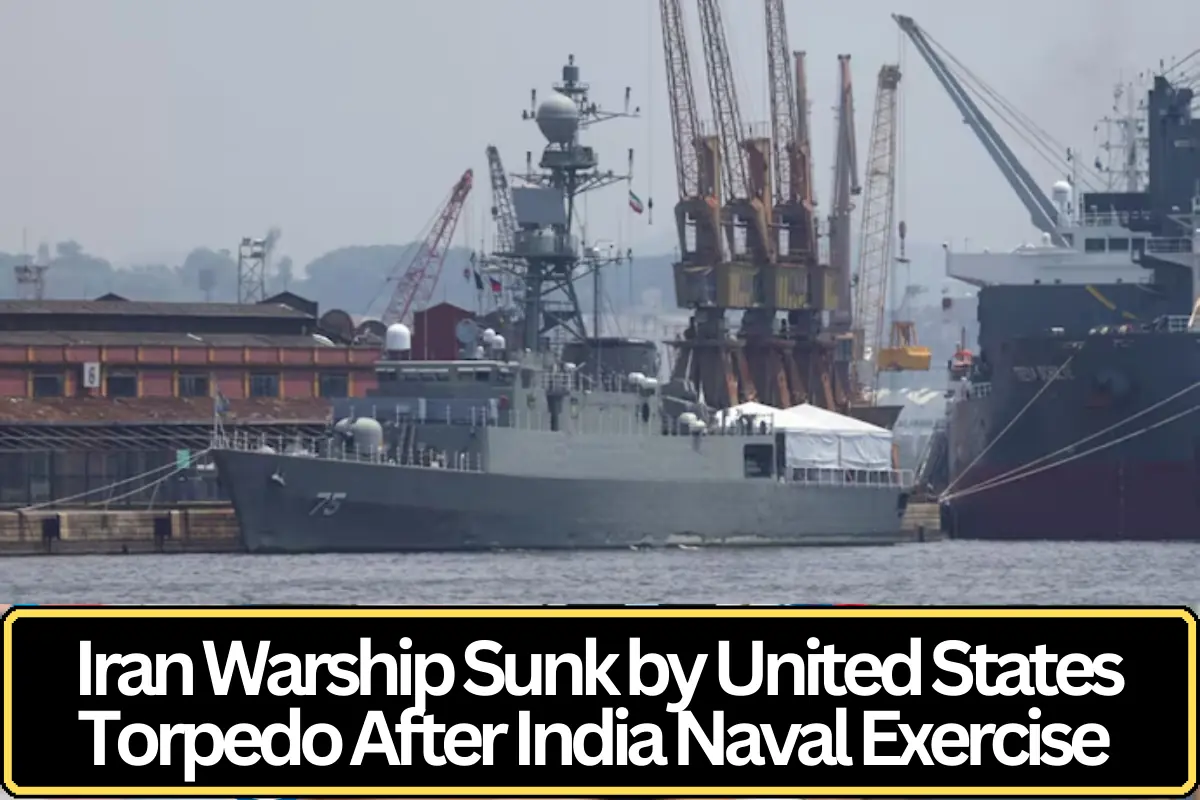
Iranian Warship Sunk by US Submarine After Indian Naval Exercise
An Iranian naval warship was sunk by a United States submarine in the Indian Ocean while returning from a multinational naval exercise hosted by India, an incident that has intensified tensions in the ongoing conflict involving Iran and a US‑led coalition.
The vessel, identified as the Iranian Navy frigate IRIS Dena, was struck by a torpedo on March 4 in waters near Sri Lanka. The attack resulted in heavy casualties among the ship’s crew and has sparked diplomatic controversy across several countries in the region.
Attack in the Indian Ocean
According to officials and rescue teams, the Iranian warship sank after being hit by a torpedo launched from a US Navy submarine. The strike occurred in international waters roughly 40 nautical miles off the southern coast of Sri Lanka.
Rescue teams from the Sri Lankan Navy responded to a distress call from the ship. By the time they reached the location, the vessel had already sunk, leaving debris and survivors in the water.
Authorities recovered dozens of bodies and rescued several sailors from the sea, while others were reported missing. The ship reportedly had around 130 personnel on board at the time of the attack. :contentReference[oaicite:0]{index=0}
Ship Had Recently Participated in Indian Naval Drills
Before the incident, the IRIS Dena had participated in the International Fleet Review and the multinational naval exercise MILAN 2026 hosted by the Indian Navy in Visakhapatnam.
The exercises, which took place between mid‑February and late February, involved dozens of navies and representatives from more than 70 countries. The drills were designed to improve maritime cooperation, interoperability, and security coordination among participating nations.
After the exercise ended, the Iranian vessel departed Indian waters and began its return journey toward Iran when it was targeted in the Indian Ocean. :contentReference[oaicite:1]{index=1}
First US Torpedo Strike on Warship in Decades
Military analysts say the attack is notable because it represents one of the rare modern instances of a submarine sinking a warship with a torpedo. Reports indicate that the US Navy used a Mark 48 heavyweight torpedo in the strike.
Experts note that such direct submarine attacks on naval vessels have been uncommon in modern warfare, making the incident particularly significant in naval history. :contentReference[oaicite:2]{index=2}
Iran Condemns the Attack
Iran strongly condemned the sinking of the warship, describing the strike as an unlawful act carried out against a vessel that had recently participated in an international maritime event.
Iranian officials emphasized that the ship had been invited to India’s naval exercise and described the attack as an “atrocity at sea.” Tehran warned that the United States would face consequences for the operation.
The incident comes amid escalating military tensions between Iran and a coalition led by the United States and Israel, which has conducted strikes on Iranian military infrastructure in recent weeks.
Diplomatic Questions for India and the Region
The sinking of the Iranian vessel has also triggered political debate in India, where opposition leaders questioned the government’s response to the incident. Critics argued that the conflict had effectively reached the Indian Ocean region, raising concerns about regional security.
India has traditionally tried to maintain a balanced diplomatic approach between Iran and Western powers. The fact that the warship had recently participated in an Indian‑hosted naval event has made the situation particularly sensitive.
Officials in New Delhi have not issued detailed public comments about the attack, though the incident has raised questions about maritime security in the Indian Ocean.
Humanitarian Rescue Efforts
Sri Lanka played a key role in rescue operations following the sinking. The country’s navy dispatched vessels to search for survivors and transport rescued sailors to medical facilities.
Several survivors were taken to hospitals in southern Sri Lanka for treatment, while authorities continued recovery efforts in the area where the ship went down.
The incident has also prompted diplomatic coordination between Sri Lanka, Iran, and other governments regarding the handling of survivors and the repatriation of bodies.
Growing Tensions at Sea
The attack highlights the increasing global reach of the conflict involving Iran and Western military forces. While much of the confrontation has focused on the Middle East, the incident in the Indian Ocean shows how maritime routes and naval operations are becoming part of the broader geopolitical struggle.
Security experts warn that further escalation could affect shipping lanes and naval activity in one of the world’s most strategically important maritime regions.
Conclusion
The sinking of the Iranian warship IRIS Dena marks a dramatic development in the evolving conflict involving Iran and Western allies. Occurring shortly after the ship participated in a multinational exercise hosted by India, the incident has raised diplomatic tensions and renewed concerns about maritime security in the Indian Ocean.
As rescue operations conclude and diplomatic reactions continue, the attack is likely to remain a focal point in discussions about the expanding scope of the ongoing conflict and its potential impact on global naval security.