Iranians Express Deepening Anxiety and Defiance as War Fears Grow
Amid rising tensions involving the U.S., Israel, and Iran, ordinary Iranians express fear, resilience, and uncertainty about the possibility of war and its consequences.
 SANJANA DUTTA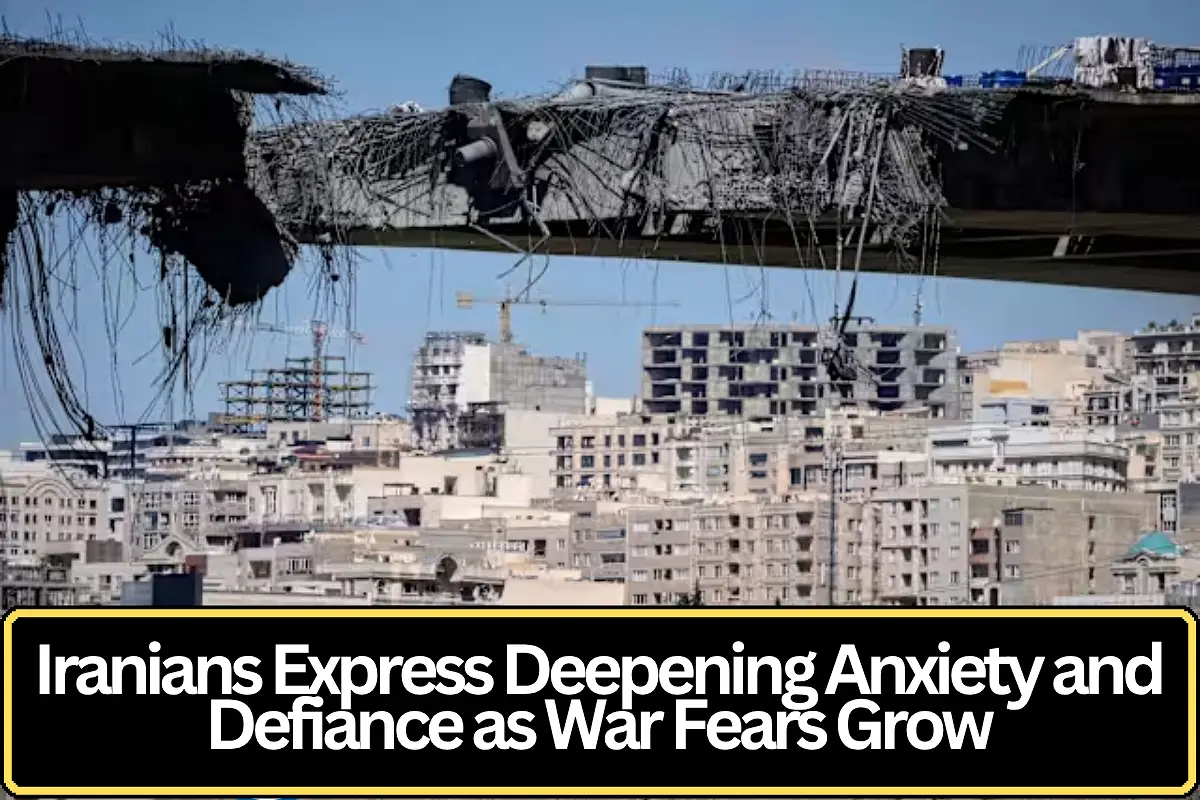
Iranians Express Deepening Anxiety and Defiance as War Fears Grow
TEHRAN, April 4, 2026 — As tensions escalate between Iran, the United States, and Israel, ordinary Iranians are grappling with a mix of fear, uncertainty, and resilience, reflecting a society caught between the threat of war and the realities of daily life under prolonged geopolitical strain.
Across cities and towns, conversations about a potential conflict have become increasingly common, with citizens weighing the risks of military escalation against years of economic hardship and political isolation. While some express deep concern about the human and economic toll of war, others convey a sense of defiance shaped by decades of external pressure and internal challenges.
Rising Fear of Conflict
The prospect of a broader regional war has fueled anxiety among many Iranians, particularly as diplomatic tensions intensify and military rhetoric sharpens. Families worry about the immediate dangers of airstrikes, infrastructure damage, and civilian casualties, as well as the longer-term consequences for stability and security.
In urban centers like Tehran, residents describe a growing sense of unease, with some quietly preparing for worst-case scenarios. Discussions about emergency supplies, financial security, and potential displacement have become more frequent, even as daily routines continue.
For younger generations, many of whom have not experienced war firsthand, the uncertainty is especially unsettling. Social media platforms are filled with debates, speculation, and expressions of concern about what the future may hold.
Economic Strain Amplifies Concerns
Years of economic sanctions have already placed significant pressure on Iran’s economy, leading to inflation, reduced purchasing power, and limited access to global markets. The possibility of war threatens to exacerbate these challenges, raising fears of further economic disruption.
Business owners and workers alike worry about the impact on jobs, trade, and supply chains. Essential goods could become scarcer, and prices could rise even further, intensifying the burden on households already struggling to make ends meet.
Despite these concerns, some Iranians point to their experience in adapting to hardship as a source of resilience. Informal networks, local production, and community support systems have helped many navigate economic difficulties in the past, and similar strategies may be relied upon again.
Defiance Rooted in National Identity
Alongside fear, there is also a strong current of defiance among segments of the population. For some, external threats reinforce a sense of national unity and resistance, echoing narratives promoted by the government about sovereignty and independence.
Historical memory plays a role in shaping these attitudes. The legacy of past conflicts and foreign interventions has contributed to a perception that Iran must stand firm against external pressure, even at significant cost.
This sentiment is particularly evident among those who view the current tensions as part of a broader pattern of geopolitical rivalry, rather than an isolated crisis. For them, endurance is seen as both a necessity and a point of pride.
Generational and Social Divides
Reactions to the possibility of war are not uniform across Iranian society. Younger people, urban professionals, and those with international exposure often express greater concern about the consequences of isolation and conflict. Many emphasize the importance of diplomacy and global engagement as pathways to stability.
In contrast, some older citizens and those in more conservative or rural communities may be more inclined to support a firm stance against perceived external threats. These differing perspectives highlight the complexity of public opinion within the country.
Social divisions also intersect with economic realities, as individuals in more vulnerable positions face heightened risks in the event of conflict. Access to resources, mobility, and support networks can significantly influence how people perceive and respond to the situation.
Information and Uncertainty
Access to reliable information remains a challenge, with state-controlled media and restrictions on independent reporting shaping the flow of news. This environment contributes to uncertainty, as citizens attempt to discern the likelihood and potential scope of conflict.
Rumors and speculation can spread quickly, particularly online, adding to the sense of instability. At the same time, official messaging often emphasizes strength and preparedness, seeking to reassure the public while reinforcing national narratives.
The gap between official statements and public perception can create tension, as individuals navigate differing sources of information and interpret events through their own experiences.
Regional and Global Context
The situation in Iran is closely tied to broader developments in the Middle East, where multiple conflicts and alliances intersect. The involvement of global powers adds another layer of complexity, with decisions made far beyond Iran’s borders influencing the trajectory of events.
For many Iranians, this interconnected landscape underscores the unpredictability of the current moment. The actions of external actors, as well as regional dynamics, play a significant role in shaping outcomes that directly affect their lives.
Observers note that while geopolitical strategies are often discussed at the highest levels, their consequences are felt most acutely by ordinary people, whose daily realities can change rapidly in times of crisis.
Resilience in Daily Life
Despite the uncertainty, life in Iran continues with a degree of normalcy. Markets remain open, schools and workplaces function, and cultural activities persist, reflecting a determination to maintain stability amid external pressures.
This resilience is not without strain, as underlying anxieties persist. Yet for many, the ability to carry on with daily routines provides a sense of control and continuity in an otherwise unpredictable environment.
Community ties and social connections play an important role in sustaining morale, offering support and solidarity during challenging times. These networks can become especially vital if conditions worsen.
Outlook Remains Uncertain
The path forward for Iran and the broader region remains uncertain, with the potential for both escalation and de-escalation. Diplomatic efforts continue alongside military posturing, creating a complex and fluid situation.
For ordinary Iranians, the stakes are high, encompassing not only national security but also economic stability, personal safety, and future prospects. Their responses—ranging from fear to defiance—reflect the multifaceted nature of life in a country at the center of global tensions.
As developments unfold, the voices of those living through the crisis offer a crucial perspective on the human dimension of geopolitical conflict, highlighting the resilience and challenges of a society facing an uncertain future.
Current Status
Tensions remain elevated with no immediate resolution in sight, as diplomatic efforts continue and the risk of escalation persists across the region.