Israeli Strike in Southern Lebanon Kills 12 Medics as Cross-Border Conflict Continues
An Israeli strike in southern Lebanon has killed 12 medics, according to reports, as cross-border fighting continues amid escalating tensions between Israel and armed groups in Lebanon.
 SANJANA DUTTA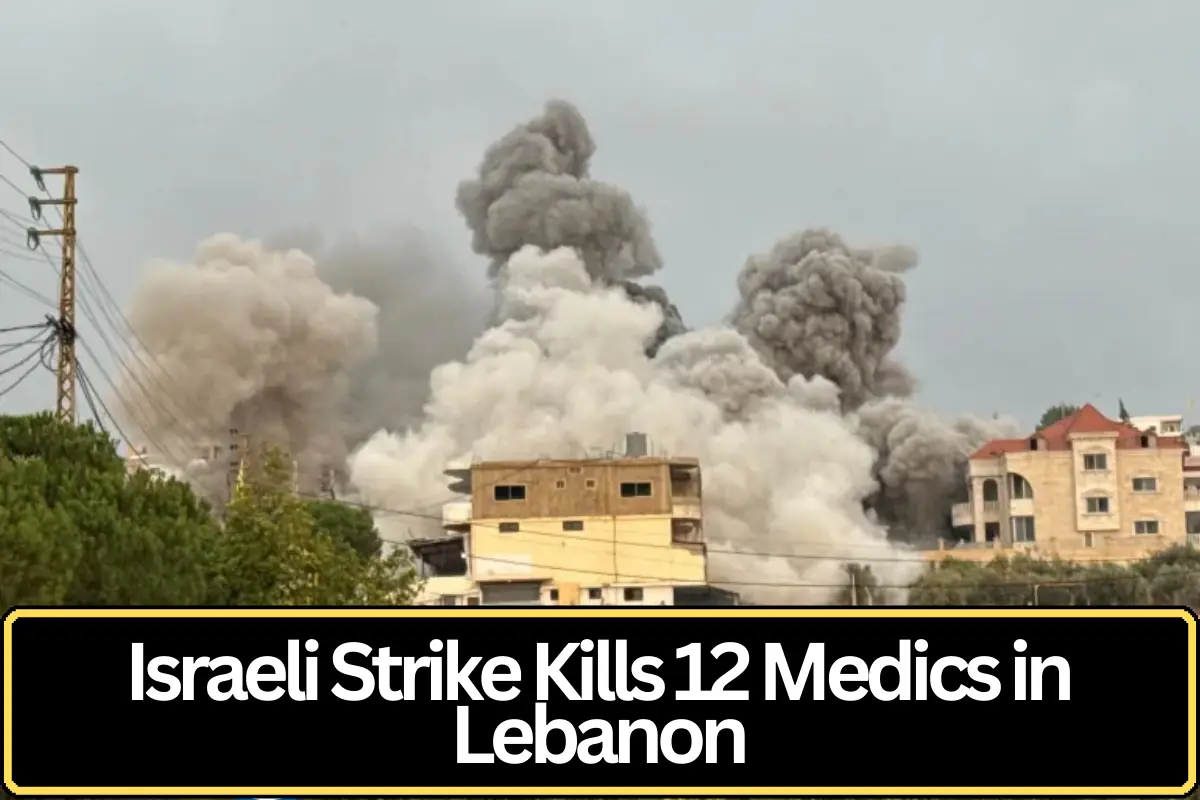
Israeli Strike in Southern Lebanon Kills 12 Medics Amid Continuing Cross-Border Fighting
An Israeli strike in southern Lebanon has killed at least 12 medics, according to regional reports, as cross-border hostilities between Israel and armed groups in Lebanon continue to intensify. The incident occurred during ongoing military exchanges along the Israel–Lebanon border, where fighting has persisted for months amid broader regional tensions. Officials and humanitarian organizations said the victims were medical personnel operating in the area at the time of the strike.
The attack took place in southern Lebanon, a region that has experienced repeated military activity as Israeli forces and Lebanon-based armed groups exchange fire across the border. The reported deaths of the medical workers have raised concerns among humanitarian organizations about the safety of emergency responders working in conflict zones.
Strike Targets Area in Southern Lebanon
Local sources reported that the strike hit an area in southern Lebanon where medical teams were present during ongoing hostilities. Emergency workers were reportedly responding to earlier incidents in the area when the attack occurred.
The deaths of the 12 medics represent one of the deadliest incidents involving emergency personnel since the current escalation of cross-border fighting began. Medical teams in southern Lebanon often operate in difficult conditions, responding to casualties caused by artillery exchanges, drone strikes, and other military activity.
Rescue personnel and civil defense units frequently work near areas affected by military operations, placing them at risk when fighting intensifies. The latest incident has highlighted the dangers faced by humanitarian workers operating near active front lines.
Ongoing Hostilities Along the Border
Cross-border violence between Israel and armed groups in Lebanon has continued intermittently since regional tensions increased following conflicts elsewhere in the Middle East. Exchanges of fire, including rockets, artillery, and airstrikes, have affected communities on both sides of the border.
Israeli officials have said that their military operations are aimed at preventing attacks against Israeli territory and targeting militant infrastructure. Lebanese armed groups have also launched attacks toward Israeli positions and border areas during the confrontation.
The conflict has forced thousands of civilians in border regions to leave their homes as security conditions deteriorated. Both Israel and Lebanon have experienced disruptions to daily life in communities located close to the frontier.
Concerns for Safety of Humanitarian Workers
The deaths of medical personnel have raised renewed concerns about the safety of humanitarian workers operating in conflict zones. International humanitarian law provides protections for medical teams and emergency responders, recognizing their role in treating casualties and assisting civilians.
Organizations involved in humanitarian work often call for all parties in a conflict to ensure that medical personnel, ambulances, and hospitals are protected from military operations. When fighting takes place in densely populated or contested areas, however, emergency workers can face significant risks.
Medical teams frequently enter areas shortly after attacks to provide treatment to the wounded and evacuate casualties. These operations can place responders near locations that remain vulnerable to further strikes or ongoing combat.
Regional and International Reactions
Incidents involving casualties among medical workers often draw international attention and calls for investigations into the circumstances surrounding the attack. Governments and humanitarian organizations regularly urge combatants to respect protections granted to medical personnel under international law.
The latest reports from southern Lebanon come as diplomatic efforts continue to prevent the conflict from expanding into a wider regional war. International actors have repeatedly called for restraint and de-escalation along the Israel–Lebanon border.
Regional tensions have remained elevated due to the interconnected nature of several conflicts across the Middle East. Developments in one area of the region can quickly influence security conditions elsewhere.
Impact on Civilians in Border Areas
Communities living near the Israel–Lebanon border have faced significant disruption as hostilities continue. Residents in both countries have experienced displacement, infrastructure damage, and ongoing security risks due to the exchanges of fire.
In southern Lebanon, repeated strikes and artillery fire have affected towns and villages near the border. Civil defense teams and medical personnel play a critical role in assisting residents, responding to emergencies, and evacuating injured individuals.
Israeli communities near the border have also faced rocket alerts and security restrictions during periods of heightened tension. Authorities on both sides have implemented safety measures to protect civilians from the effects of the fighting.
Military and Political Context
The Israel–Lebanon border has long been a sensitive area in the Middle East, shaped by decades of political tensions and military confrontations. Armed groups based in Lebanon have maintained positions near the border, while Israel has regularly conducted operations aimed at countering perceived security threats.
Periodic clashes have occurred over the years, sometimes escalating into larger confrontations. The current phase of hostilities reflects broader regional dynamics that have intensified in recent months.
Security analysts note that the risk of escalation remains a major concern for regional governments and international observers, particularly given the potential for cross-border incidents to trigger wider military responses.
Humanitarian Situation in the Region
The ongoing conflict has placed increasing strain on humanitarian services operating in affected areas. Medical teams, rescue units, and aid organizations must respond to emergencies while navigating dangerous and rapidly changing conditions.
Damage to infrastructure and ongoing security risks can complicate relief efforts, particularly in communities located close to the front lines. Humanitarian groups continue to call for safe access to affected areas so that emergency services can operate effectively.
The reported deaths of the 12 medics underscore the risks faced by those working to assist civilians during armed conflicts.
Current Situation
The conflict along the Israel–Lebanon border remains ongoing, with periodic exchanges of fire continuing to affect communities in southern Lebanon and northern Israel. The reported deaths of the 12 medics have added to concerns about the humanitarian impact of the fighting as international observers call for restraint and efforts to prevent further escalation.