K Kavitha Announces Plans to Launch New Political Party Ahead of Telangana Elections
BRS leader K Kavitha announces plans to float a new political party, signaling a major shift in Telangana politics and sparking speculation about future alliances and electoral strategies.
 SANJANA DUTTA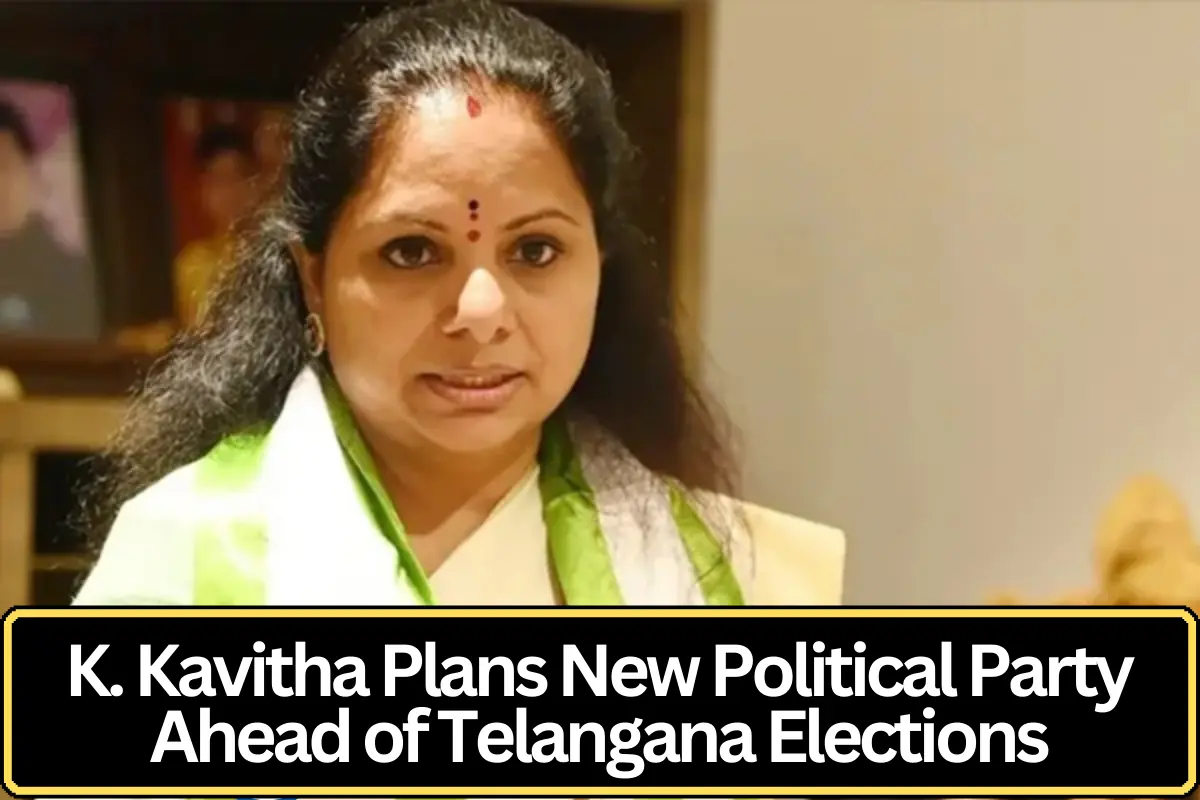
K Kavitha Signals Major Political Shift with Plan to Launch New Party
Indian political landscape in Telangana may soon witness a significant transformation as Bharat Rashtra Samithi (BRS) leader K Kavitha has indicated that she is planning to float a new political party. The announcement has triggered widespread discussion among political observers, party workers, and voters across the state, as it could reshape the balance of power in Telangana politics.
Kavitha, who is widely recognized as a prominent political figure and the daughter of former Telangana Chief Minister K Chandrashekar Rao, revealed her intention to establish a new political organization in the near future. Her statement has drawn attention because it could mark a new chapter in her political career and potentially introduce a new force into the state's competitive political environment.
While details about the party’s structure, leadership team, and official launch timeline are yet to be disclosed, Kavitha’s remarks have sparked speculation about the strategic motivations behind the move and its possible impact on upcoming elections.
Background of K Kavitha in Telangana Politics
K Kavitha has been a prominent political leader in Telangana for several years and has played an influential role in the political activities of the Bharat Rashtra Samithi. She previously served as a Member of Parliament and has been actively involved in party campaigns, organizational initiatives, and policy discussions.
Her political journey began with strong support from grassroots workers and women’s organizations, and she has often positioned herself as a leader advocating for social welfare, cultural initiatives, and women's empowerment. Over the years, she has built a political identity that extends beyond her family’s legacy, gaining recognition as an influential voice within the regional political sphere.
The possibility of launching her own political party suggests that she may be preparing to pursue an independent political path or create a platform focused on specific policy priorities and political objectives.
Political Legacy and Influence
Kavitha comes from a family deeply rooted in Telangana’s political history. Her father, K Chandrashekar Rao, played a central role in the Telangana statehood movement and later served as the state’s chief minister for two consecutive terms. Under his leadership, the Bharat Rashtra Samithi emerged as one of the most powerful regional parties in the state.
Growing up within this political environment gave Kavitha significant exposure to governance, political campaigning, and public engagement. Over time, she developed her own network of supporters and political allies who view her as a capable leader with the potential to shape the future of Telangana politics.
Her possible decision to establish a new party therefore carries symbolic and strategic significance, as it could represent both continuity and change within the state’s political ecosystem.
Reasons Behind the Decision to Form a New Party
Although Kavitha has not yet provided a detailed explanation for launching a new political organization, analysts believe that several factors may have influenced her decision. One possible reason could be the evolving political landscape in Telangana, where multiple parties are competing to expand their influence.
Regional politics in the state has become increasingly dynamic, with traditional political alignments shifting and new voter expectations emerging. In such an environment, the creation of a new party could provide an opportunity to introduce fresh ideas, new leadership structures, and alternative policy priorities.
Another possible motivation may be the desire to create a platform that directly addresses specific social and economic issues affecting citizens. Many new political movements in India have been formed with the aim of focusing on governance reforms, youth participation, and grassroots mobilization.
If Kavitha’s new party adopts a similar approach, it could attract voters who are seeking alternatives to established political organizations.
Impact on Telangana’s Political Landscape
The formation of a new political party by a well‑known leader like K Kavitha could significantly alter the dynamics of Telangana politics. The state already has a competitive political environment with several major parties vying for influence, including national parties and strong regional organizations.
A new political party led by Kavitha may attract supporters from different political backgrounds, particularly those who admire her leadership style or share her policy priorities. It may also encourage political realignments as leaders and activists evaluate potential opportunities within a new political platform.
Political analysts suggest that such developments often lead to the emergence of new alliances, coalition negotiations, and shifts in electoral strategies among competing parties.
In states with vibrant regional politics like Telangana, even a relatively small political movement can have a substantial impact on election outcomes, particularly if it succeeds in mobilizing specific communities or voter groups.
Possible Electoral Strategy
If Kavitha proceeds with launching a new political party, one of the key challenges will be building an effective organizational structure across the state. Political parties require strong grassroots networks, local leadership teams, and coordinated campaign strategies in order to compete effectively during elections.
Establishing district-level committees, recruiting party workers, and developing a clear policy manifesto are typically among the first steps taken by newly formed political organizations.
Kavitha’s previous experience in electoral politics may help her navigate these challenges. Her familiarity with campaign strategies, public outreach, and political messaging could play a crucial role in building momentum for a new party.
Another important aspect will be identifying key policy issues that resonate with voters. Topics such as employment opportunities, economic development, social welfare programs, and infrastructure development are often central themes in Telangana elections.
Reactions from Political Leaders
The announcement has drawn mixed reactions from political leaders across different parties. Some political figures have expressed curiosity about the potential direction of Kavitha’s new political initiative, while others have suggested that the state’s political landscape is already crowded with multiple parties.
Supporters of Kavitha have welcomed the possibility of a new political platform, arguing that it could bring fresh perspectives to governance and create additional opportunities for public participation in politics.
Meanwhile, critics have questioned whether a new party will be able to establish a strong presence quickly enough to influence major electoral outcomes.
Such debates are common when new political movements emerge, particularly when they are led by well‑known figures with established political backgrounds.
Challenges Ahead for the New Political Party
Launching a political party involves numerous challenges beyond simply announcing its formation. Building credibility among voters, maintaining internal unity, and developing a clear ideological identity are critical steps for any new political organization.
Another challenge involves gaining recognition from the Election Commission and establishing a recognizable party symbol that voters can easily identify during elections.
New political parties must also compete for media attention and public support in a crowded political environment where established parties already have extensive resources and networks.
For Kavitha, navigating these challenges successfully will require strategic planning, strong leadership, and effective communication with voters.
Future Prospects
The possibility of a new political party entering Telangana’s political arena has generated considerable interest among political observers. If Kavitha proceeds with her plan, the development could introduce new narratives and policy discussions into the state’s political discourse.
The coming months will likely reveal more details about the proposed party, including its leadership structure, ideological positioning, and electoral strategy.
Whether the new political movement becomes a major force or remains a smaller regional initiative will depend on how effectively it connects with voters and addresses their concerns.
Regardless of the outcome, Kavitha’s announcement has already added a new dimension to the evolving story of Telangana politics.
Conclusion
K Kavitha’s indication that she plans to launch a new political party marks an important moment in Telangana’s political narrative. As a prominent leader with a strong political background, her decision has the potential to influence the strategies of existing parties and reshape the competitive landscape.
While many questions remain about the party’s structure and objectives, the announcement has generated widespread attention and speculation about what the future may hold for the state’s politics.
As developments unfold, political observers, party leaders, and voters will closely watch how this new initiative evolves and what role it ultimately plays in shaping Telangana’s democratic process.