Karnataka Budget Sparks Political Showdown as Siddaramaiah Defends Fiscal Priorities
Karnataka Chief Minister Siddaramaiah’s budget has triggered a political tussle, with opposition parties questioning fiscal priorities while the government defends its economic strategy.
 SANJANA DUTTA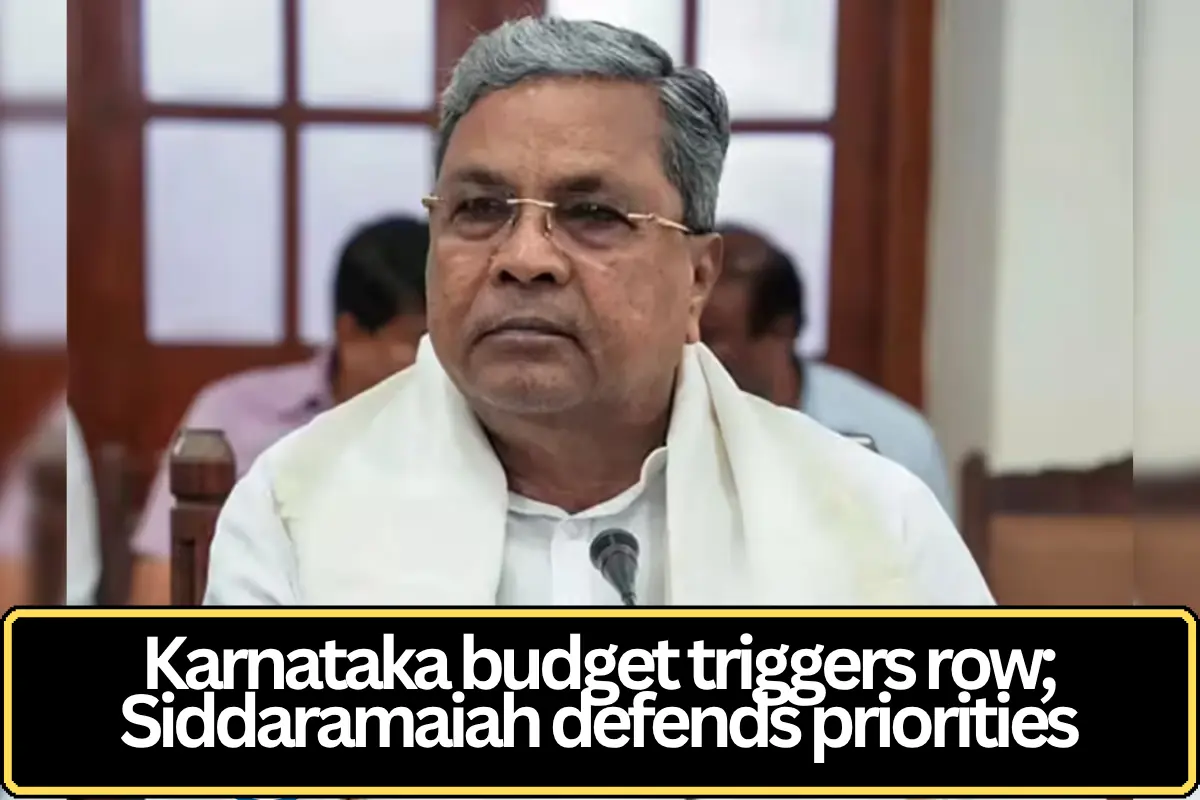
Karnataka Budget Triggers Political Confrontation
BENGALURU, March 25, 2026 — Karnataka Chief Minister Siddaramaiah’s latest state budget has ignited a political confrontation, with the ruling government defending its fiscal priorities while opposition parties intensify criticism over spending choices, economic assumptions, and long-term financial sustainability.
The budget, presented earlier this week in the state assembly, outlines a series of welfare measures, infrastructure investments, and revenue strategies aimed at boosting economic growth and addressing social needs. However, it has quickly become a focal point of political debate, reflecting broader ideological divisions over governance and fiscal management.
Government Defends Welfare and Growth Focus
The ruling administration has positioned the budget as a balanced approach that seeks to combine welfare initiatives with development-oriented spending. Officials argue that increased allocations for social programs are essential to support vulnerable populations and promote inclusive growth.
Key provisions include expanded funding for rural development, healthcare, and education, alongside investments in infrastructure projects designed to stimulate economic activity. The government maintains that these measures will create jobs, improve living standards, and strengthen the state’s economic foundation.
Siddaramaiah has emphasized that the budget reflects the administration’s commitment to fulfilling electoral promises while maintaining fiscal discipline. He has also highlighted efforts to enhance revenue collection and optimize resource allocation.
Opposition Raises Concerns Over Fiscal Health
Opposition parties have sharply criticized the budget, arguing that it prioritizes populist measures over sustainable economic planning. Critics contend that increased spending on welfare schemes could strain the state’s finances and lead to higher debt levels.
They have also questioned the assumptions underlying revenue projections, suggesting that the government may face challenges in meeting its targets. According to opposition leaders, overly optimistic estimates could result in fiscal imbalances and limit the state’s ability to manage future economic shocks.
The debate has extended to concerns about transparency and accountability, with calls for greater clarity on how funds will be allocated and monitored.
Debate Over Welfare Versus Development
At the heart of the political tussle is a broader debate over the role of government spending in driving economic growth. The ruling party has defended its emphasis on welfare programs, arguing that social investment is critical for long-term development.
Opponents, however, have called for a greater focus on capital expenditure and private sector engagement, suggesting that these approaches would yield more sustainable economic benefits. This divergence reflects differing economic philosophies that have long shaped political discourse in the state.
Analysts note that striking the right balance between welfare and development spending remains a key challenge for policymakers, particularly in a dynamic and diverse economy like Karnataka’s.
Economic Context and Challenges
The budget comes at a time of evolving economic conditions, both domestically and globally. Factors such as inflation, fluctuating commodity prices, and changing market dynamics are influencing fiscal decisions and policy priorities.
Karnataka, as one of India’s leading economic hubs, faces unique challenges and opportunities. The state’s strong industrial base and thriving technology sector provide a foundation for growth, but also require sustained investment and policy support.
Government officials have argued that the budget is designed to navigate these complexities, ensuring stability while positioning the state for future expansion.
Political Implications Ahead of Elections
The controversy surrounding the budget has significant political implications, particularly with upcoming electoral contests on the horizon. Both the ruling party and the opposition are leveraging the issue to shape public perception and mobilize support.
For the government, the budget serves as a platform to showcase its policy agenda and commitment to public welfare. For the opposition, it represents an opportunity to challenge the administration’s credibility and highlight perceived shortcomings.
Political observers suggest that the debate over the budget could influence voter sentiment, especially if economic conditions and public services become central issues in campaign narratives.
Public Response and Stakeholder Reactions
Reactions to the budget have been mixed among various stakeholders, including industry groups, economists, and civil society organizations. While some have welcomed the focus on social welfare and infrastructure, others have expressed concerns about fiscal prudence and implementation challenges.
Business leaders have called for policies that support investment and innovation, emphasizing the importance of a stable economic environment. Meanwhile, advocacy groups have highlighted the need for effective execution of welfare programs to ensure that benefits reach intended recipients.
The diversity of perspectives underscores the complexity of budget-making and the competing priorities that policymakers must address.
Implementation and Policy Execution
Beyond the political debate, the success of the budget will ultimately depend on its implementation. Efficient execution of projects, timely disbursement of funds, and robust monitoring mechanisms will be critical to achieving the intended outcomes.
The government has outlined plans to strengthen administrative processes and improve coordination across departments. However, challenges such as bureaucratic delays and resource constraints could affect progress.
Experts note that effective governance and accountability will be key factors in determining the budget’s impact on the state’s economy and public welfare.
Broader Governance Debate
The ongoing political tug-of-war reflects a broader debate about governance and economic policy in Karnataka. Issues such as fiscal responsibility, social equity, and development priorities continue to shape the state’s political landscape.
The budget has become a focal point for these discussions, highlighting the differing visions of how best to manage resources and promote growth. As the debate unfolds, it is likely to influence policy decisions and political strategies in the months ahead.
Observers suggest that constructive dialogue and evidence-based policymaking will be essential to addressing the challenges and opportunities facing the state.
Conclusion
The Karnataka budget has emerged as a key battleground in the state’s political arena, reflecting deeper divisions over economic priorities and governance approaches.
Current Status
The debate continues in the state assembly and public sphere, with both sides holding firm positions as discussions over fiscal policy and political strategy intensify.