Kennedy Allies Petition to Expand US Vaccine Injury Compensation List
Allies of Robert F. Kennedy Jr. have petitioned US authorities to broaden the vaccine injury compensation list, raising debate over vaccine policy and public health safeguards.
 Akanksha jain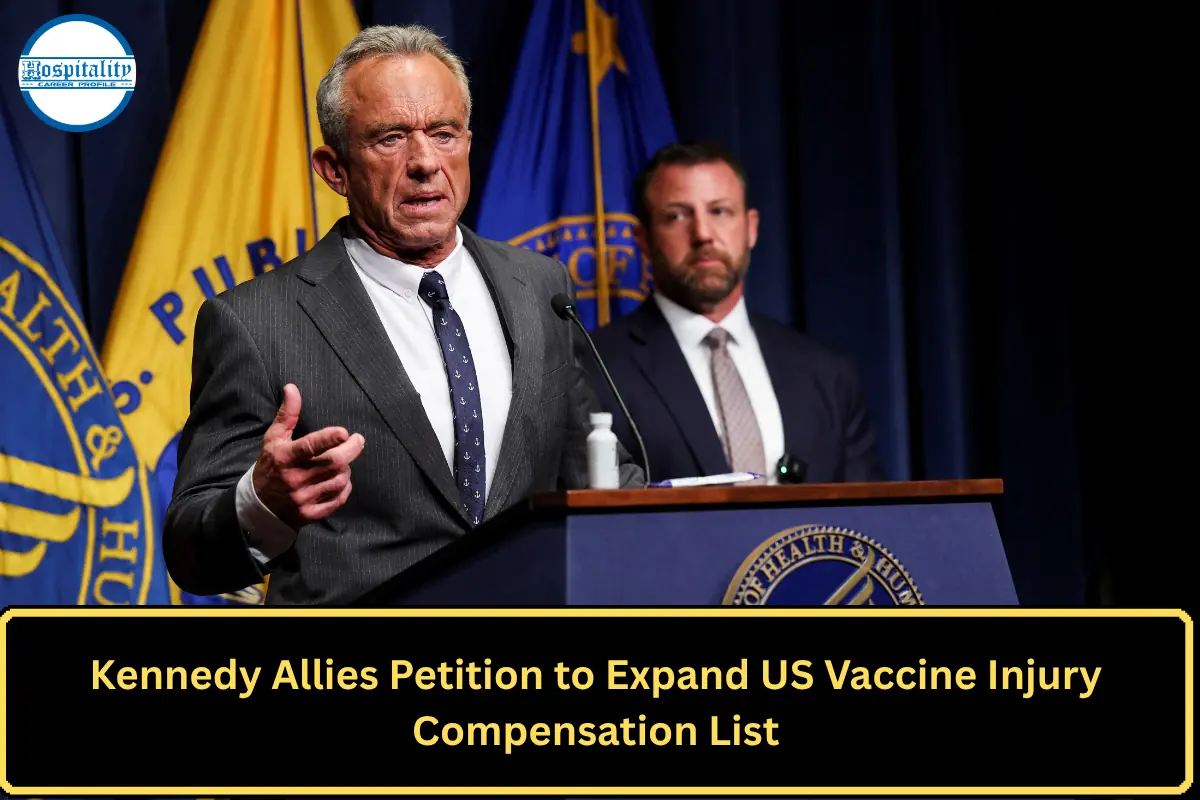
Kennedy Allies Petition to Expand US Vaccine Injury Compensation List
Allies of Robert F. Kennedy Jr. have formally petitioned US health authorities to expand the list of conditions eligible under the federal vaccine injury compensation program, according to a filing submitted on March 25, 2026. The move, which seeks to include additional medical conditions allegedly linked to vaccines, has reignited debate over vaccine safety, regulatory oversight, and public confidence in immunization programs in the United States.
The petition was submitted to the US Department of Health and Human Services, which oversees the National Vaccine Injury Compensation Program (VICP). The program provides financial compensation to individuals who are found to have suffered injuries associated with certain vaccines, based on a predefined list of recognized conditions.
Push to Broaden Eligibility Criteria
The group backing the petition argues that the current list of compensable injuries does not adequately reflect emerging scientific evidence and patient experiences. They are calling for the inclusion of additional conditions that they claim may be linked to immunization, as well as a broader interpretation of existing criteria.
Supporters of the petition say that expanding the list would improve access to compensation for affected individuals and enhance transparency in the vaccine safety system. They also argue that the current framework may exclude legitimate cases due to strict eligibility requirements.
The proposal includes recommendations for updating the Vaccine Injury Table, which is used to determine whether a claimant qualifies for compensation without needing to prove causation in court.
Concerns from Public Health Experts
Public health experts have raised concerns about the potential implications of expanding the compensation list without robust scientific consensus. They warn that changes to the program could inadvertently undermine public confidence in vaccines, which are widely regarded as one of the most effective tools in preventing infectious diseases.
Health officials emphasize that the existing compensation program is designed to balance support for rare adverse events with the need to maintain trust in vaccination efforts. Any modifications, they argue, must be based on rigorous scientific evaluation and evidence-based policy decisions.
Experts also note that vaccine-related injuries are extremely rare and that the benefits of immunization far outweigh the risks in preventing serious illnesses.
Regulatory Review Process
The Department of Health and Human Services is expected to review the petition as part of its standard regulatory process. This includes evaluating the scientific evidence presented, consulting with advisory committees, and considering public comments before making any changes to the Vaccine Injury Table.
Officials have not indicated a timeline for a decision, but such reviews typically involve extensive analysis and stakeholder engagement. The process is intended to ensure that any updates to the program are grounded in credible research and aligned with public health priorities.
The outcome of the review could have significant implications for both claimants and the broader vaccine policy landscape.
Impact on Vaccine Policy Debate
The petition comes amid ongoing debates in the United States over vaccine mandates, safety monitoring, and regulatory transparency. While vaccination remains a cornerstone of public health, discussions around individual rights and risk assessment continue to shape policy discourse.
Advocacy groups on both sides of the issue are closely watching the development, viewing it as a potential turning point in how vaccine-related claims are handled. The proposal has also drawn attention from lawmakers and policymakers, some of whom have called for greater scrutiny of vaccine safety systems.
At the same time, health authorities stress the importance of maintaining high vaccination rates to prevent outbreaks of infectious diseases.
Legal and Financial Implications
Expanding the list of compensable injuries could have financial implications for the federal program, which is funded by a tax on vaccines. An increase in eligible claims may lead to higher payouts, potentially affecting the program’s sustainability over time.
Legal experts note that any changes to the compensation framework could also influence how vaccine-related cases are litigated, including the burden of proof required for claimants. The Vaccine Injury Table plays a central role in simplifying the claims process, and modifications could alter its effectiveness.
The balance between accessibility and program integrity will be a key consideration in the review process.
Public Trust and Communication
Maintaining public trust remains a central concern for health authorities as the debate unfolds. Clear communication about the risks and benefits of vaccines, as well as the purpose of the compensation program, is seen as essential to addressing public concerns.
Health agencies are likely to emphasize that the existence of the compensation program reflects a commitment to transparency and accountability, rather than evidence of widespread safety issues. Ensuring that policy changes are communicated effectively will be critical to avoiding misinformation.
Experts highlight the need for balanced messaging that acknowledges rare adverse events while reinforcing the overall safety and effectiveness of vaccines.
Global Context
The developments in the United States are being closely monitored internationally, as other countries also operate vaccine injury compensation schemes. Changes to the US program could influence global discussions on vaccine safety monitoring and compensation mechanisms.
International health organizations have generally supported the use of compensation programs as a way to maintain public confidence while addressing rare adverse events. However, they stress that such programs must be guided by strong scientific evidence and consistent regulatory standards.
The issue underscores the broader challenge of balancing innovation, safety, and public trust in global immunization efforts.
Future Outlook
As the petition undergoes review, stakeholders across the healthcare, legal, and policy sectors are expected to engage in discussions about the future of the vaccine injury compensation program. The outcome could shape how vaccine-related claims are evaluated and addressed in the years ahead.
Regardless of the decision, the debate highlights the ongoing need for robust safety monitoring systems and transparent regulatory processes. Continued investment in research and surveillance will be essential to ensure the safety and effectiveness of vaccines.
The Department of Health and Human Services is currently reviewing the petition, with no immediate decision announced.