Key Political Questions Emerging as the United States–Iran Conflict Intensifies
As tensions between the United States and Iran intensify, political leaders and analysts are debating the strategic goals, global consequences, and domestic political impact of the escalating conflict.
 SANJANA DUTTA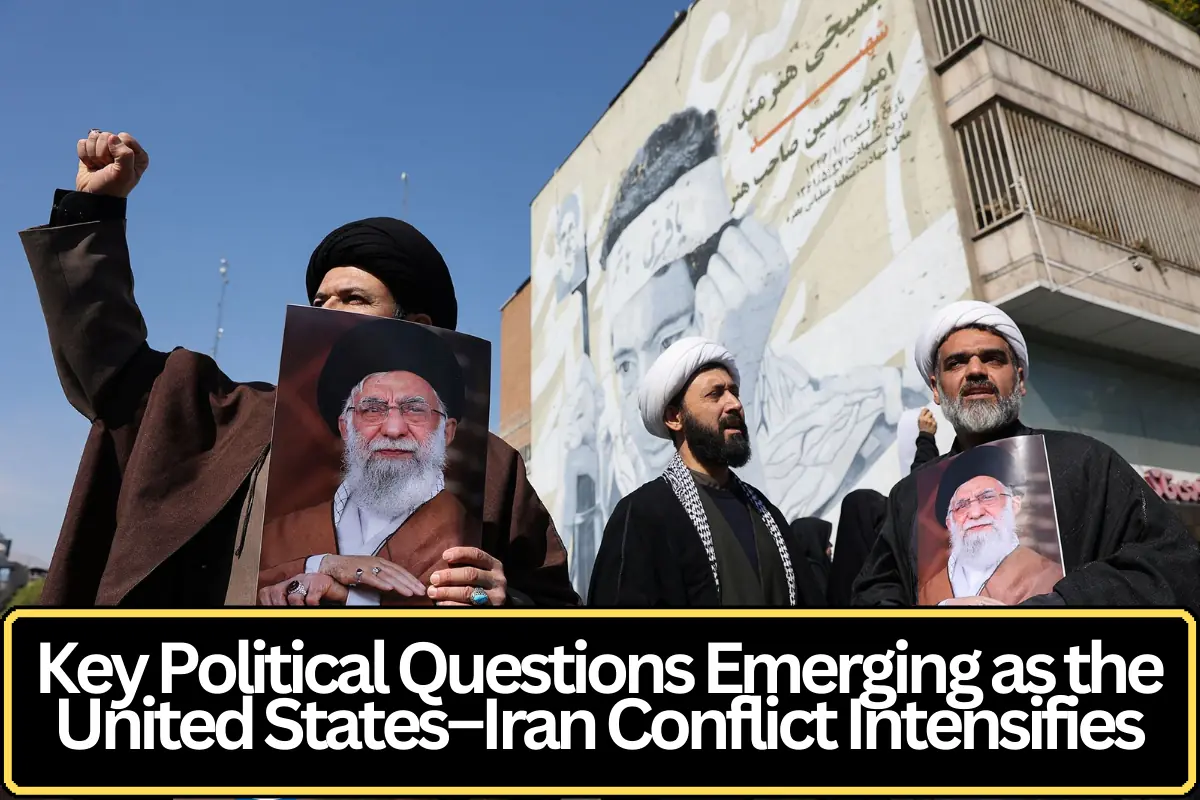
Introduction: A Conflict Raising Global Political Questions
The escalating confrontation between the United States and Iran has rapidly become one of the most significant geopolitical developments in recent years. What initially appeared to be a limited military engagement has evolved into a complex international crisis involving strategic alliances, domestic political calculations, and concerns about regional stability.
As military operations continue and diplomatic tensions rise, policymakers and analysts are increasingly focused on the broader political questions surrounding the conflict. These questions extend far beyond battlefield developments. They involve the strategic objectives of the United States, the resilience of Iran’s political system, the potential for regional escalation, and the long‑term implications for global security.
Political leaders in Washington, Middle Eastern capitals, and international institutions are now debating how the conflict could reshape power dynamics in the region. With global energy markets reacting and diplomatic channels under pressure, the war is prompting intense discussion about the future of international relations and the role of major powers in maintaining global stability.
Understanding the Strategic Objectives of the United States
One of the most widely discussed questions concerns the core objectives guiding the United States’ military actions. Government officials have emphasized that the campaign is focused on neutralizing security threats and protecting allied nations in the Middle East.
According to official statements, American military operations are intended to target critical elements of Iran’s military infrastructure, including missile capabilities, military bases, and logistical networks that could threaten regional security. By weakening these systems, policymakers believe they can reduce the risk of attacks against allied nations and international shipping routes.
However, outside observers note that defining a clear strategic end‑goal is essential in any military campaign. Without a clearly articulated objective, conflicts can gradually expand beyond their initial scope. For this reason, analysts and members of Congress are closely examining how the administration defines success in the conflict and what conditions might lead to de‑escalation.
The Debate Over Regime Change
Another key political question centers on whether the conflict is intended to weaken or even replace Iran’s current leadership. Although official statements have not described regime change as a formal objective, the issue remains part of the broader policy debate.
Iran’s political system is structured around a powerful leadership hierarchy that combines religious authority with governmental institutions. The resilience of this structure has been tested during previous crises, yet it has historically demonstrated the ability to maintain control even during periods of external pressure.
Some analysts argue that sustained military pressure could weaken the government and create conditions for political transformation. Others believe that external military action may actually strengthen nationalist sentiment within the country, making internal political change less likely in the short term.
This debate reflects a broader question that has shaped international policy discussions for decades: whether external intervention can realistically influence internal political structures in sovereign nations.
The Possibility of a Long and Complex War
The potential duration of the conflict is another issue dominating political discussions. While some early expectations suggested that military operations might remain limited, recent developments have raised the possibility of a longer and more complex engagement.
Iran possesses significant military capabilities and strategic depth. Its geographic size, population, and infrastructure provide considerable resilience against external pressure. In addition, the country maintains a network of regional partners and allied groups that could expand the scope of the conflict.
Military strategists often emphasize that conflicts involving large states rarely end quickly. Even when initial operations achieve tactical success, long‑term stability requires careful planning, diplomacy, and economic considerations. As a result, policymakers are evaluating whether the current campaign could evolve into a prolonged strategic confrontation.
Regional Security and the Risk of Escalation
The Middle East has long been a region shaped by overlapping alliances and rivalries. Because of this complex environment, any major military confrontation carries the risk of drawing additional actors into the conflict.
Several regional groups and governments maintain close relationships with Iran or the United States. If these actors become directly involved, the conflict could expand beyond its current scope. Such a development would increase the complexity of diplomatic negotiations and potentially create new security challenges across the region.
Neighboring countries are already monitoring the situation carefully. Many governments are concerned that escalating hostilities could disrupt trade routes, threaten infrastructure, and create humanitarian pressures through displacement and economic instability.
Preventing the conflict from spreading further has therefore become one of the most important priorities for international diplomats.
The Role of Congress in War Decisions
Within the United States, the conflict has also triggered renewed debate about the constitutional role of Congress in authorizing military action. The American political system divides war‑related authority between the executive and legislative branches, creating an ongoing discussion about how military operations should be approved and supervised.
Some lawmakers argue that extended military engagements should receive formal authorization from Congress to ensure democratic accountability. Others believe that the president must retain flexibility to respond quickly to emerging threats without lengthy legislative procedures.
As the conflict continues, this debate could shape future decisions about military funding, operational scope, and long‑term strategy. Congressional hearings and policy discussions may become increasingly prominent as lawmakers seek more detailed explanations of the administration’s objectives.
Public Opinion and Domestic Political Impact
Domestic public opinion is another powerful factor influencing the trajectory of the conflict. In democratic societies, public support often determines how long governments can sustain major military operations abroad.
American citizens are closely following developments in the Middle East through news coverage and political debate. Concerns about economic stability, energy prices, and the potential for long‑term military engagement are shaping public attitudes toward the war.
Political leaders from different parties are expressing varying perspectives on the situation. Some argue that decisive action is necessary to maintain security and deter future threats. Others caution that prolonged conflict could carry significant human and economic costs.
These discussions are likely to intensify as the situation evolves, especially if the conflict begins to affect global markets or domestic economic conditions.
Global Energy Markets and Economic Implications
The Middle East plays a central role in the global energy system, making any regional conflict a matter of international economic concern. Oil and natural gas exports from the region support industrial production, transportation networks, and electricity generation across the world.
One of the most strategically important locations in this context is the Strait of Hormuz, a narrow waterway through which a significant portion of global oil shipments passes each day. Any disruption in this corridor can quickly influence global energy prices.
Financial markets are already responding to uncertainty surrounding the conflict. Investors and governments are closely monitoring developments that could affect energy infrastructure, shipping routes, and trade patterns.
If tensions continue to rise, global economic institutions may face increased pressure to manage market volatility and protect international supply chains.
Diplomatic Efforts and International Reactions
While military developments dominate headlines, diplomatic activity continues behind the scenes. International organizations and foreign governments are exploring possible pathways to reduce tensions and prevent further escalation.
Some countries are calling for immediate negotiations, while others are urging restraint from all parties involved. Diplomatic channels remain critical for managing misunderstandings and creating opportunities for dialogue even during active conflict.
History has shown that many conflicts ultimately require political settlements rather than purely military solutions. As a result, diplomatic engagement is likely to remain a key component of efforts to stabilize the situation.
Leadership and Crisis Communication
Another important aspect of the political debate involves leadership communication during times of crisis. Governments must balance the need for transparency with the necessity of protecting sensitive national security information.
Public statements from senior officials can help reassure citizens, clarify policy goals, and demonstrate that leaders are actively managing the situation. At the same time, strategic decisions often occur behind closed doors through intelligence briefings and military planning sessions.
The effectiveness of crisis communication can influence both domestic public confidence and international perceptions of leadership stability.
Looking Ahead: Uncertain but Consequential
The evolving conflict between the United States and Iran represents a pivotal moment in contemporary geopolitics. Decisions made in the coming weeks and months could shape security dynamics across the Middle East and influence global political relationships.
While military developments will continue to attract attention, the deeper political questions surrounding the conflict may ultimately determine its long‑term consequences. Issues such as strategic objectives, regional alliances, domestic political support, and diplomatic engagement will all play crucial roles in shaping the future.
For policymakers, analysts, and citizens around the world, understanding these political dimensions is essential for evaluating how the crisis may unfold.
Conclusion: A Defining Moment in Global Politics
The United States–Iran conflict has already triggered widespread debate about strategy, leadership, and international stability. As governments assess their positions and explore possible outcomes, the world is witnessing a moment that could redefine geopolitical relationships for years to come.
Whether the crisis moves toward escalation or eventual negotiation will depend on the decisions of political leaders, the reactions of regional actors, and the resilience of diplomatic institutions. For now, the conflict stands as one of the most consequential political challenges facing the international community.