Korea FX Market to Stabilize as Middle East Risks Ease: Yonhap
South Korea’s finance minister says FX market volatility will ease once Middle East tensions subside, with the won expected to return to normal levels.
 Tripti Srivastava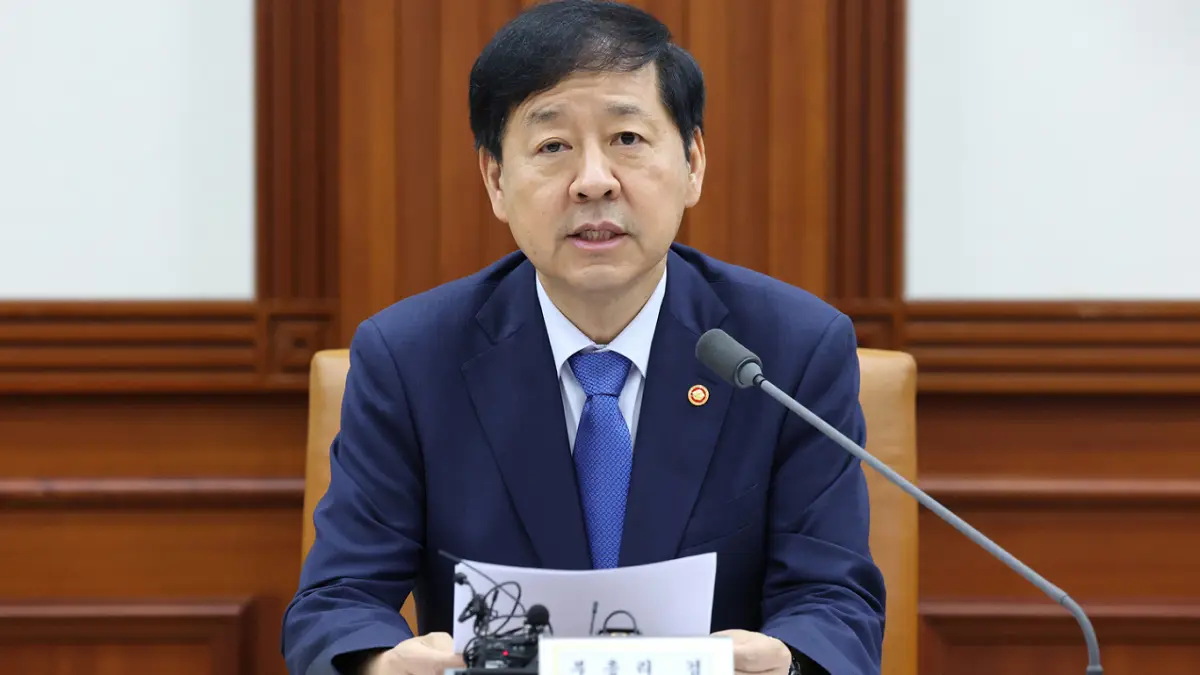
South Korea’s foreign exchange market is expected to stabilise once geopolitical risks linked to the Middle East ease, Finance Minister Koo Yun-cheol said, signalling confidence that recent volatility in the Korean won will reverse as external pressures subside.
Speaking during a visit to Washington, D.C., Koo said the currency has deviated significantly from its underlying economic fundamentals but is likely to return to more stable levels as market conditions normalise and government policies take effect.
FX Market Volatility Linked to Geopolitical Risks
The minister attributed recent instability in the foreign exchange market primarily to heightened geopolitical tensions in the Middle East, which have triggered broader uncertainty across global financial markets. According to Koo, easing of these risks would allow the currency market to regain equilibrium.
“If the risks related to the Middle East conflict are resolved, the market will stabilise," Koo said, emphasising that external shocks, rather than domestic weaknesses, have been the key driver of currency fluctuations.
The Korean won has experienced notable volatility in recent months, reflecting investor sensitivity to geopolitical developments and capital flows in emerging and developed markets alike.
Koo highlighted that the Korean currency has moved beyond levels justified by economic fundamentals, suggesting that the current exchange rate does not fully reflect the country’s macroeconomic conditions.
While declining to specify a precise “normal” level for the won, the minister noted that exchange rates are ultimately determined by market forces. However, he indicated that policy measures and improving investor sentiment could help guide the currency back toward equilibrium.
“It is difficult to define a specific level, as exchange rates are market-driven,” he said, adding that the current divergence is likely temporary.
The government has been implementing foreign exchange policies aimed at stabilising markets and maintaining investor confidence amid global uncertainty.
Strong Foreign Investment Interest Supports Outlook
Despite recent currency volatility, Koo pointed to continued strong interest from foreign investors in South Korea’s domestic market, supported by stable foreign currency supply conditions.
The minister noted that capital inflows and sustained investor demand are key factors that could support the currency’s recovery once external risks diminish.
“Foreign investors are showing strong interest in investing in the domestic market,” Koo said, highlighting confidence in South Korea’s economic fundamentals.
Analysts have long viewed steady foreign investment as a stabilising force for the won, particularly during periods of global market stress.
Koo also linked South Korea’s broader economic outlook to developments in the Middle East, underscoring the potential impact of prolonged geopolitical tensions on growth prospects.
The government is targeting economic growth of 2% for the year, though the minister acknowledged that achieving this goal will depend in part on how quickly the conflict is resolved.
He indicated that a swift resolution could allow the economy to meet its growth target with limited additional policy intervention, while a prolonged conflict would require more extensive measures.
“If the war ends as early as next week, the target may be achieved with relatively limited effort, but if it continues, broader policy responses will be required,” he said.
International organisations have projected South Korea’s growth at around 1.9%, slightly below the government’s target, highlighting the sensitivity of the outlook to global developments.
Global Policy Coordination in Focus
Koo’s remarks came as he attended meetings of Group of 20 (G20) finance ministers and annual gatherings of the International Monetary Fund (IMF) and the World Bank, where global economic risks and policy coordination are key agenda items.
The discussions are taking place against a backdrop of heightened geopolitical tensions, rising energy prices, and persistent volatility in global financial markets.
South Korea’s stance reflects broader concerns among policymakers about the spillover effects of geopolitical conflicts on currency markets, capital flows, and economic stability.
With the trajectory of the Middle East conflict remaining uncertain, market participants are closely monitoring developments for signals on currency movements and global financial conditions.