Lilly CEO Says Weight-Loss Drugs May Reach Only Half of Eligible Patients at Peak
Eli Lilly’s CEO stated that weight-loss drugs could reach only about half of eligible patients at peak, highlighting access, supply, and affordability challenges in obesity treatment.
 Akanksha jain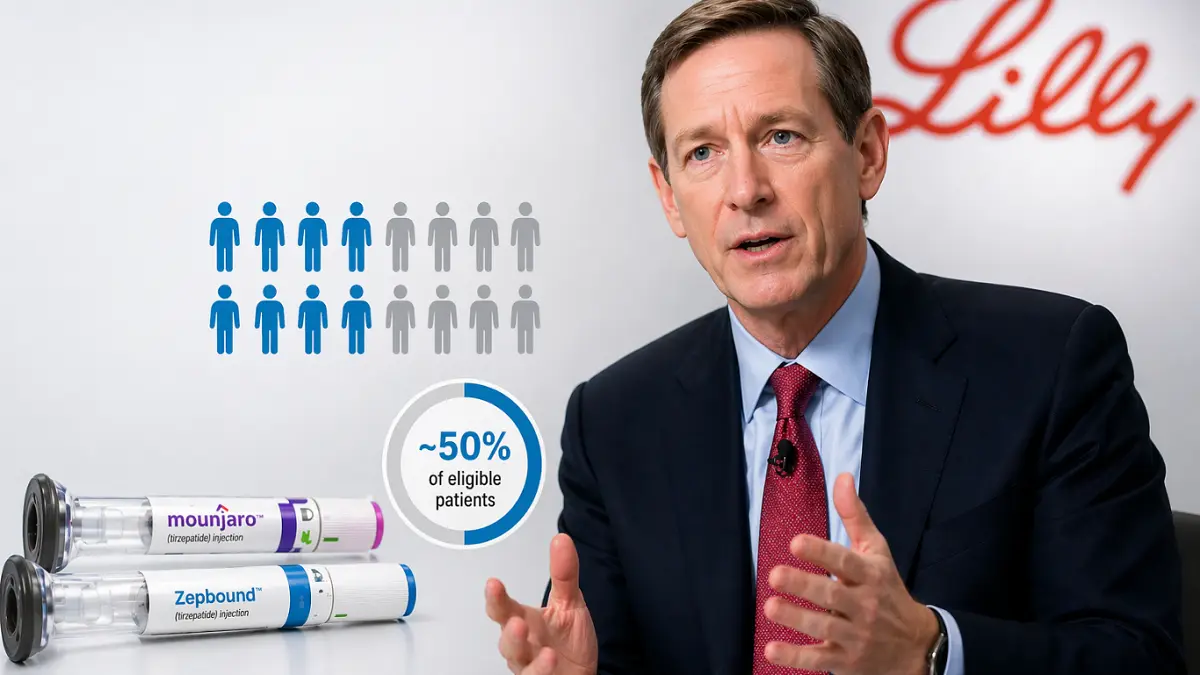
Eli Lilly’s chief executive said in April 2026 that next-generation weight-loss drugs are expected to reach only about half of eligible patients at peak usage globally, underscoring ongoing challenges related to access, affordability, and supply in the rapidly expanding obesity treatment market.
The statement reflects growing demand for obesity therapies, particularly GLP-1-based drugs, which have shown significant effectiveness in weight reduction and metabolic health improvement. Despite strong clinical outcomes, barriers such as high costs, limited insurance coverage, and manufacturing constraints continue to restrict widespread adoption.
Rising Demand Meets Access Limitations
Weight-loss drugs have gained significant attention in recent years as obesity rates continue to rise globally. These therapies, particularly those targeting metabolic pathways, have been shown to support sustained weight reduction and improve related conditions such as diabetes and cardiovascular risk.
However, the CEO indicated that even at peak market penetration, only around half of the potential patient population may gain access to these treatments. This gap highlights structural challenges within healthcare systems, including disparities in affordability and reimbursement policies.
The high cost of these medications remains a major limiting factor, particularly in markets where insurance coverage is limited or inconsistent. Patients often face out-of-pocket expenses that restrict long-term use, which is typically required for sustained benefits.
Supply Constraints and Manufacturing Challenges
In addition to cost barriers, supply limitations have emerged as a key issue affecting access to weight-loss drugs. Rapid growth in demand has placed pressure on manufacturing capacity, leading to shortages in some regions.
Pharmaceutical companies are working to scale up production, but expanding manufacturing infrastructure and ensuring consistent supply chains require time and significant investment. These constraints have contributed to uneven availability across markets.
The CEO’s comments highlight that even as production increases, matching supply with global demand remains a complex challenge, particularly as more patients seek treatment.
Implications for Public Health and Obesity Care
Obesity is a major public health concern, associated with increased risk of chronic conditions such as type 2 diabetes, cardiovascular disease, and certain cancers. Effective treatment options are considered critical in reducing the long-term burden on healthcare systems.
While weight-loss drugs offer a promising tool for managing obesity, limited access could restrict their overall impact at a population level. Public health experts emphasize the need for broader strategies that combine pharmacological treatment with lifestyle interventions, prevention programs, and policy support.
The gap between eligible patients and those who can access treatment also raises concerns about health equity, as lower-income populations may face greater barriers to obtaining these therapies.
Market Growth and Competitive Landscape
The obesity drug market has become one of the fastest-growing segments in the pharmaceutical industry, attracting significant investment and competition. Multiple companies are developing or expanding portfolios of weight-management therapies, aiming to capture a share of the growing demand.
Despite this growth, the CEO’s estimate suggests that market expansion may be constrained by systemic factors rather than lack of demand. Addressing these challenges will be critical for achieving broader adoption and maximizing the public health benefits of these treatments.
Pharmaceutical firms are also exploring strategies to improve access, including pricing models, partnerships with healthcare providers, and efforts to expand insurance coverage.
Current Status and Outlook
Weight-loss drugs continue to see increasing uptake in markets where they are available, with ongoing efforts to expand production and improve distribution. Regulatory approvals and clinical developments are expected to further shape the market landscape.
However, the projection that only about half of eligible patients may be reached at peak highlights the need for coordinated action across healthcare systems, policymakers, and industry stakeholders.
Ensuring equitable access to effective obesity treatments will remain a key challenge as demand continues to grow, with affordability, infrastructure, and policy frameworks playing a central role in determining future adoption levels.