Middle East Conflict Exposes Vulnerabilities in Global GPS Systems, Raising Security Concerns
 Taniska Kumari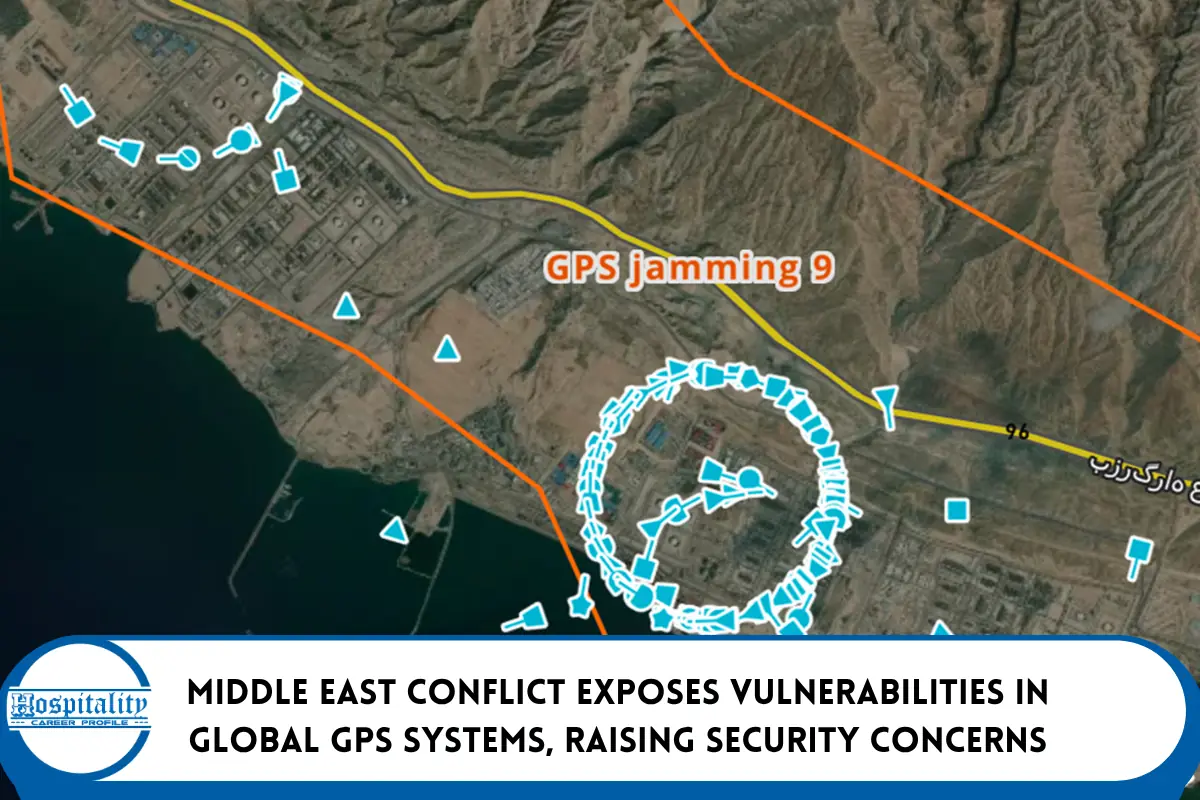
The ongoing conflict in the Middle East is exposing critical vulnerabilities in the global positioning system (GPS), raising concerns among governments, defense experts, and technology providers about the reliability and security of satellite-based navigation systems. Reports emerging in March 2026 indicate that disruptions linked to military activities in the region are affecting GPS accuracy, highlighting risks for both civilian and military applications worldwide.
Conflict Highlights GPS Weaknesses
The situation has drawn attention to how modern warfare can interfere with satellite navigation systems. GPS, which relies on signals transmitted from satellites orbiting the Earth, can be disrupted through techniques such as jamming and spoofing. These methods interfere with signal reception, causing devices to lose accuracy or display incorrect positioning data.
In conflict zones, such disruptions are often used strategically to limit the effectiveness of enemy navigation systems. However, their impact is not confined to military operations, as civilian infrastructure increasingly depends on GPS for a wide range of services.
Impact on Civilian Infrastructure
GPS plays a critical role in everyday life, supporting systems such as aviation navigation, shipping logistics, ride-hailing services, and financial transactions. Any disruption can have widespread consequences, affecting industries that rely on precise timing and location data.
Reports suggest that GPS interference in parts of the Middle East has led to navigation errors in commercial flights and shipping routes. Such incidents raise concerns about safety and operational efficiency, particularly in regions close to conflict zones.
Jamming and Spoofing Techniques
Jamming involves broadcasting signals on the same frequency as GPS satellites, effectively drowning out legitimate signals and preventing receivers from obtaining accurate data. Spoofing, on the other hand, involves transmitting false signals that mimic genuine GPS data, misleading devices into calculating incorrect positions.
Both techniques have become more sophisticated in recent years, making them harder to detect and counter. The growing accessibility of such technologies has increased the risk of disruption beyond traditional military use.
Military Dependence on GPS
Modern military operations rely heavily on GPS for navigation, targeting, and coordination. Disruptions can hinder communication, reduce precision in operations, and create operational challenges on the battlefield.
As a result, armed forces are increasingly exploring alternative navigation systems and backup solutions to reduce reliance on GPS. These include inertial navigation systems, ground-based positioning technologies, and regional satellite networks.
Global Implications
The vulnerabilities exposed by the Middle East conflict are not limited to one region. GPS is a global system, and disruptions in one area can have ripple effects across international networks. This interconnectedness makes the issue a global concern rather than a localized problem.
Experts warn that as geopolitical tensions rise, the likelihood of GPS interference could increase, posing risks to global trade, transportation, and communication systems.
Calls for Stronger Resilience
The situation has prompted calls for greater resilience in navigation systems. Governments and industry stakeholders are being urged to invest in technologies that can detect and mitigate interference, as well as develop alternative positioning systems.
Some countries are already working on complementary systems to reduce dependence on GPS, including regional satellite networks and terrestrial navigation solutions. These efforts aim to ensure continuity of services even in the event of disruptions.
Technological and Policy Responses
Addressing GPS vulnerabilities requires both technological innovation and regulatory action. Researchers are developing advanced receivers capable of identifying and filtering out interference, while policymakers are considering frameworks to regulate the use of jamming and spoofing technologies.
International cooperation is also seen as essential, as GPS is used globally and disruptions can cross national boundaries. Collaborative efforts may help establish standards and protocols to protect critical infrastructure.
Economic and Security Risks
The potential economic impact of GPS disruptions is significant. Industries such as aviation, shipping, and telecommunications could face delays, increased costs, and operational challenges. In financial systems, where precise timing is crucial, even minor disruptions can have serious consequences.
From a security perspective, vulnerabilities in GPS systems could be exploited not only in military conflicts but also by malicious actors seeking to disrupt critical services.
Future of Satellite Navigation
The challenges highlighted by the conflict are likely to accelerate the development of next-generation navigation technologies. These may include multi-constellation receivers that use signals from multiple satellite systems, as well as integration with other technologies such as 5G and terrestrial positioning networks.
Such advancements could improve resilience and reduce the impact of disruptions, ensuring more reliable navigation in both civilian and military contexts.
Conclusion
The Middle East conflict is underscoring the fragility of global GPS systems, prompting renewed focus on strengthening navigation infrastructure and developing alternatives to ensure reliability in an increasingly uncertain geopolitical environment.