New Method Reveals Hidden Protein Motions, Offering Breakthrough for Drug Design
Scientists have developed a new method to uncover hidden protein motions, potentially transforming drug design and improving treatment precision.
 Akanksha jain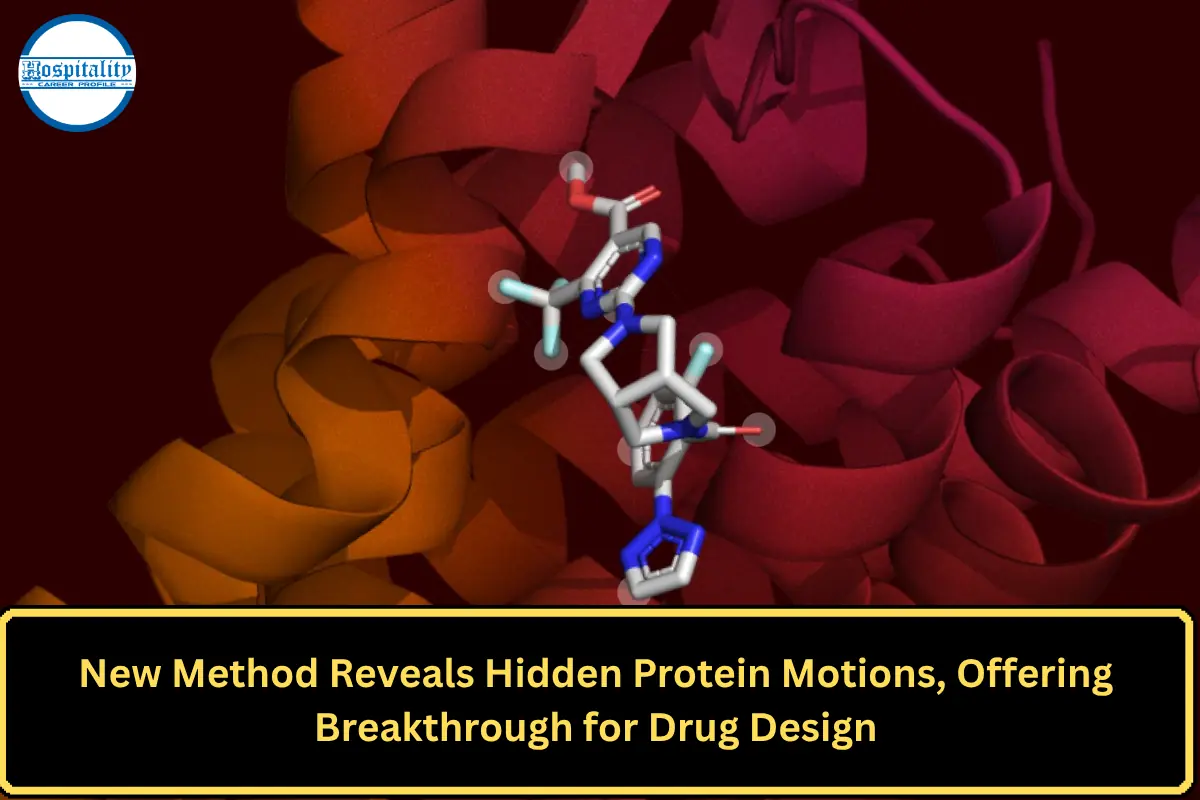
New Method Reveals Hidden Protein Motions, Offering Breakthrough for Drug Design
Scientists have developed a novel method to uncover hidden movements within proteins, a breakthrough that could significantly enhance drug design and improve the effectiveness of future treatments, according to new research published in March 2026. The discovery provides deeper insight into how proteins function at a molecular level, opening new possibilities for targeting diseases more precisely.
The research, conducted by an international team of scientists, focuses on understanding the dynamic nature of proteins—complex molecules that play a critical role in nearly all biological processes. By revealing previously undetectable motions, the new method offers a more complete picture of protein behavior, which is essential for designing drugs that can interact with them effectively.
Understanding Protein Dynamics
Proteins are not static structures; they constantly change shape and move in response to their environment. These motions are crucial for their function, enabling them to bind to other molecules, catalyze chemical reactions, and regulate biological processes. However, many of these movements occur at extremely small scales and over very short time frames, making them difficult to observe with traditional techniques.
The newly developed method allows researchers to capture these subtle and transient motions, providing insights that were previously inaccessible. By combining advanced computational modeling with experimental data, scientists can now map the full range of protein dynamics with greater accuracy.
This improved understanding of protein behavior is expected to have far-reaching implications for biomedical research and drug development.
Implications for Drug Design
One of the most significant applications of this discovery lies in drug design. Traditional approaches often rely on static models of proteins, which may not fully represent how they behave in real biological systems. As a result, some drugs may fail to bind effectively or produce unintended side effects.
By incorporating information about protein motions, researchers can design drugs that better match the dynamic nature of their targets. This could lead to more effective therapies with fewer side effects, particularly for complex diseases such as cancer, neurodegenerative disorders, and infectious diseases.
The ability to target specific protein conformations also opens the door to developing highly selective drugs that minimize interactions with non-target molecules.
Advancing Precision Medicine
The new method is expected to play a key role in advancing precision medicine, an approach that tailors treatments to individual patients based on their genetic and molecular profiles. By understanding how proteins behave in different conditions, scientists can develop therapies that are more closely aligned with the underlying mechanisms of disease.
This approach could improve treatment outcomes and reduce variability in patient responses. It also has the potential to accelerate the development of personalized therapies for conditions that currently lack effective treatments.
Researchers believe that integrating protein dynamics into drug discovery pipelines will become increasingly important as precision medicine continues to evolve.
Technological Innovations Behind the Method
The breakthrough was made possible by advances in both computational and experimental technologies. High-performance computing allows researchers to simulate protein movements at unprecedented levels of detail, while cutting-edge experimental techniques provide the data needed to validate these models.
Machine learning and artificial intelligence are also playing a growing role in analyzing complex datasets and identifying patterns in protein behavior. These tools enable scientists to process large amounts of information quickly and generate insights that would be difficult to obtain through traditional methods.
The integration of these technologies represents a significant step forward in molecular biology and pharmaceutical research.
Applications Across Multiple Diseases
The ability to study hidden protein motions has broad applications across a wide range of diseases. In cancer research, for example, understanding how proteins involved in cell growth and division change shape could lead to more effective targeted therapies.
In neurodegenerative diseases such as Alzheimer’s and Parkinson’s, the method could help identify how abnormal protein behavior contributes to disease progression. This knowledge may lead to new strategies for preventing or slowing these conditions.
In infectious diseases, insights into protein dynamics could improve the design of antiviral and antibacterial drugs, helping to combat emerging health threats.
Challenges and Limitations
Despite its potential, the new method also faces challenges. Studying protein dynamics is inherently complex, requiring significant computational resources and expertise. Additionally, translating these insights into practical drug development applications may take time.
Researchers emphasize the need for continued investment in technology and collaboration across disciplines to fully realize the benefits of this approach. Ensuring that the method can be applied efficiently and cost-effectively will be critical for its widespread adoption.
Addressing these challenges will be essential for integrating protein dynamics into mainstream drug discovery processes.
Future Research Directions
Scientists are now working to refine the method and expand its applications. Future research will focus on improving the accuracy and scalability of the technique, as well as exploring its use in studying larger and more complex protein systems.
Collaborations between academic institutions, pharmaceutical companies, and research organizations are expected to accelerate progress in this field. These partnerships will play a key role in translating scientific discoveries into practical healthcare solutions.
The continued development of this method is likely to drive innovation in both basic research and applied science.
Impact on the Pharmaceutical Industry
The pharmaceutical industry is expected to benefit significantly from this breakthrough. By providing a more detailed understanding of protein behavior, the method could reduce the time and cost associated with drug development.
Improved targeting of proteins may also increase the success rate of clinical trials, which is a major challenge in the industry. This could lead to faster approval of new drugs and improved access to treatments for patients.
Industry experts believe that incorporating protein dynamics into drug design will become a standard practice in the coming years.
Conclusion
The discovery of a method to reveal hidden protein motions marks a significant advancement in molecular biology and drug design, offering new opportunities to develop more effective and precise treatments for a wide range of diseases.