NIT Rourkela Develops AI System to Monitor Sleep Posture for Improved Patient Care
 Taniska Kumari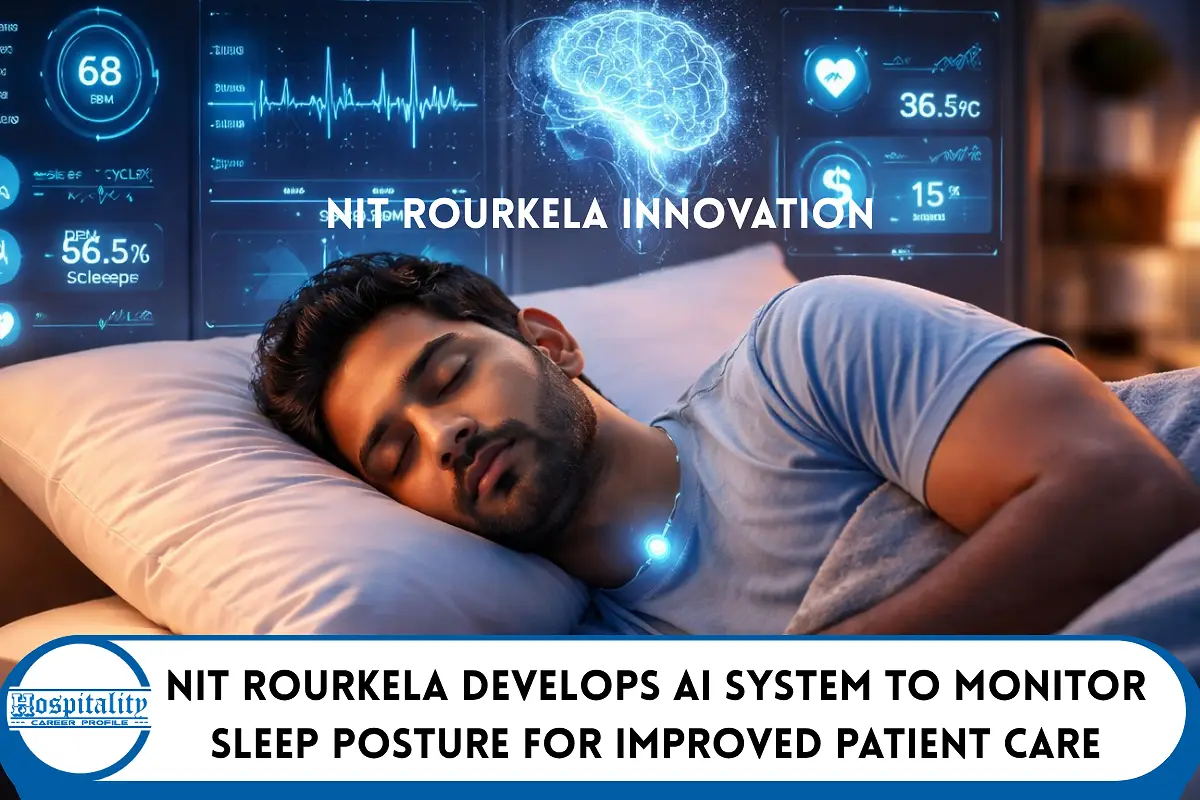
Researchers at the National Institute of Technology (NIT) Rourkela have developed an artificial intelligence-based sleep posture monitoring system in March 2026 aimed at improving patient care, enabling early detection of health risks, and supporting healthcare providers with real-time insights in both clinical and home environments.
AI System Designed for Continuous Sleep Monitoring
The newly developed system uses artificial intelligence and sensor-based technology to monitor and analyze sleep posture throughout the night. By tracking body positions and movement patterns, the system identifies how long individuals remain in specific postures and detects irregular or potentially harmful sleeping positions.
Sleep posture plays a significant role in overall health, with poor positioning linked to conditions such as sleep apnea, spinal strain, and pressure ulcers. The AI-driven approach offers a more efficient and scalable alternative to traditional monitoring methods, which often rely on manual observation or complex equipment.
Real-Time Data and Automated Alerts
The system processes data in real time, enabling it to classify various sleep positions, including supine, prone, and lateral postures. Using machine learning algorithms, it continuously evaluates posture changes and duration, providing actionable insights for healthcare providers.
One of its key features is the ability to generate alerts when a patient remains in a single position for extended periods. This is particularly important in preventing complications such as bedsores, especially among bedridden patients or individuals with limited mobility.
Healthcare staff can use these alerts to intervene promptly, reposition patients, and reduce the risk of long-term complications.
Applications in Hospitals and Care Facilities
The AI-based monitoring system is expected to have significant applications in hospitals, particularly in intensive care units, recovery wards, and long-term care facilities. Continuous monitoring can reduce the workload on healthcare professionals by automating routine observation tasks.
In addition to improving efficiency, the system enhances patient safety by ensuring that posture-related risks are identified early. This allows medical staff to take preventive measures rather than reacting to complications after they arise.
The technology can also support sleep clinics by providing detailed data on patient sleep behavior, aiding in the diagnosis and management of sleep disorders.
Potential for Home Healthcare Use
Beyond clinical settings, the system has strong potential for home healthcare applications. With the increasing demand for remote monitoring solutions, the technology enables patients to track their sleep posture without the need for hospital visits.
Caregivers and family members can receive updates and alerts, helping them monitor the condition of elderly individuals or patients recovering at home. This feature is particularly valuable for long-term care and post-surgical recovery.
The system aligns with the growing trend of digital health solutions that focus on delivering personalized and accessible care outside traditional healthcare facilities.
Advancing Preventive Healthcare
The development reflects a broader shift toward preventive healthcare, where early detection of potential issues is prioritized. By identifying harmful sleep patterns at an early stage, the system enables timely intervention and reduces the likelihood of serious health complications.
Patients can also benefit from insights into their sleep habits, allowing them to make adjustments that improve comfort and overall well-being. Healthcare providers can use the data to design personalized treatment plans based on individual needs.
Integration of AI in Medical Technology
The project highlights the growing role of artificial intelligence in transforming healthcare systems. AI technologies are increasingly being used to analyze large volumes of data, identify patterns, and support clinical decision-making.
In this case, the system’s ability to provide continuous, non-intrusive monitoring represents a significant advancement in patient care. It reduces reliance on manual processes while ensuring more consistent and accurate data collection.
Such innovations are expected to play a key role in addressing challenges faced by healthcare systems, including staff shortages and rising patient demand.
Challenges and Future Development
Despite its potential benefits, the system must address challenges related to data privacy, security, and regulatory compliance. Ensuring that sensitive health data is protected will be critical for widespread adoption.
Researchers are expected to further refine the technology by improving accuracy, expanding functionality, and integrating it with other health monitoring systems such as heart rate and respiratory tracking devices.
Future developments may also focus on enhancing user accessibility and reducing costs, making the system more widely available across different healthcare settings.
Impact on Healthcare Innovation
The introduction of AI-based sleep posture monitoring technology is likely to influence the broader healthcare industry by encouraging the adoption of similar solutions. Hospitals and healthcare providers are increasingly investing in digital tools that improve efficiency and patient outcomes.
The innovation also highlights the role of research institutions in developing practical solutions that address real-world healthcare challenges. As demand for remote and data-driven healthcare grows, technologies like this are expected to gain wider acceptance.
Conclusion
The AI-based sleep posture monitoring system developed by NIT Rourkela represents a significant step forward in healthcare technology, offering a practical solution for improving patient care, enabling early diagnosis, and supporting preventive healthcare as digital innovation continues to reshape the medical sector.