Nitish Kumar Eyes Rajya Sabha Seat in Major Political Move That Could Reshape Bihar Leadership
Bihar Chief Minister Nitish Kumar’s decision to contest a Rajya Sabha seat has triggered intense political discussion about a possible leadership transition in the state and the future of Bihar politics.
 SANJANA DUTTA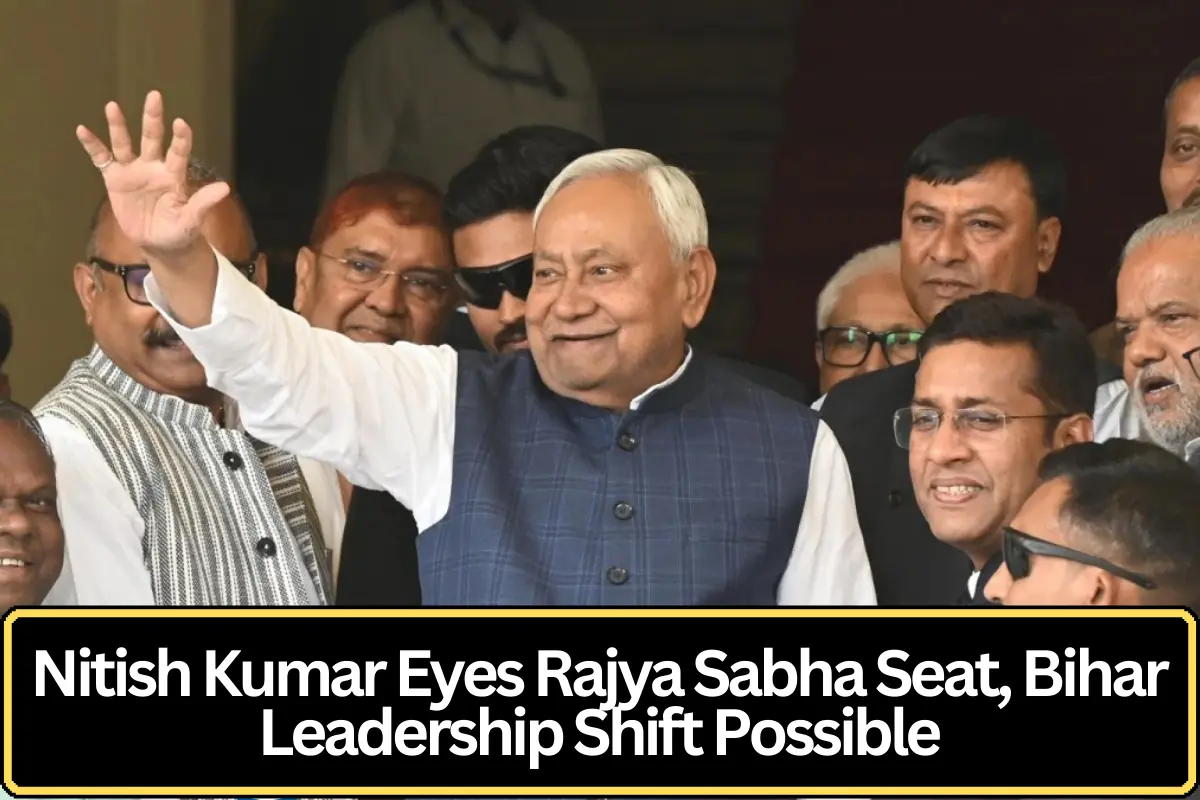
Nitish Kumar’s Rajya Sabha Move Signals Possible Turning Point in Bihar Politics
Bihar politics is witnessing a significant moment after Chief Minister Nitish Kumar indicated his intention to contest for a seat in the Rajya Sabha. The development has triggered widespread political discussions across the state and within national political circles. Observers believe that if the move materializes, it could bring a major leadership transition in Bihar and potentially mark the end of one of the longest-serving chief ministerial tenures in the state’s political history.
Nitish Kumar has been a central figure in Bihar’s governance for nearly two decades. His leadership has shaped the political narrative of the state through multiple elections, coalition arrangements, and policy decisions. The possibility of him shifting to the Rajya Sabha has therefore generated considerable interest among political analysts, party workers, and citizens who have closely followed his long political journey.
A Veteran Leader in Bihar’s Political Landscape
Rise in National and State Politics
Nitish Kumar began his political career during a period of intense political transformation in India. Over the years, he emerged as a prominent leader known for his administrative experience and pragmatic approach to coalition politics. Before becoming chief minister of Bihar, he held several key positions at the national level and built a reputation as a capable parliamentarian and policy maker.
His political journey reflects decades of experience navigating India’s complex political environment. As a leader who has worked both at the national and state levels, he developed a style of leadership that emphasized governance reforms and development initiatives. His entry into the chief minister’s office marked a new phase in Bihar’s political trajectory.
Leadership Since 2005
Nitish Kumar first assumed office as the Chief Minister of Bihar in 2005. At that time, the state was facing numerous challenges related to infrastructure, governance, and economic growth. His administration focused on improving roads, expanding access to education, strengthening law and order, and launching welfare programs aimed at supporting disadvantaged communities.
Over the years, his leadership became closely associated with efforts to change Bihar’s development narrative. Several initiatives in areas such as transportation, rural development, and social welfare were introduced under his government. These initiatives played a role in shaping the perception of Bihar’s progress in the national discourse.
Despite political challenges and changing alliances, Nitish Kumar managed to remain one of the most influential figures in the state. His ability to adapt to shifting political dynamics helped him maintain relevance in Bihar’s evolving political environment.
The Decision to Eye a Rajya Sabha Seat
A Longstanding Political Aspiration
The decision to contest a Rajya Sabha seat is believed to be connected to Nitish Kumar’s long-held aspiration to serve in all major legislative institutions of the country. Throughout his career, he has been associated with both state and national legislatures, and his possible entry into the Rajya Sabha would represent another milestone in that journey.
The Rajya Sabha plays a crucial role in India’s parliamentary system by representing the interests of states at the national level. By moving to the upper house of Parliament, Nitish Kumar would have the opportunity to contribute to national policy debates while continuing to represent Bihar’s interests in the national political arena.
Strategic Political Timing
Political observers note that the timing of this move is significant. Bihar is approaching a period of political activity that will shape the future leadership of the state. A transition from state leadership to a parliamentary role could allow Nitish Kumar to reposition himself within the broader national political framework.
Such a transition may also allow for the emergence of new leadership within the state government. Senior leaders within the ruling alliance could potentially take on greater responsibilities as part of a planned leadership change.
Potential Leadership Change in Bihar
Speculation Over a New Chief Minister
If Nitish Kumar secures a Rajya Sabha seat and steps down as chief minister, Bihar could witness a significant leadership transition. The selection of a new chief minister would involve consultations within the ruling alliance and discussions among senior party leaders.
The possibility of a new leader taking charge of the state government has already sparked discussions across political circles. Analysts believe the decision will depend on several factors including coalition dynamics, party representation in the legislative assembly, and the broader political strategy of the ruling alliance.
A new chief minister would face the challenge of maintaining administrative continuity while also establishing a distinct leadership style. Balancing these priorities will be crucial to ensure stability in governance.
Role of Coalition Politics
Bihar has a long history of coalition politics, where alliances between different political parties often determine the formation of government. Nitish Kumar has played a key role in managing these alliances and maintaining political stability in the state.
His possible departure from the chief minister’s post could lead to new negotiations within the ruling coalition. Political partners may seek greater representation or influence in the state government, leading to discussions about the distribution of responsibilities and leadership roles.
Such negotiations are a common feature of coalition politics, and the coming months may witness important developments as parties work to maintain unity while preparing for future political challenges.
Reactions from Political Parties
Support Within the Party
Leaders within Nitish Kumar’s party have largely expressed support for his potential move to the Rajya Sabha. Many believe that his experience and political insight would be valuable at the national level, particularly in discussions related to federal relations and development policies.
Senior members of the party have indicated that even if he transitions to a parliamentary role, his guidance will continue to influence the party’s decisions and strategies. His status as a senior leader and mentor is expected to remain significant.
Concerns from Grassroots Supporters
While party leadership has shown support, some grassroots supporters have expressed concern about the possibility of Nitish Kumar leaving the chief minister’s office. For many citizens and party workers, his leadership has been synonymous with stability in Bihar’s governance.
Supporters have pointed out that his long tenure created a sense of continuity that many people associate with administrative stability. As a result, the idea of a leadership change has generated mixed reactions among those who have followed his political journey for many years.
Opposition Response
Political Criticism
Opposition parties have responded strongly to reports about Nitish Kumar’s potential shift to the Rajya Sabha. Critics argue that stepping down from the chief minister’s role could raise questions about the mandate given by voters in the most recent elections.
Some opposition leaders have suggested that the move could be part of a broader political strategy designed to reorganize leadership within the ruling alliance. According to them, the transition may create opportunities for political repositioning in the state.
Demand for Transparency
Opposition leaders have also called for greater clarity regarding the future leadership of Bihar. They argue that the government should provide clear information about the potential transition to ensure that administrative functions remain unaffected.
These statements reflect the competitive nature of Bihar’s political environment, where major developments often become subjects of intense public debate.
Governance and Development Concerns
Continuation of Development Programs
Bihar has implemented several development programs during Nitish Kumar’s tenure. These programs cover areas such as infrastructure development, education expansion, healthcare improvements, and social welfare initiatives.
A leadership change naturally raises questions about the continuity of these programs. However, administrative officials have indicated that government institutions are structured to ensure that policies and development projects continue regardless of leadership transitions.
The focus of the administration is expected to remain on maintaining progress in ongoing initiatives while adapting to any changes in political leadership.
Administrative Stability
Transitions in political leadership require careful coordination between elected representatives and the administrative system. Senior bureaucrats often play a key role in ensuring that governance continues smoothly during such periods.
Maintaining administrative stability will be a priority for the government if a leadership change occurs. Ensuring that public services remain unaffected will be crucial in maintaining public confidence.
Implications for National Politics
Influence in Parliamentary Debates
If Nitish Kumar enters the Rajya Sabha, his experience as a long-serving chief minister could contribute significantly to parliamentary discussions. Leaders with extensive administrative backgrounds often bring practical insights to national policy debates.
His participation in parliamentary committees and discussions could provide opportunities to highlight issues related to state development, federal cooperation, and governance reforms.
Emergence of New Leadership in Bihar
At the same time, his move could create space for new leaders to emerge within Bihar’s political framework. Leadership transitions often encourage younger politicians to take on greater responsibilities and shape the future direction of governance.
Such generational changes are common in democratic systems and can lead to fresh ideas and new approaches to policymaking.
Looking Ahead
The coming weeks are likely to bring greater clarity regarding Nitish Kumar’s political plans and the future leadership of Bihar. Political parties, alliance partners, and observers will closely watch the developments that unfold in the state.
Whether the move results in a leadership transition or a broader political realignment, it represents an important moment in Bihar’s political evolution. The decisions made during this period will influence the state’s governance and political landscape for years to come.
For now, the possibility of Nitish Kumar moving to the Rajya Sabha has added a new dimension to Bihar politics, generating discussions about leadership, governance, and the future direction of the state.