Nitish Kumar’s Rajya Sabha Move Rekindles Debate Over the Future of Bihar Politics
Nitish Kumar’s decision to move to the Rajya Sabha has triggered intense political debate in Bihar, raising questions about leadership transition, alliance dynamics, and the future direction of the state’s governance.
 SANJANA DUTTA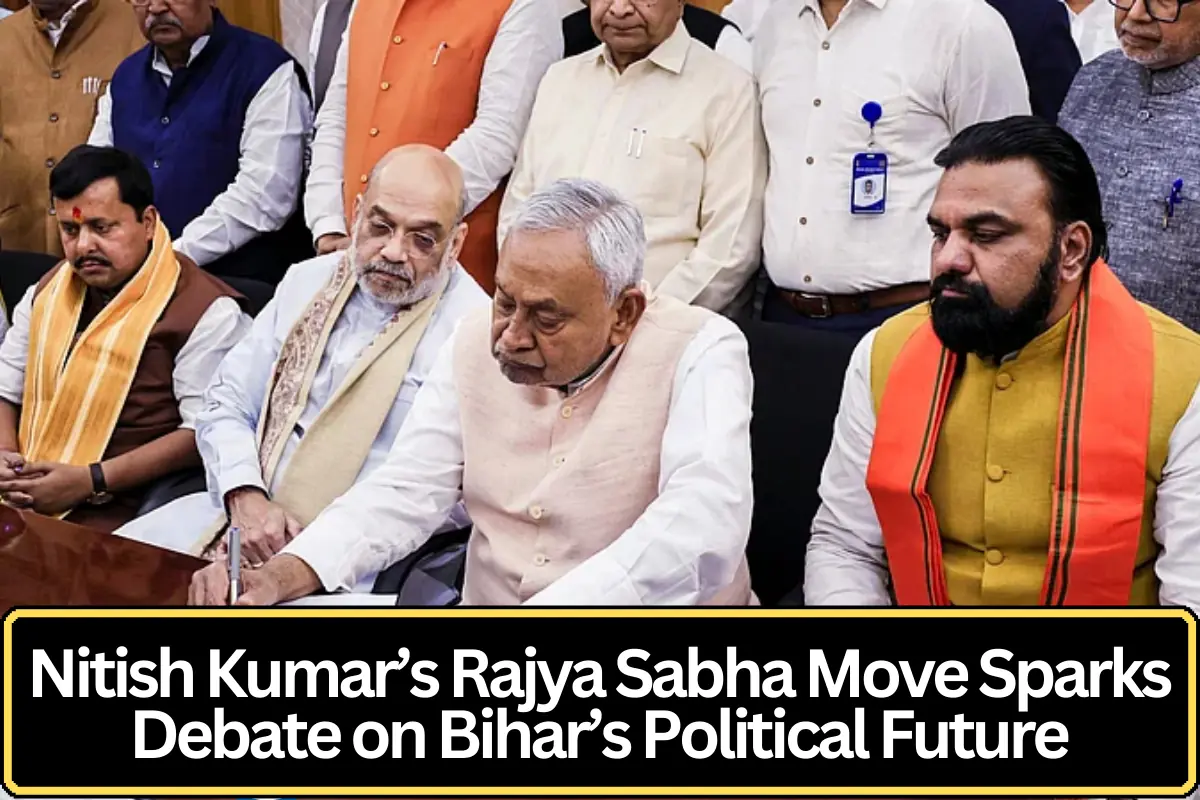
Nitish Kumar’s Rajya Sabha Nomination Sparks Political Debate in Bihar
The political landscape of Bihar has entered a new phase of uncertainty following the decision of senior leader Nitish Kumar to seek a seat in the Rajya Sabha. The move has reignited discussions about the future of Bihar’s political leadership, the internal dynamics of his party, and the broader direction of governance in the state. For nearly two decades, Nitish Kumar has been one of the most influential figures in Bihar politics, serving multiple terms as Chief Minister and shaping many of the policies that have defined the state’s development trajectory.
His decision to transition to the Upper House of Parliament has therefore attracted considerable attention from political observers, party workers, and citizens alike. Many are questioning whether this step represents a strategic shift in his political career or the beginning of a larger transformation within the state’s leadership structure.
While the Rajya Sabha offers an influential national platform, the move raises immediate questions about the leadership vacuum that could emerge in Bihar and how the state’s political alliances may evolve in the coming months.
Nitish Kumar’s Long Political Journey in Bihar
Decades of Influence in State Politics
Nitish Kumar’s political career spans several decades and has been marked by a combination of administrative experience, coalition-building skills, and strategic decision-making. Beginning his political journey during the era of socialist movements in India, he gradually established himself as a prominent leader in Bihar.
Over the years, he served in various roles including Union minister and eventually emerged as the central figure in Bihar’s governance. His tenure as Chief Minister has been characterized by several policy initiatives focused on infrastructure development, social welfare, and administrative reforms.
Under his leadership, Bihar witnessed improvements in road connectivity, educational access, and women’s participation in public life. Programs designed to promote girls’ education and empower rural communities became defining elements of his governance model.
These initiatives helped shape his image as a leader focused on development and social welfare, which contributed significantly to his long-standing electoral success.
Political Adaptability and Alliances
Another defining aspect of Nitish Kumar’s career has been his ability to navigate complex political alliances. Bihar’s political environment has often been characterized by shifting coalitions and intense competition among major parties.
Throughout his career, Nitish Kumar has demonstrated a willingness to adjust alliances when political circumstances demanded it. His party, Janata Dal (United), has at different times collaborated with major national parties in order to maintain political stability and governance continuity.
This flexibility has allowed him to remain a key player in Bihar politics even during periods of intense political change. However, it has also led to criticism from opponents who argue that frequent alliance shifts have created uncertainty among voters.
Despite these debates, his political adaptability has ensured his continued relevance in the state’s power structure.
The Significance of a Rajya Sabha Move
A Strategic National Role
Moving to the Rajya Sabha represents a transition from state-level leadership to a national legislative platform. Members of the Upper House of Parliament play an important role in reviewing legislation, participating in policy debates, and representing regional interests at the national level.
For a senior political leader like Nitish Kumar, this shift may provide an opportunity to contribute to national policymaking while remaining influential within his party. The Rajya Sabha has historically served as a platform for experienced leaders who bring decades of administrative and political expertise to parliamentary discussions.
Such a move could allow Nitish Kumar to focus on broader national issues while maintaining his political influence within Bihar.
Implications for Bihar’s Leadership
The decision has also triggered speculation about the future leadership of Bihar. If Nitish Kumar gradually reduces his role in state governance, the question of succession becomes inevitable.
Political parties and analysts are closely watching how the leadership transition might unfold. Bihar’s political system has long been shaped by strong personalities, and any change at the top could significantly influence the balance of power within the state.
The transition could also open opportunities for new leaders to emerge and shape the next phase of governance in Bihar.
Debate Over the Future of Janata Dal (United)
Internal Party Dynamics
The Rajya Sabha move has also renewed discussions about the future direction of Janata Dal (United). The party has been closely associated with Nitish Kumar’s leadership, and his strategic decisions have often guided its political path.
With the possibility of a shift in his role, party members may face the challenge of redefining their organizational structure and leadership hierarchy. Political observers believe that the coming months could be crucial in determining how the party positions itself in Bihar’s evolving political landscape.
The process of leadership transition within the party will likely involve consultations among senior leaders and discussions about long-term political strategy.
Potential Emergence of New Leaders
Leadership transitions often create opportunities for emerging politicians to take on greater responsibilities. Within Janata Dal (United), several experienced leaders have worked closely with Nitish Kumar over the years and may now be considered potential candidates for larger roles.
The emergence of new leadership could bring fresh perspectives and ideas to the party’s policy agenda. At the same time, maintaining continuity in governance will be essential to ensure stability and public confidence.
The party’s ability to manage this transition effectively may determine its future political strength in Bihar.
Impact on Bihar’s Political Alliances
Coalition Politics in the State
Bihar has historically witnessed coalition politics, where multiple parties collaborate to form governments. Nitish Kumar’s leadership has often played a central role in maintaining these alliances and ensuring coordination among coalition partners.
His potential shift to a national role raises questions about how existing alliances may evolve in the future. Coalition partners may need to reassess their strategies and consider new leadership arrangements to maintain political stability.
Political negotiations and discussions among parties are expected to intensify as they evaluate the implications of the changing leadership landscape.
The Role of National Parties
National political parties have a significant presence in Bihar and often influence the state’s political dynamics. Any leadership transition within the state government could affect how these parties approach future electoral strategies.
Some analysts believe that the evolving situation may encourage national parties to strengthen their organizational presence in Bihar in preparation for upcoming elections.
Such developments could reshape the competitive environment of the state’s politics and influence policy priorities.
Public Reactions and Political Speculation
Mixed Responses from Citizens
The news of Nitish Kumar’s Rajya Sabha move has generated mixed reactions among citizens and political commentators. Supporters view the transition as an opportunity for the experienced leader to contribute to national policymaking and share his governance experience in Parliament.
Others, however, express concern about the possibility of leadership instability in Bihar if the transition leads to internal political disagreements or administrative disruptions.
Public discussions on social media and in political forums reflect a wide range of opinions about what the move might mean for the state’s future.
Media and Expert Analysis
Political analysts and media commentators have also begun examining the broader implications of the development. Some view the move as a strategic step designed to reshape political alliances and strengthen the party’s long-term position.
Others believe it may signal the beginning of a generational shift in Bihar politics, with younger leaders potentially taking on more prominent roles in governance and party organization.
The coming months are expected to provide greater clarity as political events unfold.
The Future of Governance in Bihar
Continuity of Development Programs
One of the key concerns surrounding the leadership debate is whether existing development programs will continue without disruption. Over the years, the Bihar government has implemented several initiatives aimed at improving infrastructure, healthcare, education, and rural development.
Ensuring continuity in these programs will be crucial for maintaining public trust and sustaining economic progress in the state.
Government officials and policymakers may therefore focus on maintaining administrative stability while addressing political changes.
Opportunities for Institutional Strengthening
Leadership transitions also provide an opportunity to strengthen democratic institutions and governance systems. If managed effectively, the process can encourage greater participation from emerging leaders and promote innovation in policymaking.
Bihar’s political institutions may benefit from renewed discussions about transparency, accountability, and long-term development strategies.
Such reforms could help ensure that governance remains responsive to the needs of citizens regardless of changes in political leadership.
Conclusion
Nitish Kumar’s decision to seek a seat in the Rajya Sabha has opened a new chapter in Bihar’s political story. As one of the state’s most influential leaders, his career has shaped governance and political discourse for many years.
The potential transition from state leadership to a national legislative role raises important questions about succession, party dynamics, and the broader direction of Bihar politics. While the immediate impact remains uncertain, the development has already sparked widespread debate about the future of leadership in the state.
As political discussions continue and parties evaluate their strategies, the coming period will be crucial in determining how Bihar navigates this moment of change. Whether the transition leads to continuity or transformation, it is likely to influence the state’s political landscape for years to come.