Nitish Kumar’s Rajya Sabha Shift Triggers Political Turmoil in JD(U) as Party Looks to Son Nishant Kumar for Future Leadership
Nitish Kumar’s move to the Rajya Sabha has sparked political uncertainty within JD(U), with party leaders discussing the possibility of Nishant Kumar stepping into politics and shaping the future leadership of Bihar.
 SANJANA DUTTA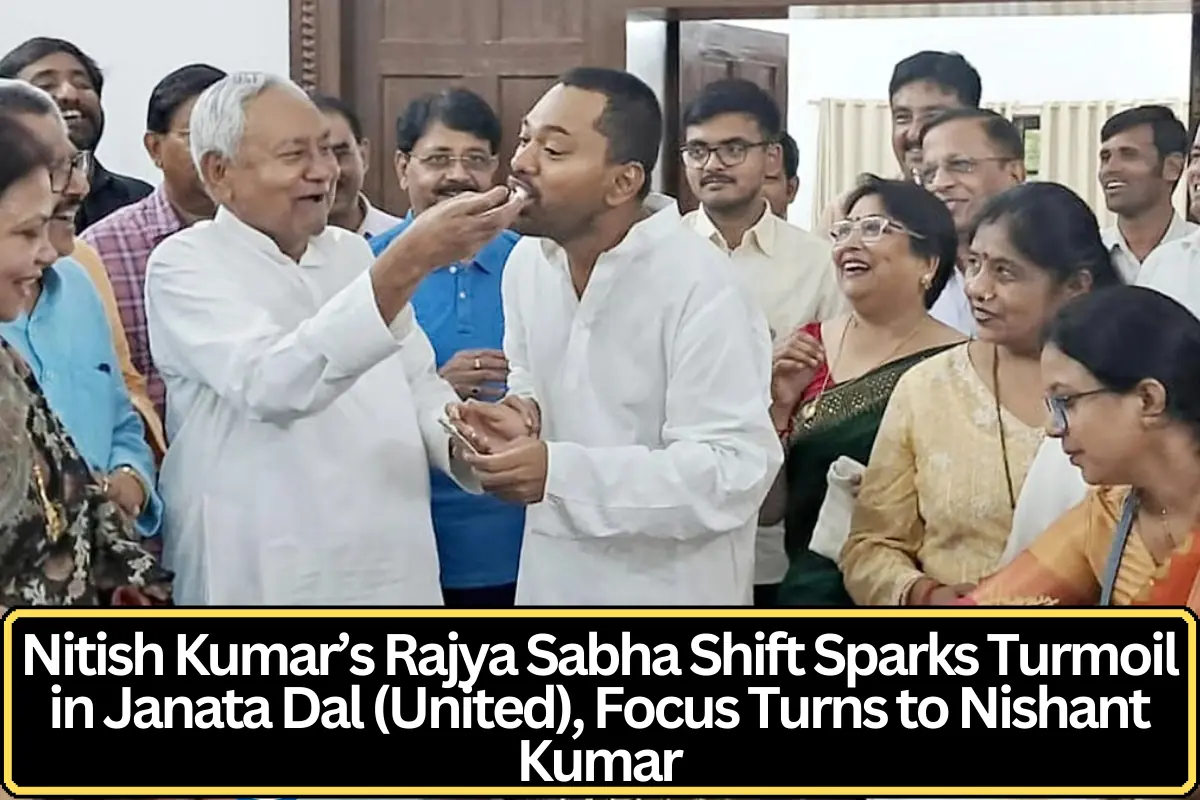
Nitish Kumar’s Rajya Sabha Move Sparks Uncertainty Within JD(U)
The political atmosphere in Bihar has entered a phase of intense speculation following Nitish Kumar’s decision to move to the Rajya Sabha. The development has created significant discussion within the Janata Dal (United) regarding the future leadership of the party and the broader direction of politics in the state. For many years, Nitish Kumar has been the central figure guiding the political strategy and governance framework of the party, and his potential shift away from state-level leadership has raised important questions about succession and continuity.
The move to the Upper House of Parliament is widely viewed as a major transition in his political journey. While the Rajya Sabha offers a national platform for policy engagement, the immediate impact has been felt within the party organization in Bihar, where leaders are debating how the party will maintain stability and political influence in the absence of its long-time leader at the forefront of state governance.
As discussions continue, attention has increasingly turned toward the possibility of a generational transition within the party, with some leaders expressing hope that Nitish Kumar’s son, Nishant Kumar, could eventually take on a political role.
The Long Political Influence of Nitish Kumar in Bihar
A Leader Who Reshaped Bihar’s Governance
Nitish Kumar has played a defining role in shaping modern Bihar politics. Over the past two decades, his leadership has been associated with governance reforms, infrastructure development, and social welfare initiatives. When he first assumed office as Chief Minister, the state was facing major challenges related to infrastructure, law and order, and economic growth.
Under his administration, Bihar witnessed improvements in road networks, rural connectivity, and access to educational opportunities. Several welfare programs aimed at empowering women and supporting disadvantaged communities became key elements of his policy agenda.
Programs encouraging girls’ education and initiatives designed to strengthen rural livelihoods gained national recognition and helped transform the state’s development narrative. These policy efforts also contributed to his image as a leader focused on governance and social progress.
Because of this long period of leadership, the prospect of his transition away from direct state politics has naturally generated widespread debate about the future direction of Bihar’s political and administrative framework.
Alliance Politics and Strategic Flexibility
Another important aspect of Nitish Kumar’s career has been his ability to navigate complex alliance politics. Bihar’s political environment has often been characterized by shifting alliances among regional and national parties. Throughout his political journey, he has demonstrated strategic flexibility in forming coalitions that allowed his party to remain influential in state governance.
This approach has enabled the Janata Dal (United) to maintain a prominent position in Bihar politics even during periods of intense competition. However, such shifts have also sparked debate among political observers about the long-term direction of the party and its ideological positioning.
Despite these debates, Nitish Kumar’s leadership has remained the central unifying force within the party for many years.
Why the Rajya Sabha Move Is Politically Significant
A Transition to National Politics
Moving to the Rajya Sabha represents a shift from state-level executive leadership to a national legislative role. The Upper House of Parliament plays a crucial role in reviewing legislation, debating national policies, and representing the interests of states within the federal system.
For a senior political leader with extensive administrative experience, the Rajya Sabha provides an opportunity to contribute to national policymaking and political discussions. Nitish Kumar’s decades of experience in governance and coalition politics could allow him to participate actively in debates related to development, federalism, and social welfare policies.
However, the decision also creates immediate questions regarding leadership succession in Bihar and the internal future of the Janata Dal (United).
Questions About State Leadership
As speculation about Nitish Kumar’s reduced role in state governance grows, attention has shifted to the possibility of new leadership emerging within the party. Bihar politics has historically been influenced by strong personalities, and any transition in leadership has the potential to reshape political alliances and electoral strategies.
Political analysts believe that the coming months may be crucial for determining how the party organizes itself and who may eventually assume a greater leadership role within the state.
Discussion Around Nishant Kumar’s Possible Entry Into Politics
Growing Speculation Within the Party
One of the most widely discussed aspects of the current political situation is the possibility that Nishant Kumar, the son of Nitish Kumar, could enter active politics in the future. Although he has largely stayed away from public political life, some party leaders have suggested that he may represent a new generation of leadership for the party.
The idea of Nishant Kumar joining politics has gained attention particularly at a time when the party is considering its long-term leadership structure. Supporters believe that his entry could help maintain continuity within the party and preserve the political legacy associated with Nitish Kumar’s leadership.
However, it is important to note that Nishant Kumar has not publicly indicated any clear intention to pursue a political career, and any such development would depend on his personal decisions and the broader political environment.
The Debate Over Political Dynasties
The discussion surrounding Nishant Kumar’s potential political role has also revived debates about dynastic politics in India. Many political parties across the country have seen family members of senior leaders enter public life, often leading to discussions about merit, leadership experience, and democratic representation.
Supporters argue that individuals from political families may possess a deep understanding of governance and public service due to their exposure to political processes from an early age. Critics, however, contend that leadership opportunities should be based primarily on merit and democratic competition.
The debate reflects a broader national conversation about the role of family influence in political leadership.
Internal Challenges for the Janata Dal (United)
Maintaining Party Unity
The current political developments have also raised concerns about maintaining unity within the Janata Dal (United). For many years, the party’s identity has been closely linked to the leadership of Nitish Kumar. His strategic decisions have shaped the party’s alliances, electoral strategies, and policy priorities.
With the possibility of leadership changes, party leaders may need to focus on strengthening organizational structures and ensuring that internal divisions do not weaken the party’s position in the state.
Political parties often face significant challenges during leadership transitions, particularly when a long-serving leader steps back from direct control.
Preparing for Future Elections
Another major challenge for the party will be preparing for upcoming elections. Electoral competition in Bihar remains intense, with several parties seeking to expand their influence across the state.
The Janata Dal (United) will need to develop strategies that address voter expectations, strengthen grassroots connections, and communicate a clear vision for the state’s development.
Effective leadership during this transitional period will therefore be critical for maintaining the party’s political relevance.
The Broader Impact on Bihar Politics
Changing Political Dynamics
The developments surrounding Nitish Kumar’s Rajya Sabha move have the potential to reshape Bihar’s political dynamics. Leadership changes within a major party often influence alliance structures, campaign strategies, and public perceptions.
Political observers are closely watching how other parties respond to the evolving situation. Changes in leadership can create opportunities for rival parties to expand their influence, while also encouraging internal restructuring within established political organizations.
The coming period may therefore witness significant political activity as parties position themselves for future electoral contests.
Public Expectations and Governance
For citizens of Bihar, the primary concern remains governance and development. Over the years, the state has implemented various programs aimed at improving infrastructure, education, healthcare, and economic opportunities.
Ensuring that these initiatives continue without disruption will be an important responsibility for political leaders and government administrators. Public confidence in governance often depends on stability and the consistent implementation of development policies.
As political discussions continue, maintaining focus on development goals will remain a key priority for the state’s leadership.
Looking Ahead
A Moment of Transition
The decision by Nitish Kumar to move to the Rajya Sabha represents a significant moment in the political evolution of Bihar. After years of dominant leadership in state politics, the possibility of a transition has created both uncertainty and opportunity.
Within the Janata Dal (United), discussions about future leadership and party strategy are likely to continue as leaders evaluate the best path forward. Whether the party chooses to promote experienced leaders from within its ranks or eventually encourage new entrants into politics, the decisions made during this period will shape its long-term future.
The situation also reflects a broader pattern in democratic politics, where leadership transitions often open the door to new ideas, generational change, and evolving political strategies.
Conclusion
Nitish Kumar’s move to the Rajya Sabha has sparked one of the most significant political discussions in Bihar in recent years. The development has raised questions about leadership succession, the future direction of the Janata Dal (United), and the possibility of a new generation entering public life.
Speculation surrounding the potential political role of Nishant Kumar has added another dimension to the debate, highlighting the complex intersection of legacy, leadership, and democratic competition in Indian politics.
As events continue to unfold, the political landscape of Bihar may undergo important changes. The coming months will likely determine how the party navigates this period of transition and how the state’s political future evolves in response to these developments.