No Quick End in Sight to US-Israel War on Iran, Analyst Warns
A leading geopolitical analyst warns that the ongoing US-Israel war on Iran shows no signs of ending soon, highlighting rising regional tensions and global implications.
 SANJANA DUTTA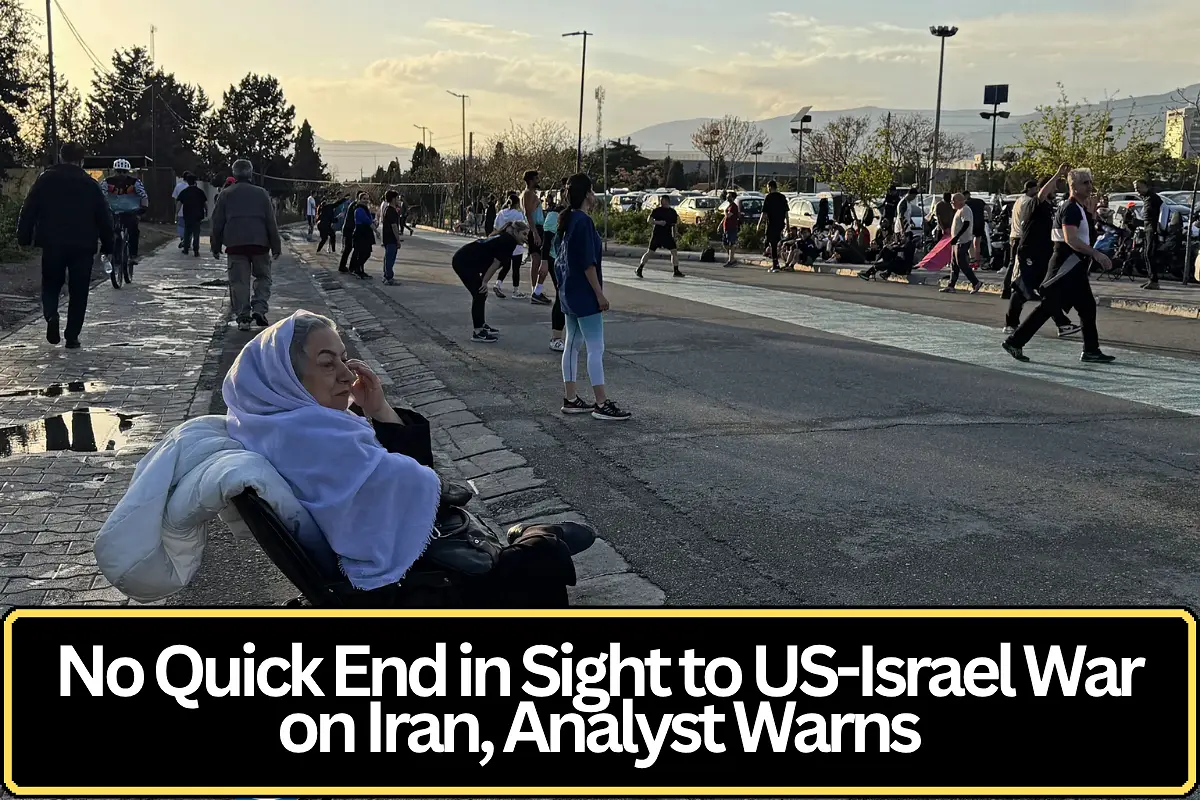
No Quick End in Sight to US-Israel War on Iran, Analyst Warns
The ongoing war involving the United States and Israel against Iran is unlikely to end in the near future, according to a prominent geopolitical analyst, who cited deep-rooted strategic objectives and escalating regional tensions as key reasons prolonging the conflict. The remarks come amid intensifying military engagements and growing concerns about the broader implications for the Middle East and global stability.
Speaking in a recent televised discussion, the analyst emphasized that neither side appears willing to de-escalate, with both maintaining firm positions driven by security concerns, political calculations, and long-standing rivalries. The conflict, which has already seen significant military actions and diplomatic fallout, continues to draw in regional actors and raise fears of a wider war.
Escalating Military and Political Stakes
The war has evolved beyond isolated strikes into a sustained confrontation involving multiple fronts. Military operations have targeted strategic installations, while cyber and intelligence warfare have also intensified. Analysts say the scope and scale of the conflict suggest a long-term engagement rather than a short-term campaign.
Political leadership in the countries involved has shown little indication of compromise. Statements from officials have reinforced hardline positions, with each side framing the conflict as essential to national security and regional influence. This rhetoric has further reduced the likelihood of immediate negotiations or ceasefire agreements.
Regional Impact and Broader Tensions
The conflict has had significant repercussions across the Middle East, with neighboring countries closely monitoring developments and, in some cases, becoming indirectly involved. Proxy groups and allied factions have played roles in expanding the conflict’s reach, complicating efforts to contain it.
Economic disruptions have also been reported, particularly in energy markets. The Middle East’s central role in global oil supply means that prolonged instability could lead to sustained fluctuations in prices, affecting economies worldwide. Shipping routes and trade corridors have also faced increased risks.
Humanitarian concerns are mounting as well, with civilian populations in affected areas facing displacement, infrastructure damage, and limited access to essential services. International organizations have called for restraint and emphasized the need for humanitarian corridors, though progress remains limited.
Global Reactions and Diplomatic Efforts
Global powers have responded with a mix of caution and concern, urging both sides to seek diplomatic solutions while preparing for potential spillover effects. Efforts to mediate the conflict have so far yielded little progress, with negotiations hindered by mutual distrust and conflicting demands.
Some countries have attempted to position themselves as intermediaries, but the complexity of the conflict and the involvement of multiple stakeholders have made consensus difficult. The lack of a unified international approach has further complicated diplomatic initiatives.
Meanwhile, international alliances are being tested, as nations weigh their strategic interests against the risks of deeper involvement. The situation has highlighted shifting geopolitical dynamics and underscored the challenges of maintaining stability in an increasingly multipolar world.
Strategic Calculations and Long-Term Outlook
Experts suggest that the prolonged nature of the conflict is rooted in broader strategic calculations. For the United States and Israel, containing Iran’s regional influence and military capabilities remains a key objective. For Iran, resisting external pressure and maintaining its strategic autonomy are central priorities.
These competing goals have created a stalemate in which neither side is willing to make concessions perceived as weakening their position. The result is a protracted conflict with no clear timeline for resolution.
The analyst noted that historical precedents in the region indicate that such conflicts often persist for extended periods, particularly when they involve ideological, political, and security dimensions. The current situation appears to follow a similar pattern.
Uncertain Path Forward
As the conflict continues, the risk of escalation remains high. Any significant incident could trigger a broader confrontation involving additional countries, further destabilizing the region. Observers warn that without meaningful diplomatic breakthroughs, the war could enter an even more volatile phase.
Despite the challenges, some experts remain cautiously optimistic that sustained international pressure and evolving circumstances could eventually create opportunities for dialogue. However, such developments are likely to take time and require substantial shifts in the positions of the parties involved.
For now, the conflict shows no signs of abating, with ongoing military actions and entrenched political stances suggesting that a resolution remains distant.