Non-Vegetarian Food Debate Heats Up Political Discourse in West Bengal
A growing political debate over non-vegetarian food consumption has intensified in West Bengal, reflecting deeper cultural, religious, and electoral dynamics ahead of key polls.
 SANJANA DUTTA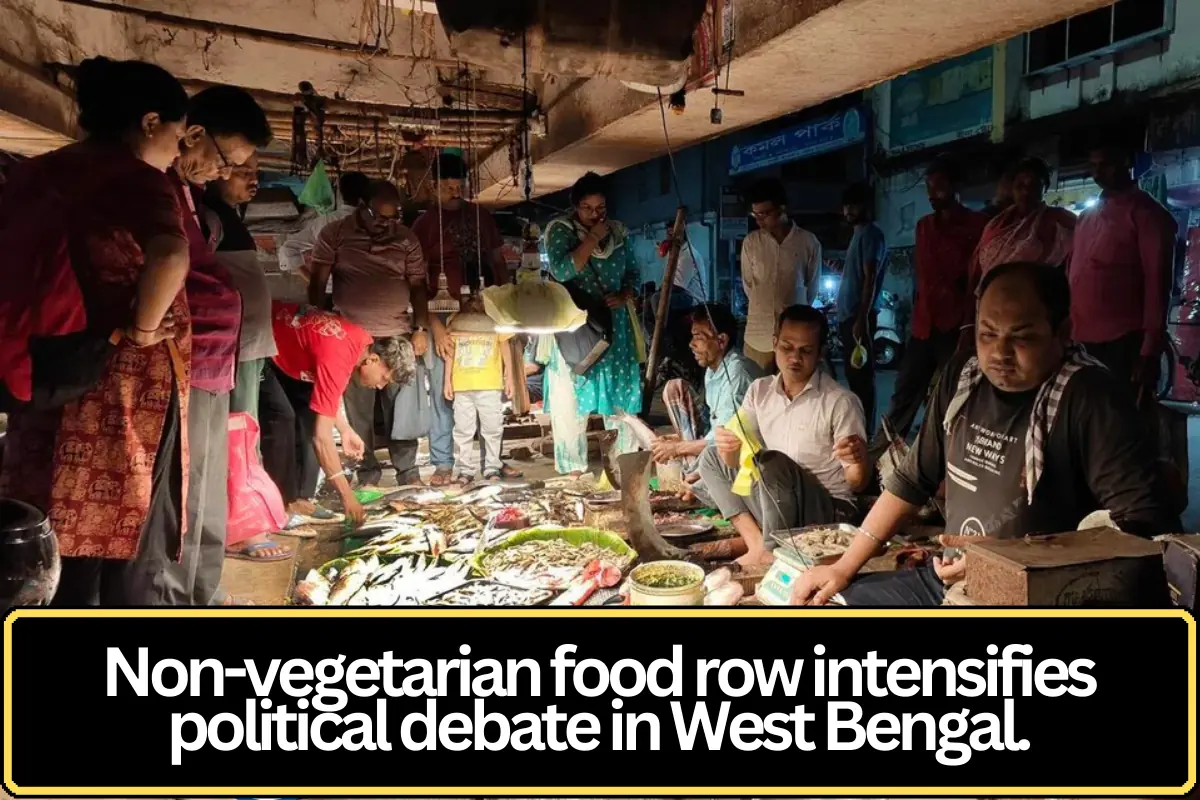
Food Habits Become Political Flashpoint in West Bengal
A political debate over non-vegetarian food has intensified in India’s eastern state of West Bengal, with leaders across party lines weighing in on the issue as the region moves closer to crucial elections. The controversy, which centers on dietary choices and cultural identity, has quickly evolved into a broader political flashpoint, reflecting deeper tensions around religion, tradition, and personal freedoms.
The issue gained traction in recent days after remarks by political figures triggered discussions on whether food habits should be linked to governance, identity, or public policy. The debate has since spread across political rallies, media discussions, and social platforms, drawing strong reactions from both supporters and critics.
Political Leaders Take Divergent Positions
Leaders from different political parties have taken sharply contrasting positions on the matter. Some have framed the promotion of vegetarianism as aligned with cultural or religious values, while others have defended the right to consume non-vegetarian food as a matter of personal choice and regional identity.
In West Bengal, where fish and meat are staple components of the local diet, many political figures have emphasized that dietary practices are deeply rooted in the state’s history and culture. They argue that attempts to politicize food habits risk alienating large sections of the population.
Opposition leaders have accused their rivals of using the issue to polarize voters along cultural and religious lines, while ruling party representatives have countered that they are merely reflecting broader societal values.
Cultural Identity at the Center of Debate
The controversy has brought cultural identity to the forefront of political discourse. West Bengal has long been known for its diverse culinary traditions, with fish playing a particularly significant role in daily life and social customs.
For many residents, food is not just a matter of consumption but a key aspect of cultural expression. The debate has therefore resonated strongly with voters, who see it as an attempt to influence or redefine longstanding traditions.
Scholars and cultural commentators note that food-related controversies often serve as proxies for larger discussions about identity, belonging, and societal norms. In this case, the issue reflects broader questions about how cultural practices are negotiated in a politically charged environment.
Electoral Implications
The timing of the debate has added to its political significance, as West Bengal prepares for upcoming elections. Political parties are increasingly focusing on issues that can mobilize voter sentiment and shape electoral narratives.
Analysts suggest that the food debate may influence voter perceptions, particularly among communities that view dietary choices as integral to their identity. By taking positions on the issue, parties may seek to consolidate support within specific voter groups.
At the same time, there is a risk that the controversy could deepen divisions, making it more difficult to build consensus on broader policy issues.
Public Reaction and Social Media Debate
The debate has sparked widespread public reaction, with citizens expressing their views through social media, public forums, and community discussions. Many have criticized the politicization of food, arguing that personal dietary choices should remain outside the realm of political contestation.
Others have supported the discussion, viewing it as an opportunity to address cultural values and societal norms. The diversity of opinions reflects the complexity of the issue and its significance in everyday life.
Social media platforms have played a key role in amplifying the debate, with hashtags and online campaigns drawing attention to the controversy. The digital discourse has further highlighted the polarization surrounding the topic.
Historical Context of Food Politics in India
Food has long been a sensitive and politically charged issue in India, where dietary practices are often linked to religion, caste, and regional identity. Debates over meat consumption, food bans, and cultural practices have periodically surfaced in different parts of the country.
In several instances, such controversies have influenced political narratives and electoral strategies. The current debate in West Bengal fits into this broader pattern, where food becomes a symbol of larger societal and political dynamics.
Experts note that such issues can have lasting impacts on public discourse, shaping how communities perceive themselves and others.
Economic and Social Dimensions
Beyond cultural and political considerations, the debate also has economic implications. The fishing and meat industries are significant contributors to West Bengal’s economy, providing livelihoods to millions of people.
Any attempt to influence dietary practices could therefore have ripple effects on these sectors, affecting employment and economic stability. Industry stakeholders have expressed concern about the potential impact of politicized narratives on consumer behavior.
At the same time, the discussion has highlighted the interconnected nature of culture, economy, and politics, underscoring the complexity of policymaking in a diverse society.
Calls for De-escalation
Amid the growing controversy, some leaders and commentators have called for restraint, urging political parties to focus on governance and development rather than divisive issues. They argue that debates over food habits risk distracting from pressing concerns such as economic growth, employment, and public welfare.
These voices emphasize the importance of maintaining social harmony and respecting individual choices in a pluralistic society. They also stress that political discourse should prioritize issues that directly impact citizens’ livelihoods and well-being.
However, with elections approaching, it remains uncertain whether the debate will subside or continue to shape political narratives.
Outlook Ahead of Elections
As West Bengal moves closer to the चुनाव period, the non-vegetarian food debate is likely to remain a prominent topic in political discussions. Parties may continue to use the issue to engage with voters and reinforce their respective positions.
The extent to which the controversy influences electoral outcomes will depend on how voters interpret the debate and whether it resonates with their priorities. While some may view it as a significant cultural issue, others may see it as a distraction from more substantive concerns.
Ultimately, the debate underscores the role of cultural identity in shaping political discourse and highlights the challenges of navigating diversity in a democratic society.
Current Status
The non-vegetarian food debate continues to intensify in West Bengal, with political leaders and the public deeply engaged as the state heads toward key elections.