Noninvasive Urine Test Shows Promise in Predicting Bladder Cancer Treatment Outcomes
A new noninvasive urine test may improve prediction of bladder cancer treatment outcomes, offering a simpler and more accurate approach to patient monitoring.
 Akanksha jain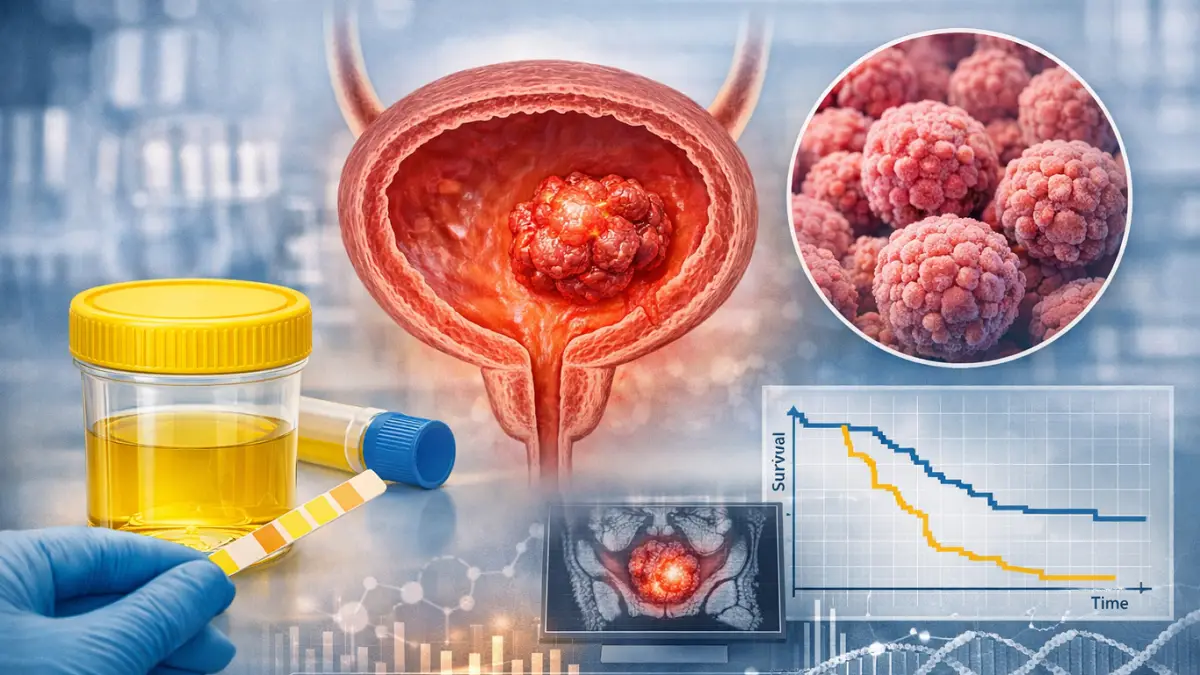
Researchers have developed a noninvasive urine-based test that can help predict treatment outcomes in bladder cancer patients, according to a study released in April 2026, offering a potential breakthrough in cancer diagnostics and patient management.
The study focuses on improving how clinicians assess patient responses to treatment without relying on invasive procedures. Bladder cancer, one of the most common cancers affecting the urinary system, often requires frequent monitoring to evaluate treatment effectiveness and detect recurrence.
Addressing Challenges in Bladder Cancer Monitoring
Current methods for monitoring bladder cancer typically involve cystoscopy, an invasive procedure that allows doctors to examine the inside of the bladder using a camera. While effective, cystoscopy can be uncomfortable, costly, and requires repeated hospital visits.
The newly developed urine test aims to provide a less invasive alternative by analyzing biological markers present in urine. Researchers believe that this approach could reduce the need for frequent invasive procedures while still delivering accurate and reliable information.
By offering a simpler testing method, the innovation could improve patient compliance and overall quality of care.
How the Urine Test Works
The test works by detecting specific biomarkers in urine that are associated with tumor activity and response to treatment. These biomarkers include molecular signals released by cancer cells, which can provide insights into how the disease is progressing.
Using advanced analytical techniques, the test evaluates patterns in these biomarkers to predict whether a patient is likely to respond positively to treatment or face potential complications. This allows clinicians to make more informed decisions about treatment strategies.
The noninvasive nature of the test makes it particularly suitable for routine monitoring and long-term follow-up of bladder cancer patients.
Key Findings of the Study
The research demonstrated that the urine test could accurately predict treatment outcomes in a significant number of cases. Patients whose test results indicated favorable biomarker patterns were more likely to respond well to therapy, while those with less favorable profiles showed higher risks of disease progression or recurrence.
The study also found that the test could detect changes in tumor activity earlier than some conventional methods, providing an opportunity for timely intervention. Early detection of treatment response is critical in improving patient outcomes and preventing complications.
Researchers emphasized that the test’s predictive capability could help tailor treatments to individual patients, enhancing the effectiveness of care.
Implications for Personalized Medicine
The development of this urine test aligns with the broader trend toward personalized medicine, where treatments are tailored based on individual patient characteristics. By providing detailed insights into how a patient’s cancer is responding to therapy, the test enables more targeted and effective treatment plans.
Clinicians may use the test results to adjust treatment regimens, switch therapies, or intensify monitoring for patients at higher risk. This personalized approach can improve outcomes while minimizing unnecessary treatments and side effects.
The study highlights the growing role of biomarkers in guiding clinical decisions and advancing precision oncology.
Benefits for Patients and Healthcare Systems
For patients, the noninvasive urine test offers a more comfortable and convenient alternative to traditional monitoring methods. Reducing the need for repeated cystoscopies can lower physical discomfort and psychological stress associated with cancer care.
From a healthcare system perspective, the test could lead to cost savings by reducing the number of invasive procedures and hospital visits. It may also improve efficiency by enabling faster and more frequent assessments of patient status.
These benefits could make the test an attractive option for widespread adoption in clinical practice.
Potential Role in Early Detection of Recurrence
Bladder cancer is known for its high recurrence rate, making regular monitoring essential even after successful treatment. The urine test’s ability to detect early signs of tumor activity could play a crucial role in identifying recurrence at an earlier stage.
Early detection allows for prompt intervention, which can significantly improve patient outcomes and reduce the risk of advanced disease. The test may therefore serve as a valuable tool in long-term cancer surveillance.
Researchers are continuing to explore how the test can be integrated into existing monitoring protocols.
Challenges and Future Research
While the findings are promising, researchers caution that further validation is needed before the test can be widely implemented. Larger clinical trials involving diverse patient populations will be necessary to confirm its accuracy and reliability.
There are also challenges related to standardizing the test and ensuring consistent results across different healthcare settings. Regulatory approvals and cost considerations will play a role in determining how quickly the test becomes available to patients.
Ongoing research aims to refine the technology and explore additional applications in cancer diagnostics.
Advancing Noninvasive Cancer Diagnostics
The development of urine-based diagnostic tools represents a broader shift toward noninvasive methods in oncology. Advances in technology are enabling the detection of cancer-related biomarkers in bodily fluids, offering new possibilities for early diagnosis and monitoring.
Such innovations have the potential to transform cancer care by making diagnostics more accessible and less burdensome for patients. They also support the move toward more proactive and preventive healthcare approaches.
Experts believe that noninvasive tests will play an increasingly important role in the future of cancer management.
Future Outlook
Looking ahead, researchers are optimistic about the potential of the urine test to improve bladder cancer care. Further studies will focus on integrating the test into clinical workflows and evaluating its impact on patient outcomes.
The technology may also be adapted for use in other types of cancer, expanding its applicability across oncology. Collaboration between researchers, clinicians, and industry partners will be essential to bring the test to market.
As innovation continues, noninvasive diagnostics are expected to become a cornerstone of modern healthcare.
Conclusion
The development of a noninvasive urine test for predicting bladder cancer treatment outcomes marks a significant step forward in oncology diagnostics, with further research underway to validate its effectiveness and support its adoption in clinical practice.