Oil Price Surge Amid Iran Conflict Raises Fears of Wider Economic and Healthcare Disruptions
Rising oil prices linked to the Iran conflict are triggering concerns over global economic stability and potential disruptions to healthcare and pharmaceutical supply chains.
 Akanksha jain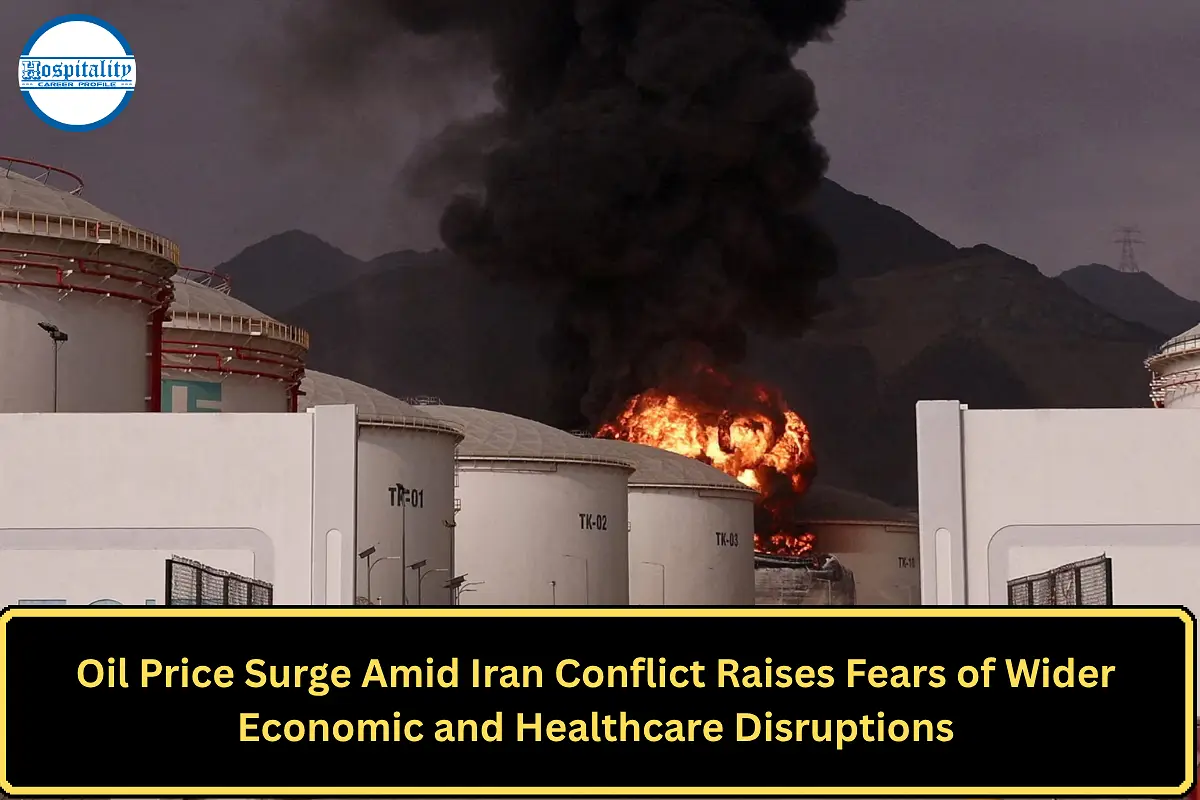
Oil Price Surge Amid Iran Conflict Raises Fears of Wider Economic and Healthcare Disruptions
Global oil prices have surged sharply in late March 2026 as escalating tensions linked to the Iran conflict disrupt energy markets, raising concerns about broader economic instability and potential knock-on effects on healthcare and pharmaceutical supply chains worldwide. The spike in crude prices, driven by fears of supply constraints and geopolitical uncertainty, is prompting governments and industries to prepare for possible disruptions across multiple sectors.
Brent crude prices have climbed significantly amid worries over the security of key shipping routes and energy supplies in the Middle East, a critical hub for global oil production and transportation. The surge comes as policymakers and business leaders assess emergency measures to mitigate the impact of rising energy costs on economies already facing inflationary pressures.
Energy Market Volatility Intensifies
The latest increase in oil prices reflects heightened concerns over supply disruptions as the Iran-related conflict threatens major transit routes, including vital maritime corridors used for transporting crude oil. Any interruption in these routes can significantly reduce global supply, pushing prices higher and increasing market volatility.
Energy analysts note that geopolitical tensions in the region have historically triggered sharp price movements, but the current situation is particularly sensitive due to tight global supply conditions and strong demand recovery. The uncertainty surrounding the duration and scale of the conflict has further amplified market reactions.
Traders and investors are closely monitoring developments, with price fluctuations expected to continue as new information emerges about the stability of supply chains.
Ripple Effects on Global Economy
Rising oil prices are likely to have widespread economic implications, affecting transportation costs, manufacturing expenses, and overall inflation levels. Higher energy costs can increase the price of goods and services, placing additional pressure on businesses and consumers.
Economists warn that sustained increases in oil prices could slow economic growth, particularly in energy-importing countries that rely heavily on external supplies. Governments may be forced to implement policy measures to cushion the impact, including subsidies, tax adjustments, or strategic reserve releases.
Financial markets have reacted cautiously, with investors factoring in the potential for prolonged instability and its impact on global growth prospects.
Impact on Healthcare and Pharmaceutical Supply Chains
The healthcare and pharmaceutical sectors are particularly vulnerable to rising energy costs and supply chain disruptions. The production and distribution of medicines depend heavily on stable logistics networks, including transportation, refrigeration, and timely delivery of raw materials.
Increased fuel costs can raise the expense of shipping active pharmaceutical ingredients (APIs) and finished drugs, potentially leading to higher prices and supply constraints. Delays in transportation may also affect the availability of critical medicines, especially in regions dependent on imports.
Healthcare providers and pharmaceutical companies are monitoring the situation closely, with some already exploring contingency plans to maintain supply continuity.
Government and Industry Response
Governments and industry leaders are considering emergency measures to address the impact of rising oil prices. Discussions are underway in several countries regarding strategic stockpiles, alternative supply routes, and policies to stabilize markets.
In the United Kingdom and other affected regions, authorities are engaging with business leaders to assess risks and develop coordinated responses. Ensuring the continued flow of essential goods, including medicines, remains a top priority.
Industry groups have called for international cooperation to maintain stability in energy and supply chains, emphasizing the interconnected nature of global markets.
Geopolitical Uncertainty and Market Outlook
The trajectory of oil prices will largely depend on how the geopolitical situation evolves. A prolonged conflict could sustain high prices, while any de-escalation may help stabilize markets. However, the current uncertainty makes it difficult to predict near-term outcomes.
Energy companies are adjusting their strategies to navigate the volatile environment, including reviewing production plans and investment decisions. At the same time, governments are under pressure to balance energy security with economic stability.
Analysts suggest that continued volatility is likely, with markets remaining sensitive to geopolitical developments and policy responses.
Long-Term Implications for Global Systems
The situation highlights the vulnerability of global systems to geopolitical shocks, particularly in sectors reliant on complex supply chains. The healthcare industry, already strained by previous disruptions, faces renewed challenges in maintaining resilience.
Experts are calling for long-term strategies to reduce dependence on single regions for critical resources, including investments in alternative energy sources and localized manufacturing capabilities. Strengthening supply chain resilience is seen as essential for mitigating future risks.
The crisis may accelerate efforts to diversify supply chains and adopt more sustainable practices across industries.
Conclusion
The surge in oil prices driven by the Iran conflict underscores the far-reaching impact of geopolitical tensions on global economies and healthcare systems, with governments and industries now working to manage immediate risks while preparing for potential long-term disruptions.