Peripheral Retina May Reveal Early Signs of Alzheimer’s Before Brain Damage, Study Finds
A new study suggests changes in the peripheral retina could help detect early signs of Alzheimer’s disease before significant brain damage occurs, opening doors for earlier diagnosis and intervention.
 Akanksha jain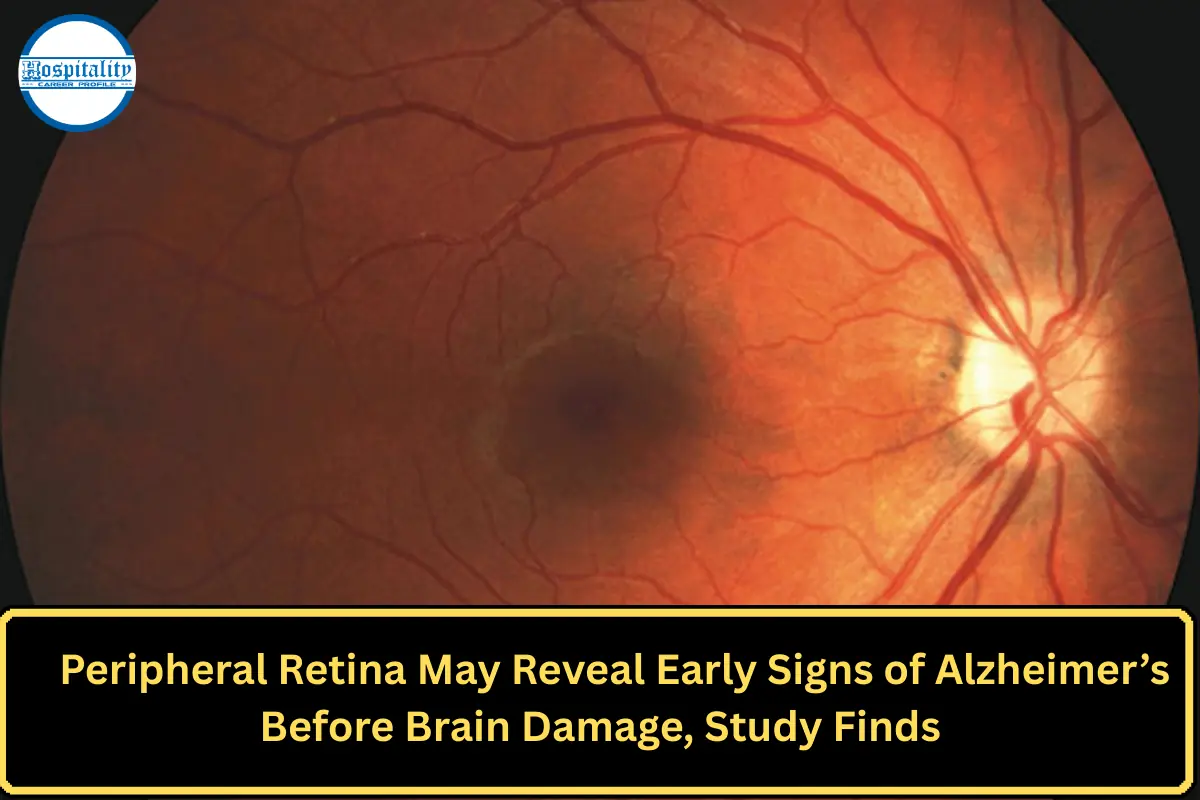
Researchers have identified the peripheral retina as a potential early indicator of Alzheimer’s disease, suggesting that subtle changes in the eye may appear before significant brain damage develops. The findings offer hope for earlier detection and improved management of the neurodegenerative condition.
Alzheimer’s disease, the most common cause of dementia worldwide, is typically diagnosed after cognitive symptoms become noticeable. By that stage, substantial changes have often already occurred in the brain. Detecting the disease earlier could allow for timely interventions, better monitoring, and improved patient outcomes.
The Eye as a Window to the Brain
The retina is considered an extension of the central nervous system, sharing structural and biological characteristics with brain tissue. Scientists have long explored whether retinal imaging could serve as a non-invasive method to identify neurological disorders.
The new study focuses specifically on the peripheral retina — the outer regions of the light-sensitive tissue at the back of the eye. Researchers observed measurable differences in retinal markers that may correlate with early Alzheimer’s-related changes.
Why Peripheral Retina Matters
Most routine eye examinations focus on central vision. However, the peripheral retina may reveal subtle alterations linked to inflammation, blood vessel changes, or protein accumulation associated with Alzheimer’s disease.
Advanced imaging technologies now allow clinicians to capture high-resolution images of these outer retinal regions, potentially enabling earlier screening.
Implications for Early Diagnosis
Non-Invasive Screening Tool
If validated through larger clinical trials, retinal imaging could become a cost-effective and accessible screening tool. Unlike brain scans or invasive diagnostic procedures, eye imaging is relatively quick and widely available.
This approach could help identify individuals at higher risk before cognitive symptoms emerge.
Opportunities for Early Intervention
Early detection is critical as emerging therapies for Alzheimer’s are believed to be most effective in the earliest stages of the disease. Identifying biological changes before extensive neuronal damage occurs could allow patients to begin treatment sooner.
Future Research Directions
While the findings are promising, experts caution that further studies are needed to confirm the reliability and accuracy of peripheral retinal markers. Large-scale research involving diverse populations will be essential to determine how retinal imaging could be integrated into routine screening practices.
Scientists are also investigating whether similar retinal changes could help detect other neurodegenerative diseases.
A Step Toward Earlier Detection
The study reinforces growing evidence that the eyes may provide valuable insights into brain health. As imaging technology continues to advance, the peripheral retina could become an important tool in the fight against Alzheimer’s disease.
Early diagnosis remains one of the most significant challenges in managing dementia. Discoveries like this may help shift detection from late-stage symptom recognition to proactive screening and prevention strategies.