Peru Election Sees Record 35 Candidates Amid Crisis
peru-election-2026-35-candidates-political-crisis-voter-discontent
 SANJANA DUTTA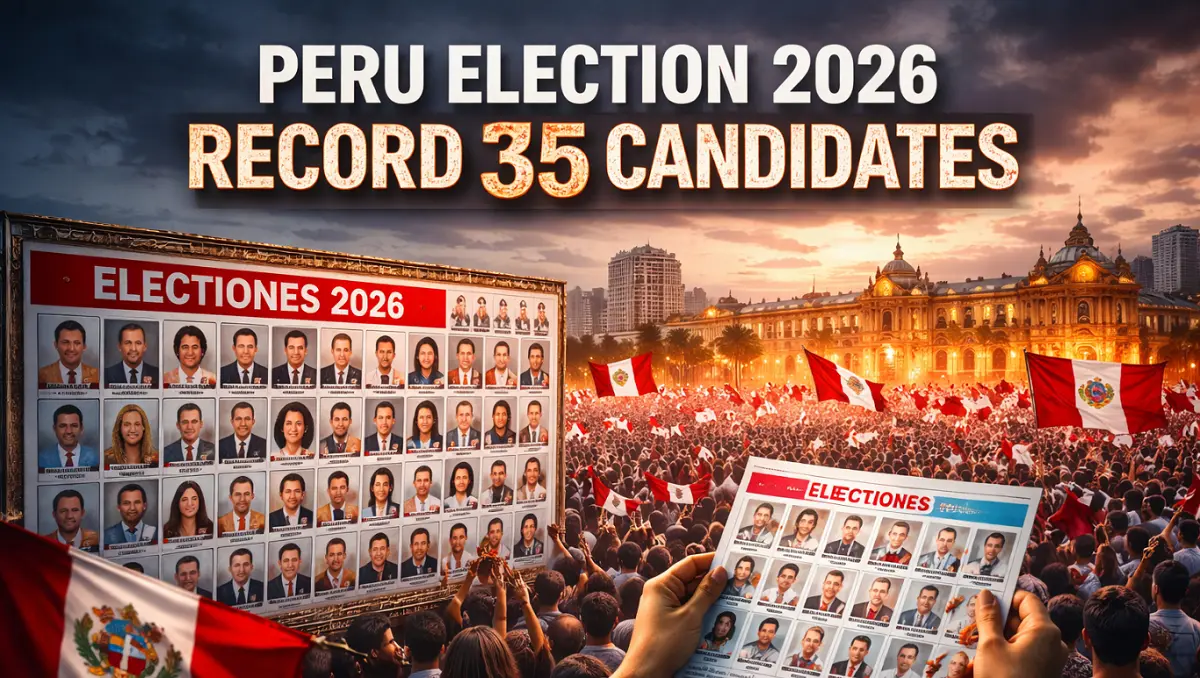
LIMA, April 2026 — Peru heads into a highly fragmented presidential election on Sunday with a record 35 candidates contesting the top office, reflecting prolonged political instability, widespread public dissatisfaction, and deep divisions across the Andean nation of 27 million people.
Record Candidate Field Reflects Political Fragmentation
The 2026 presidential race marks one of the most crowded ballots in Peru’s history, with voters choosing from 35 contenders. The election comes as the country prepares to elect its ninth president in nearly as many years, underscoring a sustained period of political turbulence marked by repeated leadership changes and institutional conflict.
The unusually large candidate pool includes several lesser-known figures, many polling at around or below one percent support. The ballot will feature candidate photographs and party symbols, a longstanding electoral practice designed to aid voter recognition in a country with historically low literacy levels.
With support spread thinly across dozens of candidates, no contender is expected to secure an outright majority. As a result, a second-round run-off between the top two candidates in June is considered almost certain.
Keiko Fujimori Leads Fragmented Field Despite Low Support
Keiko Fujimori, a prominent political figure and daughter of former president Alberto Fujimori, currently leads the field, though with only around 10% support in most polls. Her candidacy reflects both name recognition and enduring controversy tied to her father’s legacy.
Fujimori has attempted to balance references to her father’s economic and security record—including the defeat of the Shining Path insurgency and the control of hyperinflation—while distancing herself from allegations of human rights violations and corruption linked to his administration.
Despite her position at the top of the polls, her support base appears limited. Surveys indicate that approximately 54% of voters say they would not support her under any circumstances. Even so, she is widely expected to advance to a run-off for a fourth consecutive time, having previously done so in 2011, 2016, and 2021.
Multiple Candidates Compete for Run-Off Spot
Behind Fujimori, a group of candidates is clustered in the mid-to-high single digits, making the race for the second run-off position highly competitive. A marginal shift in voter preference could significantly alter the final standings.
Among the leading contenders is Rafael López Aliaga, a conservative politician and former mayor of Lima, who has drawn attention for his rhetoric and allegations of electoral fraud. His campaign has included controversial statements directed at electoral authorities.
Other candidates include Carlos Álvarez, known for his background in political satire, and Ricardo Belmont, a veteran left-wing populist figure. Both have faced scrutiny over their campaign performances and public statements.
The diverse field reflects a broader lack of consensus among voters and the absence of a dominant political force capable of consolidating widespread support.
Public Anger Over Corruption and Governance
Voter sentiment remains shaped by deep frustration with the political establishment, particularly the national congress, which has a disapproval rating nearing 90%. The legislature has faced criticism for passing laws perceived to benefit organized crime and protect political interests.
Public dissatisfaction is rooted in a decade marked by corruption scandals, impeachments, and frequent changes in leadership. Analysts point to a perceived alliance among political actors seeking to avoid accountability as a key driver of instability.
According to Samuel Rotta, head of anti-corruption group Acción Cívica, public anger stems from a widespread belief that corruption at the highest levels has contributed to both political dysfunction and the growth of criminal activity.
This discontent is further intensified by rising insecurity, including an ongoing extortion crisis and record homicide rates across the country.
Economic and Social Pressures Influence Voter Mood
Economic hardship is another major factor shaping the election. Data from the World Food Programme shows that the proportion of Peruvians facing food insecurity has more than doubled, rising from 25% before the COVID-19 pandemic to 51% in recent years.
These challenges have reinforced calls for political renewal, with many voters expressing a preference for candidates unconnected to the current political system. However, the fragmented nature of the race has made it difficult for any single candidate to emerge as a clear alternative.
Sunday’s vote offers an opportunity for Peruvians to reset their political direction. However, with no clear frontrunner and support divided among a large number of candidates, the election is expected to extend into a decisive run-off in June.
The outcome of the first round will determine which two candidates proceed to the next stage, setting the course for Peru’s leadership amid ongoing political and economic challenges.