Political Activity Intensifies in Haryana Ahead of Rajya Sabha Elections
Political activity has intensified in Haryana as parties prepare for the upcoming Rajya Sabha elections, with meetings, negotiations, and candidate strategies shaping the political landscape.
 SANJANA DUTTA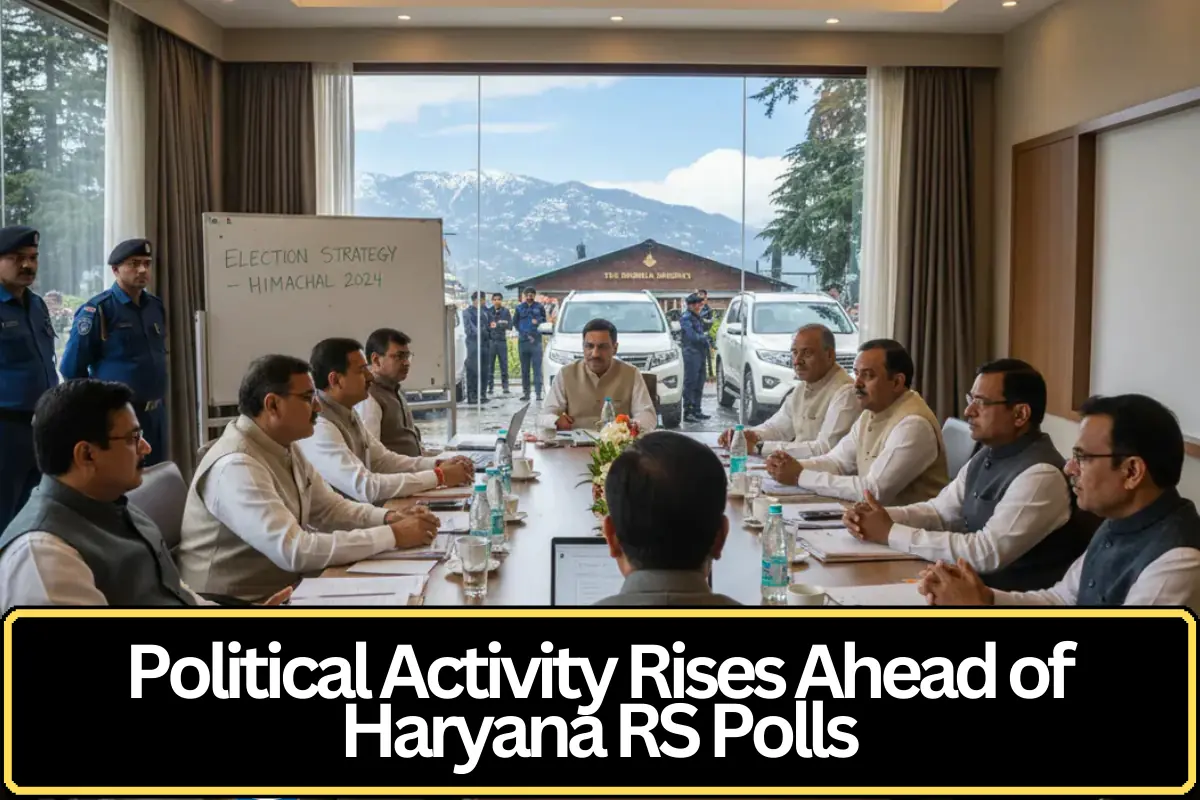
Political Mobilisation Grows as Parties Prepare for Upper House Poll
Political activity in Haryana has intensified ahead of the upcoming Rajya Sabha elections, with major parties holding meetings, strategizing candidate selections, and strengthening support among legislators. The developments come as political leaders across the state prepare for the parliamentary upper house vote, which will determine representation from Haryana in the Rajya Sabha. The election is expected to draw attention due to the complex arithmetic in the state assembly and the potential for strategic alliances.
Party leaders have begun internal consultations to finalize candidates and ensure the required legislative backing for victory. The Rajya Sabha elections are conducted through an indirect voting system where elected members of the state legislative assembly vote to choose representatives for the upper house of Parliament. As a result, the outcome often depends heavily on the strength and cohesion of political parties within the assembly.
In Haryana, where political alignments and cross-party negotiations frequently play a decisive role, the upcoming vote has prompted heightened activity among legislators and party leadership.
Focus on Legislative Numbers and Party Strategy
The Rajya Sabha election process requires parties to carefully calculate their numerical strength in the state assembly to determine whether they can secure a seat independently or require support from other legislators. In states with closely contested political environments, even a small shift in support can influence the outcome.
Political observers say parties in Haryana are closely examining their legislative strength while also reaching out to allies and independent members. Ensuring that party legislators remain united during the voting process is a key priority, as cross-voting or abstentions can affect the final result.
Party meetings have been held to discuss election strategy, candidate profiles, and potential alliances. These meetings also aim to reinforce party discipline among lawmakers who will participate in the voting process.
Candidate Selection Becomes Key Factor
One of the most significant elements shaping the upcoming Rajya Sabha election is the selection of candidates. Political parties often nominate experienced leaders, former ministers, or individuals with strong organizational roles to represent them in the upper house.
Candidate selection also carries political symbolism, as parties sometimes use the opportunity to reward loyal members or bring in figures who can strengthen the party’s national presence. In some cases, nominees may include individuals with expertise in policy, law, or public administration.
As discussions continue within party leadership circles, announcements regarding official candidates are expected to follow after internal consultations and approval from senior leadership.
Role of Rajya Sabha in India’s Parliamentary System
The Rajya Sabha, or Council of States, is the upper house of India’s Parliament and plays a significant role in the legislative process. Members of the Rajya Sabha review, debate, and vote on laws proposed in Parliament, offering a platform for representation of states in national policymaking.
Unlike the Lok Sabha, whose members are directly elected by citizens, Rajya Sabha members are elected indirectly by state legislators. Each state is allocated a specific number of seats based on population, and elections are held periodically as members complete their terms.
For political parties, securing seats in the Rajya Sabha is important because it influences their strength in the national legislative process. A strong presence in the upper house can help parties advance or challenge legislation proposed in Parliament.
Political Environment in Haryana
Haryana has long been considered a politically dynamic state where alliances and party loyalties often shift over time. The state assembly includes representatives from multiple political parties as well as independent legislators, creating a complex political environment.
This diversity often means that parties must work carefully to maintain legislative support during key votes. Rajya Sabha elections, which rely on the votes of MLAs, frequently highlight the importance of party unity and coalition management.
Political leaders in Haryana have therefore intensified their outreach to legislators in recent days, emphasizing the importance of coordinated strategy ahead of the election.
Importance of Party Discipline
Maintaining party discipline is a critical factor in Rajya Sabha elections. Legislators are typically expected to vote according to the party line, and political organizations often issue directions to ensure unified voting behavior.
However, past elections in several states have demonstrated that cross-voting can occasionally occur, particularly in closely contested contests. To prevent such outcomes, parties usually hold meetings with their legislators to reinforce commitments and address concerns.
Leaders may also review voting procedures and provide guidance to lawmakers to ensure that ballots are cast correctly under the election rules governing Rajya Sabha polls.
National Implications of State-Level Elections
Although Rajya Sabha elections are conducted at the state level, they can carry national political significance. The composition of the upper house directly affects the legislative balance of power in Parliament.
When parties gain or lose Rajya Sabha seats, it can alter the ease with which legislation is passed or challenged in Parliament. As a result, national party leadership often closely monitors state-level Rajya Sabha contests.
In Haryana’s case, the election is being watched not only for its immediate outcome but also for what it might indicate about the political strength of different parties in the state.
Preparations Continue Ahead of Voting
As the election approaches, political leaders are expected to continue consultations with legislators, finalize candidate nominations, and strengthen organizational coordination. Campaign-style outreach within the legislative assembly often becomes more visible during this period as parties seek to secure every possible vote.
Analysts note that Rajya Sabha elections, though less visible to the general public than direct elections, remain an important part of India’s democratic system. They reflect the political dynamics within state assemblies while shaping representation in the national Parliament.
In Haryana, the coming days are likely to see continued political engagement, strategic discussions, and negotiations among parties as they prepare for the vote.
Current Status
Political activity in Haryana remains heightened as parties finalize strategies and candidates ahead of the upcoming Rajya Sabha elections, with legislators expected to play a decisive role in determining the state’s representation in the upper house of Parliament.