Politics Faced Trust Crisis in the Past, Says Rajnath Singh
Defence Minister Rajnath Singh said Indian politics had faced a trust crisis in the past, emphasizing the need to restore public confidence through transparency and accountability.
 SANJANA DUTTA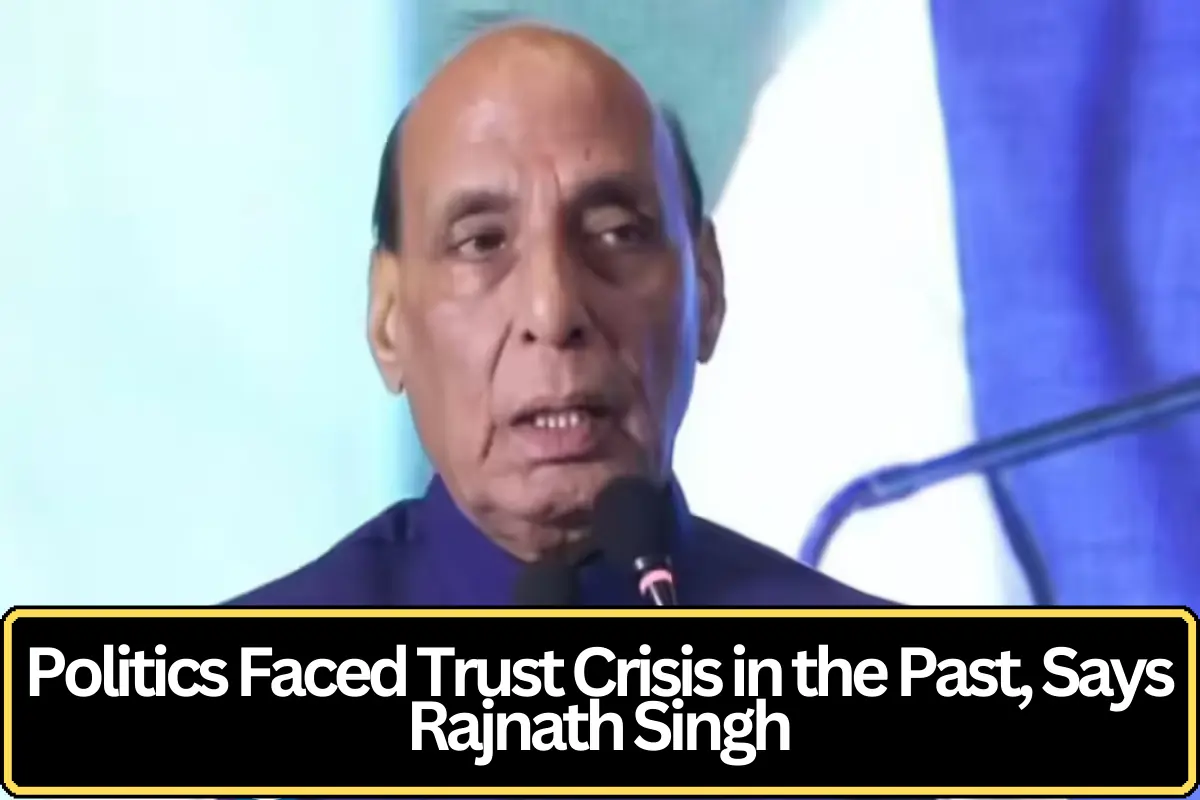
Rajnath Singh Highlights Past Trust Deficit in Indian Politics
Defence Minister Rajnath Singh on March 18, 2026, said that Indian politics had previously gone through a significant trust crisis, stressing the importance of restoring credibility and strengthening public confidence in governance. Speaking at a public event in India, Singh underscored the need for transparency, accountability, and ethical leadership to ensure that citizens continue to place faith in democratic institutions.
His remarks come at a time when political discourse in the country remains intense, with parties competing to shape public opinion ahead of upcoming elections in several states. Singh’s statement reflected broader concerns about the relationship between political leadership and public trust, a recurring theme in India’s democratic evolution.
Call for Greater Transparency and Accountability
Singh emphasized that rebuilding trust in politics requires consistent efforts to uphold transparency and accountability. He noted that governance must be rooted in integrity and responsiveness to public needs, adding that political leaders have a responsibility to act in the best interests of citizens.
According to Singh, past experiences have shown that a lack of transparency and perceived disconnect between leaders and the public can erode confidence in political systems. He stressed that maintaining credibility is essential for the effective functioning of democracy.
He also highlighted the role of institutions in ensuring accountability, pointing out that strong institutional frameworks can help prevent misuse of power and reinforce trust in governance.
Context of Political Trust in India
India’s political landscape has undergone significant changes over the decades, with periods of both high public confidence and skepticism toward political actors. Analysts note that trust in politics is influenced by a range of factors, including governance outcomes, economic performance, and the conduct of political leaders.
Singh’s remarks align with ongoing discussions about the need to strengthen democratic values and improve the quality of political engagement. Observers point out that trust is a critical component of democratic stability, shaping how citizens interact with institutions and participate in the political process.
In recent years, debates around transparency, corruption, and governance have continued to shape public perceptions of politics, making the issue of trust particularly relevant.
Importance of Ethical Leadership
The defence minister stressed that ethical leadership is central to restoring trust in politics. He called on political leaders to adhere to high standards of conduct and to prioritize public service over personal or partisan interests.
Singh noted that leaders must demonstrate consistency between their words and actions, as credibility is built over time through sustained commitment to ethical principles. He added that public trust cannot be achieved through rhetoric alone but requires tangible actions and results.
He also emphasized the importance of communication, suggesting that leaders should engage openly with citizens to address concerns and build stronger connections with the public.
Role of Governance in Building Trust
Effective governance plays a crucial role in shaping public trust, Singh said. He pointed out that delivering on policy promises and ensuring efficient implementation of programs can enhance confidence in political leadership.
He added that governments must focus on addressing key issues such as economic development, social welfare, and national security to meet public expectations. By demonstrating competence and reliability, political leaders can strengthen trust and legitimacy.
Singh also highlighted the need for inclusivity in governance, noting that policies should reflect the diverse needs of India’s population.
Political Discourse and Public Perception
The minister’s remarks come amid a highly charged political environment, where debates often become polarized. Analysts suggest that the tone and quality of political discourse can significantly influence public perceptions of trustworthiness.
Singh called for constructive engagement and respectful dialogue, emphasizing that healthy debate is essential for democracy but should not undermine public confidence in institutions. He urged political actors to focus on substantive issues rather than divisive rhetoric.
Observers note that maintaining a balance between competition and cooperation is key to sustaining trust in a democratic system.
Historical Lessons and Future Outlook
Reflecting on past experiences, Singh suggested that periods of trust deficit offer important lessons for political leaders. He said that understanding the causes of such crises can help prevent similar situations in the future.
He emphasized that continuous efforts are needed to strengthen democratic processes and ensure that governance remains aligned with public expectations. Singh expressed optimism that with the right approach, trust in politics can be reinforced over time.
Analysts agree that rebuilding trust is a gradual process that requires sustained commitment from both political leaders and institutions.
Reactions and Broader Implications
Singh’s statement has drawn attention from political observers, who view it as a reflection of broader concerns about governance and public perception. While some have welcomed the acknowledgment of past challenges, others have emphasized the need for concrete steps to address ongoing issues.
The remarks are likely to resonate in the context of upcoming elections, where trust and credibility often play a significant role in shaping voter decisions. Political parties may seek to position themselves as reliable and transparent in response to such concerns.
Experts note that the focus on trust highlights the evolving expectations of voters, who increasingly demand accountability and performance from their leaders.
Conclusion
Rajnath Singh’s comments underscore the importance of trust as a cornerstone of democratic governance. By acknowledging past challenges and emphasizing the need for transparency and ethical leadership, he has highlighted a key issue facing Indian politics.
As the country continues to navigate a dynamic political landscape, the question of trust is likely to remain central to public discourse and policymaking.
Current Status
Rajnath Singh has reiterated that rebuilding trust in politics remains a priority, with calls for greater transparency, accountability, and ethical governance continuing to shape the national conversation.