Priyanka Gandhi Says Facing Highest Number of Cases Is a ‘Badge of Honour’ Amid Intensifying Political Climate
Priyanka Gandhi states that facing the highest number of legal cases has become a “badge of honour” in the current political climate, highlighting rising tensions in national politics.
 SANJANA DUTTA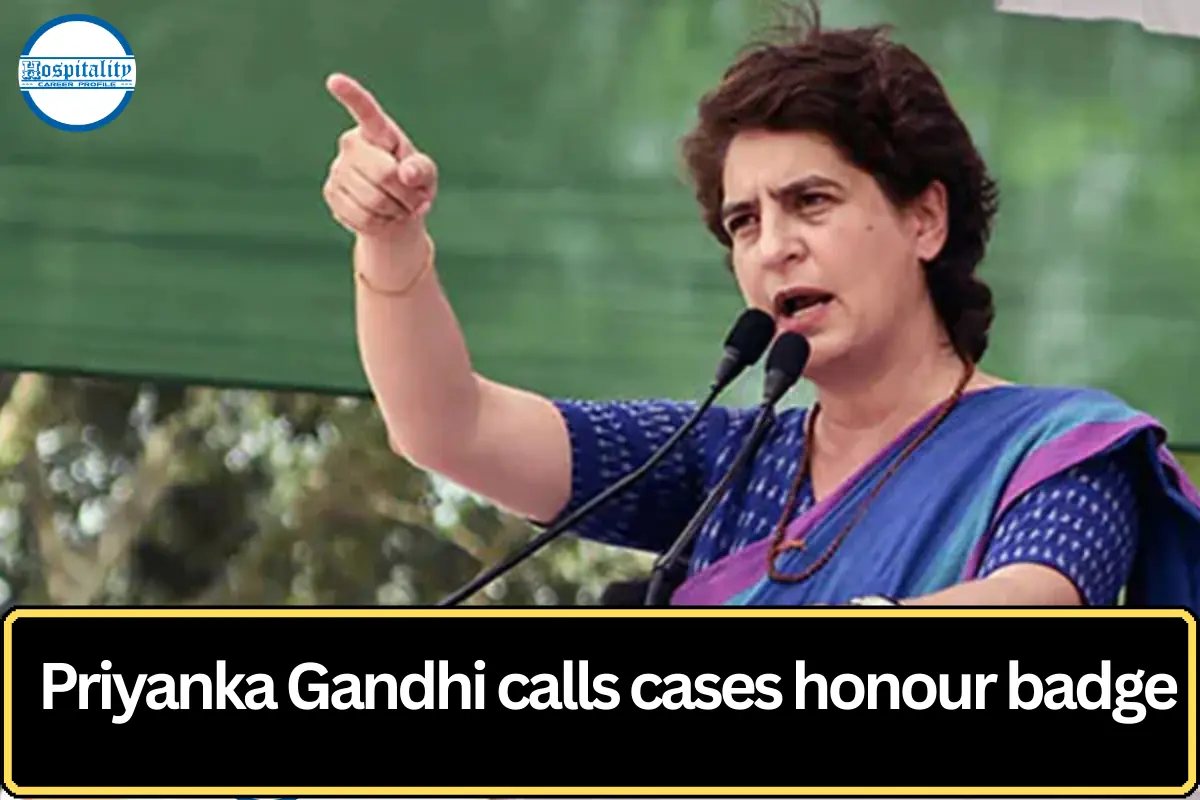
Priyanka Gandhi Responds to Legal Cases Amid Political Tensions
Congress leader Priyanka Gandhi has stated that facing the highest number of legal cases in the present political climate is a “badge of honour,” underscoring the growing friction between opposition leaders and authorities. Her remarks come at a time when multiple political figures across party lines are facing legal scrutiny, investigations, and administrative proceedings.
Speaking during a recent public interaction, Gandhi framed the legal cases filed against her as politically motivated, arguing that opposition voices are increasingly being targeted. She maintained that rather than weakening her resolve, the cases have strengthened her commitment to continue raising issues concerning governance, public welfare, and democratic rights.
Context of the Statement
The statement was made against the backdrop of heightened political activity across the country. With elections approaching in several regions, political rhetoric has intensified, and legal disputes have increasingly intersected with electoral narratives. Gandhi’s comments were interpreted by supporters as a direct challenge to what she described as an environment of intimidation.
According to party representatives, the cases involve a range of allegations tied to political speeches, protests, and administrative matters. Gandhi did not provide specific details during her remarks but emphasized that such cases are part of a broader pattern affecting opposition leaders.
Opposition’s Allegations of Targeting
The Congress party has consistently alleged that investigative agencies and legal mechanisms are being used selectively against opposition figures. Party leaders argue that dissenting voices are facing disproportionate scrutiny, especially during politically sensitive periods.
Gandhi’s “badge of honour” comment reflects this broader opposition narrative. By characterizing the cases as a symbol of resistance, she sought to reposition legal challenges as evidence of political struggle rather than personal vulnerability.
Political Messaging Strategy
Analysts note that such statements serve both symbolic and strategic purposes. By framing legal action as political persecution, opposition leaders can rally supporters and reinforce narratives of resilience. In competitive electoral environments, messaging plays a central role in shaping public perception.
Gandhi’s remarks also signal an effort to shift focus from legal technicalities to broader questions about democratic space and institutional independence.
Government’s Position on Legal Proceedings
Government representatives have rejected allegations of political targeting, maintaining that law enforcement and investigative agencies operate independently. Officials have reiterated that cases are pursued based on evidence and statutory procedures, not political affiliation.
Supporters of the ruling establishment argue that accountability applies equally to all individuals, regardless of political position. They contend that portraying legal proceedings as persecution risks undermining trust in institutions.
Institutional Independence Debate
The debate over institutional independence has become a recurring theme in national politics. While opposition parties question impartiality, government representatives emphasize procedural safeguards and judicial oversight.
The judiciary continues to play a key role in adjudicating disputes, and courts have frequently been called upon to examine allegations of misuse of authority.
Legal Cases and Political Discourse
The intersection of legal action and political discourse is not new in India’s democratic framework. Over decades, leaders across the political spectrum have faced cases ranging from defamation and public order violations to financial investigations. However, the frequency and visibility of such cases have drawn renewed attention in recent years.
Gandhi’s assertion that accumulating cases is a mark of honour reflects a broader political climate in which legal battles are often portrayed as extensions of ideological conflict.
Impact on Public Perception
Public reactions to such statements vary widely. Supporters often interpret them as evidence of courage and determination, while critics view them as attempts to deflect from legal accountability. The narrative surrounding legal cases can influence voter sentiment, particularly when framed within broader democratic concerns.
Political observers suggest that the framing of legal action as persecution may resonate with segments of the electorate who perceive institutions as politically influenced.
Electoral Implications
As regional and national elections approach, legal controversies are likely to remain intertwined with campaign messaging. Opposition parties may continue to highlight investigations and cases as indicators of political pressure, while ruling party representatives may emphasize legal compliance and governance.
Gandhi’s comments could energize party workers and supporters, particularly in constituencies where electoral contests are closely fought. By invoking resilience, she seeks to project strength amid challenges.
Mobilizing Party Cadres
Political messaging that emphasizes struggle and resistance often plays a role in mobilizing grassroots workers. Leaders facing legal challenges sometimes use public statements to galvanize cadres and reaffirm collective purpose.
Gandhi’s remarks appear to align with this strategy, signaling that legal battles will not deter her political engagement.
Broader Democratic Debate
The exchange of allegations between ruling and opposition parties reflects a larger democratic debate about institutional trust, political competition, and the limits of executive power. Observers note that maintaining confidence in democratic systems requires transparency and due process.
While legal scrutiny remains a legitimate mechanism of accountability, perceptions of fairness are equally important in sustaining public trust.
Role of Judiciary
Courts continue to serve as the ultimate arbiters in disputes involving political leaders. Judicial review provides a mechanism to assess the validity of charges and ensure procedural compliance. As cases involving political figures progress, court decisions are likely to shape public understanding of these disputes.
Political Climate and Opposition Strategy
The current political environment has seen increased polarization, with sharp exchanges between parties on issues ranging from governance to civil liberties. In this context, Gandhi’s framing of legal cases as a badge of honour reflects a broader strategy of resistance politics.
Opposition leaders frequently argue that democratic dissent must be protected, even when it invites legal challenges. By publicly embracing the existence of cases, Gandhi sought to reinforce her image as an outspoken critic.
Conclusion
Priyanka Gandhi’s statement that facing the highest number of cases has become a “badge of honour” highlights the intensity of India’s contemporary political climate. As legal proceedings intersect with electoral narratives, the debate over accountability and political targeting is likely to continue.
Whether viewed as resilience or rhetoric, her remarks underscore the deepening contest between political actors and the institutions that govern public life. With elections approaching and political tensions rising, legal cases are expected to remain a central element of public discourse.