Raisina Dialogue 2026 Begins in New Delhi Amid Global Tensions and the Ongoing Iran War
The Raisina Dialogue 2026 begins in New Delhi as global leaders, diplomats, and policy experts gather to discuss international security, geopolitical tensions, and the implications of the ongoing Iran war on global stability.
 SANJANA DUTTA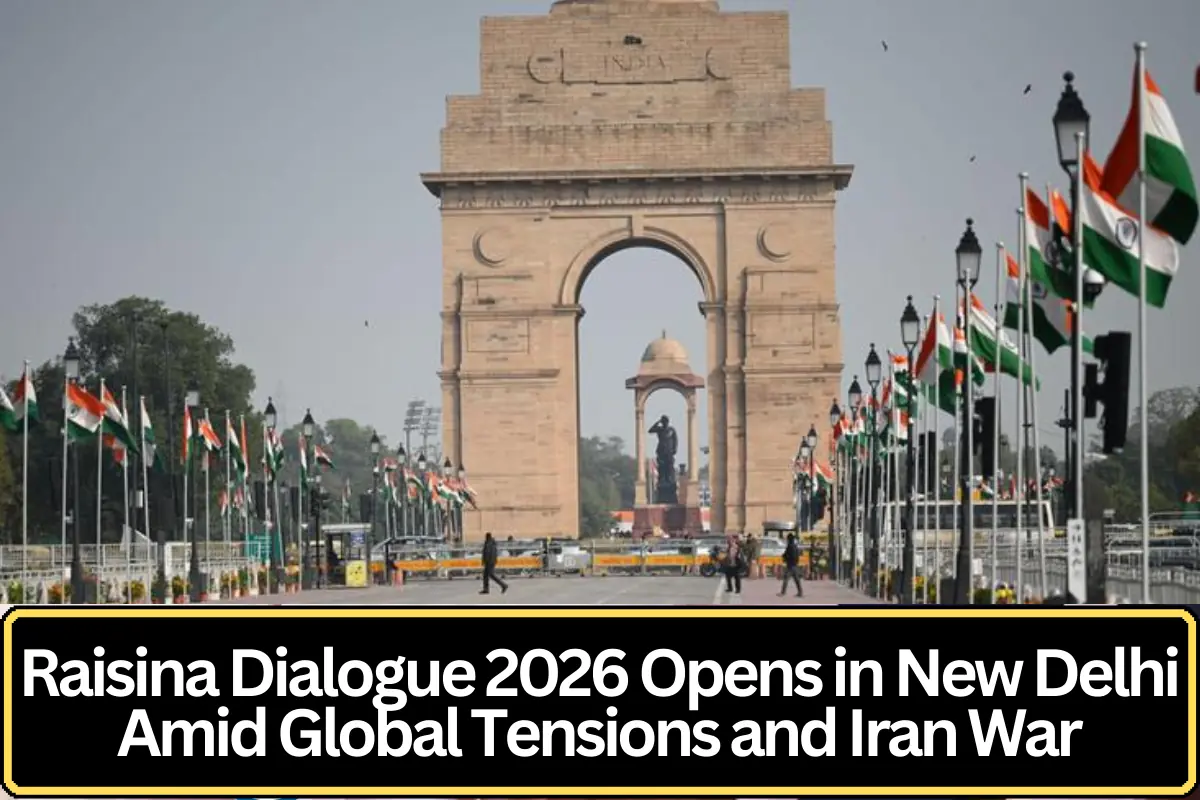
Raisina Dialogue 2026 Opens in New Delhi Amid Heightened Global Uncertainty
The Raisina Dialogue 2026 has commenced in New Delhi at a time when global politics is experiencing one of its most complex and uncertain phases in recent years. Leaders, diplomats, strategic thinkers, and policymakers from across the world have gathered in India’s capital to discuss the pressing issues shaping the international order. This year’s dialogue takes place against the backdrop of growing geopolitical tensions and the ongoing war involving Iran, which has heightened concerns about regional security and global stability.
The Raisina Dialogue has grown into one of the most influential global forums for strategic discussions since its inception. Each year, it brings together influential voices from governments, academia, think tanks, business communities, and civil society to exchange ideas about international relations, economic cooperation, and security challenges. The 2026 edition carries particular significance because of the complex geopolitical climate currently affecting multiple regions of the world.
The Importance of Raisina Dialogue in Global Diplomacy
A Platform for Strategic Conversations
The Raisina Dialogue has established itself as a major global forum where international leaders can engage in meaningful conversations about the challenges facing the world. The event serves as a platform for discussing issues such as global security, technological change, economic development, climate policy, and regional conflicts.
Unlike traditional diplomatic meetings, the dialogue encourages open discussions between policymakers, scholars, and experts. This format allows participants to explore new perspectives and propose innovative solutions to complex global problems. The forum also provides an opportunity for emerging voices in international policy to interact with experienced decision-makers.
As geopolitical tensions increase in several regions, the role of such platforms becomes even more critical. Dialogue and diplomacy remain essential tools for preventing conflict and promoting cooperation among nations.
India’s Role in Hosting the Dialogue
India’s role as the host of the Raisina Dialogue reflects its growing influence in global affairs. Over the past decade, the country has increasingly positioned itself as an important player in international diplomacy and strategic discussions.
By hosting this event, India brings together voices from different regions and political systems. The dialogue highlights the country's commitment to multilateral engagement and its willingness to facilitate conversations on major global challenges.
The forum also provides an opportunity for India to present its perspective on issues such as global governance reforms, economic cooperation, and international security.
Global Tensions and the Ongoing Iran War
Rising Concerns Over Regional Stability
One of the most significant issues discussed during this year’s dialogue is the ongoing conflict involving Iran. The war has raised serious concerns about stability in the Middle East and its potential impact on global security.
The conflict has already influenced regional alliances, economic conditions, and diplomatic relations among several countries. Rising tensions have prompted governments and international organizations to evaluate the possible consequences of further escalation.
Energy markets, trade routes, and security arrangements in the region have all been affected by the conflict. These developments have prompted world leaders to explore ways to reduce tensions and encourage diplomatic solutions.
Implications for Global Security
The war involving Iran has broader implications that extend beyond the Middle East. International experts warn that prolonged instability in the region could disrupt global supply chains and increase economic uncertainty.
Security analysts attending the Raisina Dialogue are discussing how international cooperation can help manage the risks associated with the conflict. These conversations include strategies for preventing further escalation and promoting peaceful negotiations.
The issue also highlights the importance of strengthening international institutions and diplomatic frameworks that can address emerging conflicts.
Key Themes Discussed at the Dialogue
Geopolitical Competition
One of the central themes of the Raisina Dialogue 2026 is the increasing competition among major powers in global politics. Countries are navigating a world where economic influence, technological leadership, and military capabilities play a crucial role in shaping international relations.
Participants are examining how nations can manage competition while avoiding conflict. Discussions are focusing on the importance of diplomacy, strategic partnerships, and responsible leadership in maintaining global stability.
The dialogue also explores how smaller and developing countries can protect their interests while participating in the global economic system.
Technology and Global Governance
Another major topic of discussion is the role of technology in shaping international politics. Advances in artificial intelligence, cybersecurity, and digital infrastructure are transforming economies and societies around the world.
However, these technological changes also raise important questions about regulation, data protection, and global governance. Participants at the Raisina Dialogue are discussing how governments can collaborate to ensure that technological innovation benefits societies while minimizing potential risks.
International cooperation will be essential in developing frameworks that promote responsible use of emerging technologies.
Economic Challenges in an Uncertain World
Impact of Geopolitical Conflicts on the Global Economy
Economic uncertainty has become another key concern for policymakers attending the dialogue. Conflicts in various regions, including the Middle East, have increased volatility in energy markets and disrupted trade flows.
Experts are examining how geopolitical tensions influence global economic growth and financial stability. Discussions are focusing on strategies to strengthen economic resilience and diversify supply chains to reduce vulnerabilities.
Developing countries are particularly concerned about the economic consequences of prolonged geopolitical instability. Leaders are therefore exploring ways to strengthen international cooperation in trade and development.
India’s Economic and Strategic Position
India’s economic growth and strategic partnerships have become important factors in global discussions about development and cooperation. During the Raisina Dialogue, participants are analyzing how India’s policies and initiatives contribute to regional and global economic stability.
The country’s expanding technological sector, growing infrastructure investments, and active diplomatic engagement have strengthened its position in international affairs. These developments have made India an important voice in conversations about economic cooperation and sustainable development.
The Role of Diplomacy in Conflict Resolution
Importance of Dialogue
The central message of the Raisina Dialogue remains the importance of diplomacy and communication in addressing global challenges. Conflicts and geopolitical rivalries often create tensions that can escalate if not managed carefully.
Forums such as this dialogue provide opportunities for policymakers and experts to share perspectives and explore potential solutions. These conversations help build understanding among nations and encourage cooperative approaches to problem-solving.
Diplomatic engagement remains one of the most effective ways to prevent conflicts from escalating into larger crises.
Multilateral Cooperation
Another important theme emerging from the discussions is the need for stronger multilateral cooperation. Global challenges such as conflict, climate change, economic inequality, and technological disruption require collective action from the international community.
Participants at the Raisina Dialogue are emphasizing that international institutions must adapt to changing global realities. Reforms and renewed commitments to cooperation may be necessary to ensure that these institutions remain effective in addressing modern challenges.
Voices from Around the World
Diverse Participation
The Raisina Dialogue attracts participants from dozens of countries representing a wide range of perspectives and experiences. Government officials, diplomats, scholars, and industry leaders contribute to discussions that cover political, economic, and technological issues.
This diversity of voices enriches the dialogue by bringing different viewpoints to the table. Participants often gain new insights by listening to experiences and ideas from other regions of the world.
The forum also highlights the importance of global collaboration in addressing shared challenges.
Future-Focused Discussions
In addition to addressing immediate global concerns, the dialogue also focuses on long-term trends that will shape the future of international relations. Topics such as climate change, sustainable development, and digital transformation are central to these conversations.
Participants are exploring how governments, businesses, and civil society can work together to build a more stable and prosperous global order.
Looking Ahead
The Raisina Dialogue 2026 arrives at a moment when the international community faces numerous challenges. Geopolitical tensions, economic uncertainty, technological disruption, and regional conflicts all contribute to a complex global environment.
By bringing together influential voices from across the world, the dialogue aims to encourage constructive discussions and collaborative solutions. The conversations taking place in New Delhi may help shape future diplomatic initiatives and international partnerships.
As global leaders continue to navigate a rapidly changing world, platforms such as the Raisina Dialogue remain essential for fostering cooperation and understanding among nations.
Conclusion
The opening of the Raisina Dialogue 2026 underscores the importance of diplomacy and dialogue in an era defined by uncertainty and geopolitical tension. With the ongoing Iran war raising concerns about regional stability and global security, the discussions taking place in New Delhi carry significant international relevance.
Participants at the forum are working to identify strategies that promote peace, economic resilience, and international cooperation. While challenges remain, the exchange of ideas and perspectives at the Raisina Dialogue offers hope that collaborative efforts can contribute to a more stable and secure global future.