Rajasthan Chief Minister Criticizes Ashok Gehlot’s Campaign as Misleading Amid Political Tensions
Rajasthan Chief Minister has accused former CM Ashok Gehlot of running a misleading political campaign, intensifying the political rivalry in the state.
 SANJANA DUTTA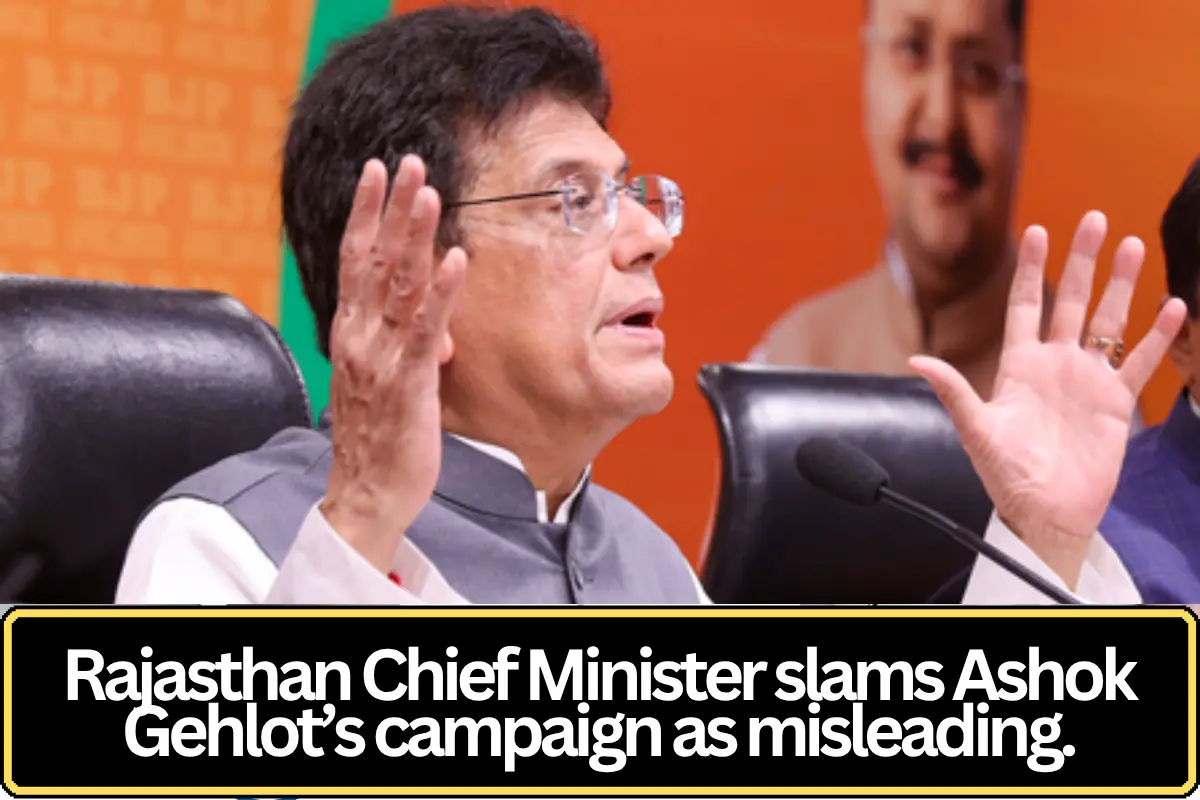
Political Clash Intensifies in Rajasthan
JAIPUR, March 27, 2026 — Rajasthan’s Chief Minister has sharply criticized former Chief Minister Ashok Gehlot’s ongoing political campaign, calling it “misleading” and accusing him of presenting distorted claims to the public. The remarks come amid rising political tensions in the state, as both leaders intensify their outreach efforts ahead of upcoming electoral contests.
The Chief Minister alleged that Gehlot’s campaign narratives are aimed at confusing voters and misrepresenting the current government’s policies and achievements. The criticism reflects a deepening rivalry between the two leaders, which has increasingly shaped the political discourse in Rajasthan.
Government Accuses Opposition of Misinformation
According to the Chief Minister, the opposition campaign led by Gehlot relies on selective interpretation of facts and exaggerated claims to undermine the credibility of the ruling administration. He asserted that the government has remained committed to transparency and development, dismissing the opposition’s allegations as baseless.
Officials within the ruling party echoed these sentiments, arguing that the government’s record in areas such as infrastructure development, welfare schemes, and economic management speaks for itself. They emphasized that voters are capable of distinguishing between factual information and politically motivated narratives.
The Chief Minister also urged the opposition to engage in constructive debate rather than resorting to what he described as misleading tactics.
Gehlot’s Campaign Focus and Strategy
Ashok Gehlot, a senior leader with significant influence in Rajasthan politics, has been actively campaigning across the state, highlighting issues related to governance, economic challenges, and public welfare. His campaign has focused on criticizing the current administration’s policies and presenting an alternative vision for the state’s development.
Supporters of Gehlot argue that his campaign is grounded in addressing real concerns faced by citizens, including unemployment, price rise, and access to essential services. They contend that raising such issues is a legitimate part of democratic engagement and accountability.
The differing perspectives between the two camps underscore the polarized nature of the political environment in Rajasthan.
Rising Political Temperature Ahead of Elections
The exchange of sharp remarks comes at a time when political activity in Rajasthan is gaining momentum ahead of future elections. Both the ruling party and the opposition are intensifying their efforts to connect with voters, making campaign narratives a central element of their strategies.
Political analysts note that such confrontations are not uncommon during election cycles, as parties seek to shape public perception and gain a competitive edge. However, the intensity of the current rhetoric suggests that the contest is likely to be closely fought.
The evolving political dynamics are expected to influence campaign messaging, alliances, and voter engagement in the coming months.
Debate Over Governance and Development
At the heart of the political dispute is a broader debate over governance and development priorities in Rajasthan. The ruling government has highlighted its achievements in infrastructure projects, social welfare initiatives, and economic reforms as evidence of its performance.
In contrast, the opposition has questioned the effectiveness and implementation of these policies, arguing that they have not adequately addressed key issues faced by the population. This divergence in narratives reflects differing visions for the state’s future.
Observers suggest that voters will ultimately evaluate these competing claims based on their own experiences and expectations.
Public Response and Political Messaging
The political exchange has drawn attention from the public, with voters closely following the developments and assessing the credibility of competing claims. Campaign messaging, both online and offline, has become increasingly prominent as parties seek to influence voter opinion.
Social media platforms, public rallies, and grassroots outreach are being used extensively to amplify narratives and counter opposing viewpoints. This has created a dynamic information environment where multiple perspectives compete for attention.
Experts note that the effectiveness of these strategies will depend on how well parties can connect with voters and address their concerns.
Role of Leadership in Shaping Political Narrative
The personal rivalry between the Chief Minister and Ashok Gehlot has become a defining feature of Rajasthan’s political landscape. Both leaders bring significant experience and influence, making their interactions a focal point of public and media attention.
Leadership plays a crucial role in shaping political narratives, as statements and actions by prominent figures often set the tone for broader party strategies. In this context, the ongoing exchange highlights the importance of communication and perception in modern politics.
Analysts believe that the ability of leaders to articulate their vision and respond to criticism will be a key factor in determining electoral outcomes.
Implications for Electoral Strategy
The controversy surrounding the campaign has implications for how both sides approach their electoral strategies. The ruling party is likely to emphasize its governance record and counter opposition claims, while the opposition may continue to focus on highlighting perceived shortcomings.
This dynamic could lead to more focused and issue-based campaigning, as parties seek to differentiate themselves and appeal to specific voter segments. The role of data, messaging, and grassroots mobilization is expected to be significant in shaping campaign outcomes.
Political observers suggest that maintaining credibility and consistency in messaging will be critical for both sides.
Broader Political Context
The developments in Rajasthan are part of a broader pattern in Indian politics, where intense competition and strong leadership rivalries often drive campaign narratives. As states prepare for elections, political discourse tends to become more polarized, reflecting the high stakes involved.
Such dynamics highlight the importance of democratic engagement, where competing ideas and perspectives are presented to voters. However, they also underscore the need for responsible communication to ensure that public debate remains constructive and informed.
The balance between political competition and accountability will continue to shape the nature of electoral contests across the country.
Conclusion
The criticism of Ashok Gehlot’s campaign by the Rajasthan Chief Minister marks another chapter in the state’s evolving political contest, highlighting the intensity of rivalry and the importance of narrative in shaping voter perceptions.
Current Status
Political exchanges between the ruling party and the opposition continue, with both sides actively campaigning and preparing for upcoming electoral challenges in Rajasthan.