Rajeev Chandrasekhar Criticises Mamata Banerjee Over West Bengal Santhal Conference Row
BJP leader Rajeev Chandrasekhar criticised West Bengal Chief Minister Mamata Banerjee over the Santhal conference controversy, calling it a reflection of disturbing political culture in the state.
 SANJANA DUTTA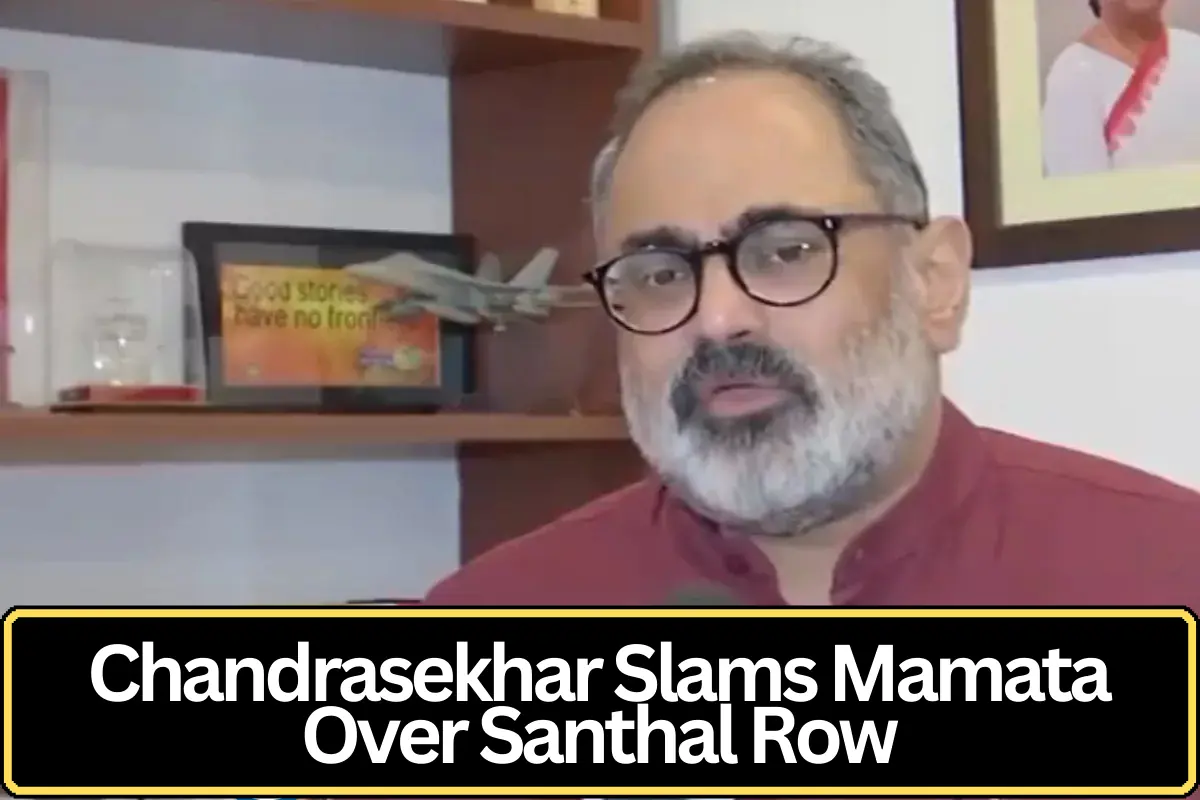
Political Tensions Rise Over Santhal Conference Controversy
Political tensions in West Bengal have intensified after Bharatiya Janata Party leader Rajeev Chandrasekhar criticised Chief Minister Mamata Banerjee over a controversy linked to a Santhal community conference. Chandrasekhar described the situation as an example of a “disturbing political culture” in the state, triggering fresh exchanges between the BJP and the ruling Trinamool Congress.
The remarks came amid growing political debate over the handling of the conference and the reactions from different political parties. The issue has attracted attention because of its potential implications for tribal politics and the broader political landscape in West Bengal.
Rajeev Chandrasekhar’s Criticism
Rajeev Chandrasekhar publicly criticised the West Bengal government, accusing it of encouraging a political environment that discourages dissent and undermines democratic values. According to him, recent developments surrounding the Santhal conference reflect deeper issues related to governance and political culture in the state.
The BJP leader argued that democratic institutions must allow space for diverse voices and community gatherings without political interference. His comments were widely circulated on social media and quickly became part of the ongoing political debate in West Bengal.
Chandrasekhar’s remarks also highlighted concerns raised by opposition leaders regarding the treatment of political opponents and community groups in the state.
Background of the Santhal Conference Row
The controversy emerged following disputes related to a conference involving members of the Santhal tribal community. The Santhals are one of the largest indigenous tribal groups in eastern India, with significant populations in West Bengal, Jharkhand, Odisha, and neighbouring regions.
Reports suggest that disagreements over the organisation and political messaging surrounding the conference triggered criticism from opposition leaders. The incident has since evolved into a broader political issue, with parties offering differing interpretations of the events.
Some opposition figures have alleged that the state administration did not handle the situation appropriately, while leaders of the ruling party have rejected such claims.
Response from the Trinamool Congress
Leaders of the Trinamool Congress defended the state government, rejecting accusations made by opposition figures. Party representatives argued that the controversy was being exaggerated for political gain and insisted that the government remains committed to protecting the interests and rights of tribal communities.
Supporters of the ruling party stated that the government has implemented several welfare and development initiatives aimed at improving the socio‑economic conditions of tribal populations across the state.
They also accused opposition parties of attempting to politicise community issues ahead of upcoming political developments.
Importance of Tribal Communities in State Politics
Tribal communities play an important role in the political landscape of eastern India, including West Bengal. Regions with significant tribal populations often become key battlegrounds during elections, with political parties focusing on issues such as land rights, education, healthcare, and economic development.
The Santhal community in particular has a long cultural and historical presence in the region. Conferences and community gatherings are often organised to discuss social issues, cultural preservation, and development concerns.
Because of their political and social significance, events involving tribal groups frequently attract attention from political leaders and policymakers.
Broader Political Context in West Bengal
The exchange between BJP leaders and the Trinamool Congress reflects the continuing rivalry between the two parties in West Bengal. Political competition in the state has intensified over the past decade as national and regional parties attempt to strengthen their presence.
Debates surrounding governance, political freedom, and community representation are common themes in this ongoing rivalry.
Observers say controversies such as the Santhal conference row often become focal points for broader political narratives promoted by competing parties.
Calls for Constructive Dialogue
Some political analysts and civil society voices have called for a more constructive approach to addressing such disputes. They argue that issues related to tribal communities should be discussed through dialogue and policy initiatives rather than becoming subjects of partisan confrontation.
Experts also emphasise the importance of ensuring that community concerns remain at the centre of the conversation rather than being overshadowed by political rivalry.
Looking Ahead
As the debate continues, the Santhal conference controversy is likely to remain part of the broader political discourse in West Bengal. Statements from national and state leaders suggest that the issue may continue to generate discussion in the coming days.
The episode once again highlights the complex intersection of community issues, political competition, and public discourse in Indian politics.
Observers will be watching closely to see how political leaders address the concerns raised during the controversy and whether the discussion leads to constructive engagement with tribal communities in the region.