Sasikala Announces Launch of New Political Party Ahead of Tamil Nadu Assembly Polls, Targets EPS
VK Sasikala announces plans to launch a new political party ahead of the Tamil Nadu Assembly elections, positioning herself against AIADMK leader Edappadi K. Palaniswami (EPS).
 SANJANA DUTTA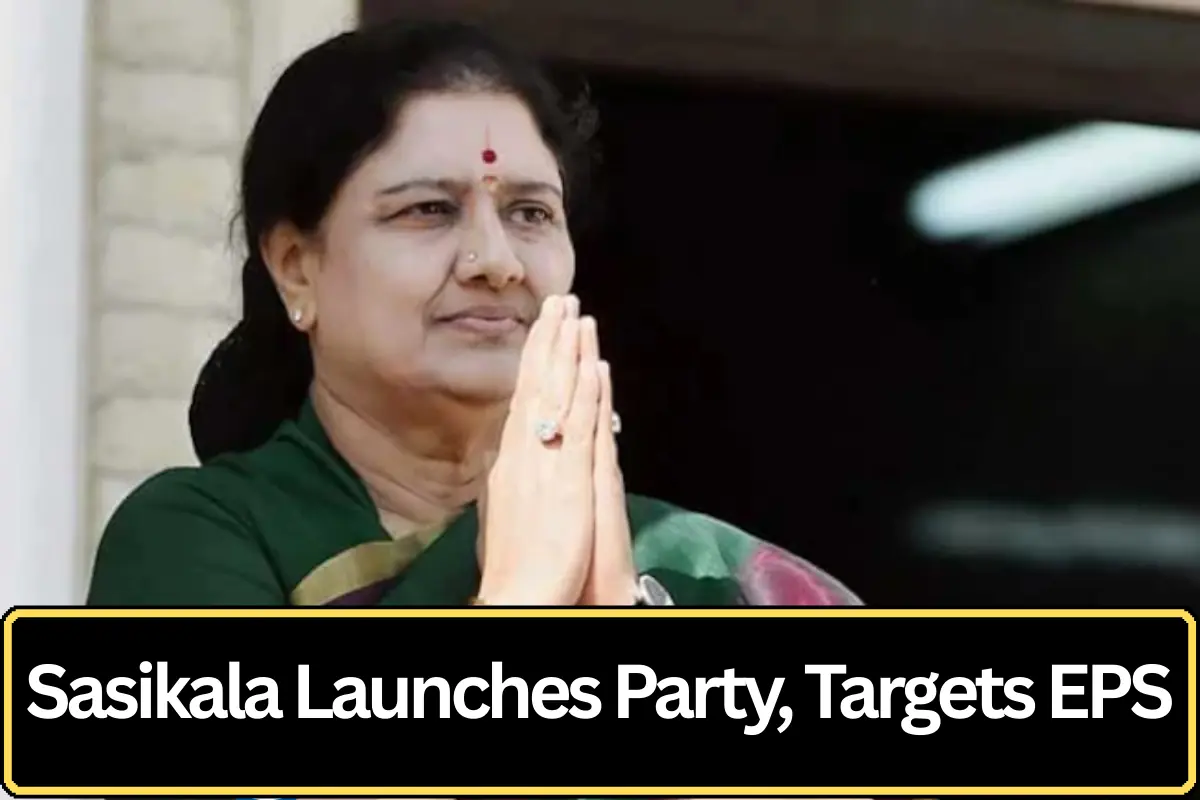
Sasikala Signals Political Comeback with New Party Launch Ahead of Tamil Nadu Polls
Veteran political figure V.K. Sasikala has announced her decision to launch a new political party ahead of the upcoming Tamil Nadu Assembly elections, marking a significant development in the state’s evolving political landscape. The move is widely seen as a direct challenge to AIADMK leader Edappadi K. Palaniswami (EPS), intensifying competition within the state’s opposition space.
The announcement comes at a time when Tamil Nadu’s political environment is witnessing renewed alignments and strategic recalibrations. Sasikala’s re-entry into active politics through a formal party structure is expected to reshape electoral calculations, particularly within constituencies historically aligned with the AIADMK.
Positioning Against EPS
Sasikala’s political messaging indicates that her primary focus will be on consolidating support among cadres who remain loyal to the legacy of former Chief Minister J. Jayalalithaa. Observers note that her decision to launch a new party appears aimed at reclaiming space within the Dravidian political framework while directly countering EPS’s leadership within the AIADMK.
Political analysts suggest that the move reflects internal tensions that have persisted since the AIADMK’s leadership transition following Jayalalithaa’s tenure. While EPS has consolidated his position within the party apparatus, Sasikala’s announcement introduces a parallel axis of mobilisation.
The forthcoming elections provide a strategic opportunity for Sasikala to test her grassroots influence and organisational reach.
Legacy Politics and Cadre Mobilisation
Sasikala has consistently invoked Jayalalithaa’s political legacy as a central theme in her outreach efforts. Her new party is expected to emphasise continuity with policies and welfare schemes associated with the late leader’s tenure.
Sources indicate that preparatory discussions have been underway with district-level coordinators and former party functionaries. Efforts are reportedly focused on reactivating dormant networks and attracting disillusioned cadres.
Political observers highlight that symbolic positioning around legacy politics remains a powerful tool in Tamil Nadu’s electoral culture.
AIADMK’s Internal Dynamics
The AIADMK, under EPS’s leadership, has undergone structural consolidation over recent years. Party insiders maintain that organisational unity and clarity of command are critical as the Assembly polls approach.
However, Sasikala’s return to the electoral arena introduces a new variable. Analysts note that even limited vote fragmentation within traditional AIADMK strongholds could influence closely contested seats.
Party representatives aligned with EPS have reiterated confidence in their leadership structure, asserting that the party remains cohesive and electorally prepared.
Electoral Arithmetic and Strategic Implications
Tamil Nadu’s Assembly elections are typically shaped by alliances, regional influence, and cadre strength. The introduction of a new party led by a familiar political figure could alter alliance negotiations and seat-sharing dynamics.
Experts suggest that Sasikala’s party may seek to position itself as a defender of core Dravidian principles while appealing to voters seeking alternative leadership within the opposition space.
Whether this strategy translates into measurable electoral gains will depend on organisational execution, candidate selection, and alliance-building capabilities.
Public Messaging and Political Narrative
In public remarks, Sasikala has framed her political return as a response to what she describes as a need for renewed direction in the state’s opposition politics. She has emphasised governance experience and grassroots connectivity as strengths she intends to leverage.
Her statements have focused on issues such as administrative efficiency, welfare delivery, and party discipline. The narrative appears designed to contrast her approach with current AIADMK leadership.
Political commentators observe that narrative framing will play a decisive role in shaping voter perception in the months leading up to the elections.
Reactions from Political Stakeholders
Responses from rival parties have been measured. Leaders from other major formations in Tamil Nadu have indicated that they are closely monitoring developments while continuing their own preparations for the polls.
Some analysts view Sasikala’s move as primarily impacting the opposition landscape rather than the ruling establishment. Others argue that any shift in opposition vote share could indirectly affect broader electoral equations.
The evolving dynamics have prompted renewed debate over coalition possibilities and strategic alignments.
Historical Context of Political Realignments
Tamil Nadu politics has historically witnessed significant realignments driven by personality-based leadership and ideological positioning. The Dravidian political tradition, rooted in strong organisational structures and charismatic leadership, often adapts through factional splits and subsequent consolidations.
Sasikala’s new party initiative fits within this broader historical pattern. Analysts point out that past electoral cycles have demonstrated the fluid nature of political affiliations in the state.
The extent to which history repeats itself will depend on voter response and campaign momentum.
Campaign Strategy and Organisational Roadmap
Preparations for the formal launch are reportedly underway, including the development of a party constitution, appointment of office bearers, and establishment of district units. Organisers are expected to prioritise rapid expansion of booth-level committees to ensure ground presence.
Campaign themes are likely to revolve around governance accountability, protection of regional identity, and restoration of party legacy. Strategic outreach through public rallies and media engagement is anticipated in the coming months.
Observers suggest that digital mobilisation and social media outreach will also form a key component of the campaign plan.
Challenges Ahead
Despite the announcement’s impact, Sasikala faces significant challenges. Rebuilding a statewide organisational network within a limited timeframe requires extensive coordination and resources.
Additionally, consolidating voter confidence after years of political flux will demand sustained engagement and consistent messaging. Electoral success will hinge on translating symbolic appeal into tangible support at polling booths.
Analysts note that leadership credibility and clarity of policy proposals will be crucial factors.
Broader Political Climate in Tamil Nadu
The Assembly elections are expected to be highly competitive, with major parties intensifying outreach campaigns. Development narratives, welfare commitments, and regional identity themes are likely to dominate discourse.
Sasikala’s entry adds a new dimension to the opposition matrix, potentially reshaping debates around leadership and legacy. Political observers anticipate heightened campaign rhetoric as parties position themselves ahead of formal election notifications.
The coming months are expected to witness intensified political activity across districts.
Conclusion
Sasikala’s decision to launch a new political party ahead of the Tamil Nadu Assembly elections marks a significant moment in the state’s political timeline. Positioned as a direct challenge to EPS-led AIADMK leadership, the move introduces fresh competition within the opposition space.
As preparations gather pace, the effectiveness of organisational mobilisation, narrative framing, and alliance-building will determine the initiative’s electoral impact. With the Assembly polls approaching, Tamil Nadu’s political landscape appears set for renewed contestation and strategic realignment.