Shopify Expands Native B2B Features to Millions of Merchants Globally
Shopify has rolled out expanded native B2B features to millions of merchants, aiming to simplify wholesale operations and drive business growth.
 RUKAIYA KADIVAL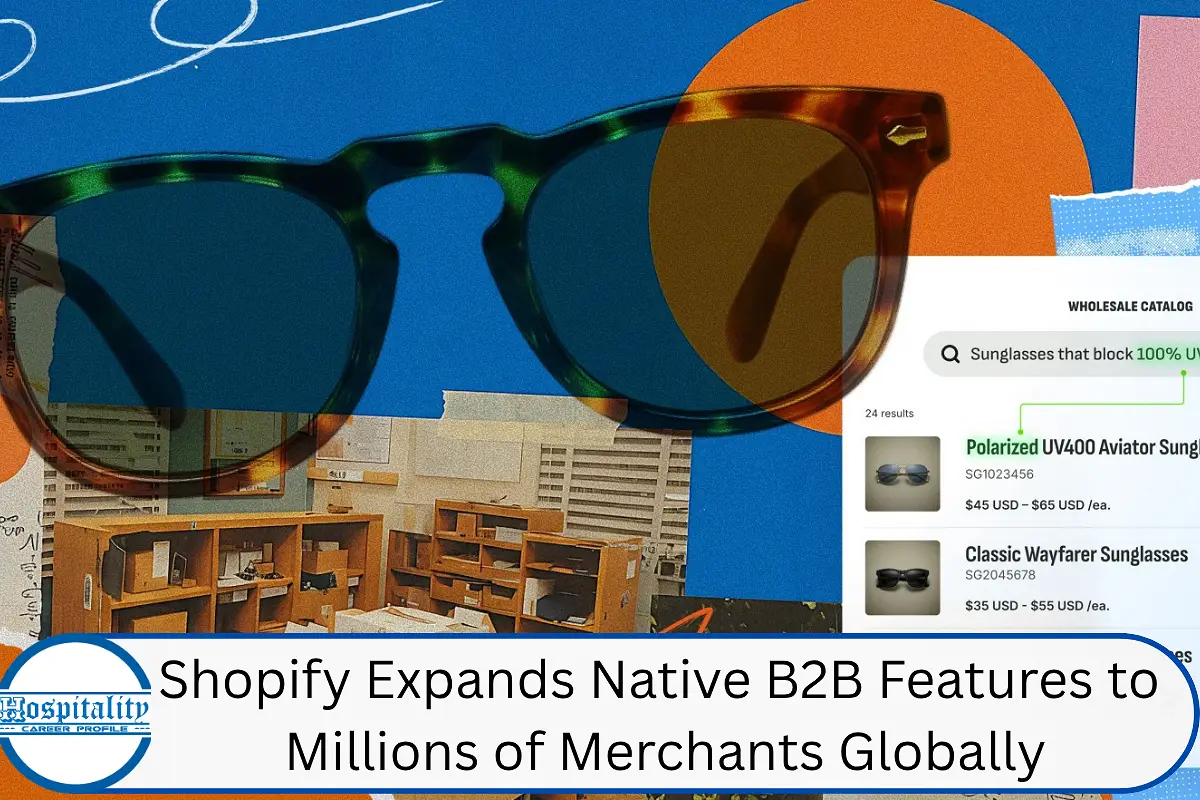
Shopify Expands Native B2B Features to Millions of Merchants Globally
Shopify has announced the expansion of its native business-to-business (B2B) features to millions of merchants worldwide, marking a significant step in its effort to strengthen its position in the global e-commerce market. The rollout, revealed in early April 2026, aims to simplify wholesale operations by integrating B2B capabilities directly into Shopify’s core platform, enabling businesses to manage both retail and wholesale transactions from a single system.
The move reflects Shopify’s broader strategy to capture growing demand for digital commerce solutions among businesses seeking streamlined operations and enhanced scalability. By embedding B2B tools natively, the company seeks to eliminate the need for third-party integrations and provide a more seamless experience for merchants.
Unified Platform for Retail and Wholesale
With the latest update, Shopify merchants can now handle both direct-to-consumer (D2C) and B2B sales within the same platform. This unified approach allows businesses to manage inventory, pricing, customer relationships, and orders without switching between systems.
The integration is designed to reduce operational complexity, particularly for companies that operate across multiple sales channels. Merchants can customize pricing structures, offer bulk discounts, and manage wholesale accounts directly within Shopify’s interface.
This consolidation of capabilities is expected to improve efficiency and reduce costs, particularly for small and medium-sized enterprises looking to expand into wholesale markets.
Key Features of the B2B Expansion
The expanded B2B functionality includes tools tailored to the needs of wholesale buyers and sellers. These features allow merchants to create company profiles, set negotiated pricing, and offer flexible payment terms to business customers.
Shopify has also introduced enhanced order management capabilities, enabling businesses to handle large-volume transactions more effectively. The platform supports bulk ordering, custom catalogs, and streamlined checkout processes designed specifically for B2B transactions.
In addition, merchants can automate workflows such as invoicing and payment collection, improving overall operational efficiency and reducing manual workload.
Growing Importance of B2B E-commerce
The expansion comes amid rapid growth in the B2B e-commerce sector, which is increasingly shifting toward digital platforms. Businesses are seeking solutions that offer the same level of convenience and functionality as consumer-facing e-commerce systems.
Industry trends indicate that B2B buyers now expect seamless online experiences, including personalized pricing, easy ordering, and transparent transaction processes. Shopify’s enhanced features aim to meet these expectations and support businesses in adapting to changing market dynamics.
By strengthening its B2B capabilities, Shopify is positioning itself to compete more effectively with other enterprise-focused e-commerce platforms.
Benefits for Merchants
For merchants, the integration of native B2B tools offers several advantages. It allows businesses to expand their customer base by reaching wholesale buyers without the need for additional software or complex integrations.
The ability to manage both retail and wholesale operations in one place can also improve data visibility, enabling better decision-making and more effective inventory management. Businesses can gain insights into customer behavior across different segments, helping them optimize pricing and marketing strategies.
Furthermore, the streamlined processes can lead to faster order fulfillment and improved customer satisfaction.
Competitive Landscape
Shopify’s move comes as competition intensifies in the e-commerce sector, with companies investing heavily in features that cater to both small businesses and large enterprises. By expanding its B2B capabilities, Shopify is aiming to attract a broader range of merchants and strengthen its market share.
Other platforms have also been enhancing their offerings to support wholesale operations, making innovation and user experience key differentiators in the market. Shopify’s focus on simplicity and integration could provide a competitive edge, particularly for businesses seeking an all-in-one solution.
The company’s ability to scale its platform while maintaining ease of use will be critical in sustaining its growth momentum.
Challenges and Considerations
Despite the potential benefits, Shopify may face challenges in ensuring that its B2B features meet the diverse needs of global merchants. Different industries and regions have varying requirements for pricing, taxation, and compliance, which can add complexity to platform development.
Additionally, larger enterprises may require more advanced customization and integration capabilities, which could necessitate further enhancements to the platform.
Shopify will need to continue investing in product development and customer support to address these challenges and maintain user satisfaction.
Strategic Outlook
The expansion of native B2B features aligns with Shopify’s long-term strategy to build a comprehensive commerce platform that supports businesses at every stage of growth. By offering integrated solutions, the company aims to reduce friction and enable merchants to scale more effectively.
The move also reflects a broader shift in the e-commerce industry toward unified platforms that combine multiple functionalities into a single system. This trend is expected to continue as businesses seek more efficient and cost-effective solutions.
Shopify’s ability to innovate and adapt to market needs will play a key role in determining its success in the evolving digital commerce landscape.
Conclusion
Shopify’s rollout of expanded native B2B features to millions of merchants underscores its commitment to simplifying e-commerce operations and capturing growth opportunities in the rapidly expanding wholesale market, as businesses increasingly embrace integrated digital solutions.