South Africa May Fuel Price Hike: Petrol Up R2, Diesel R5.9
South Africa faces fuel price hikes, with petrol up to R21.40/litre and diesel nearly R5.93/litre in May, despite reduced underrecoveries.
 Tripti Srivastava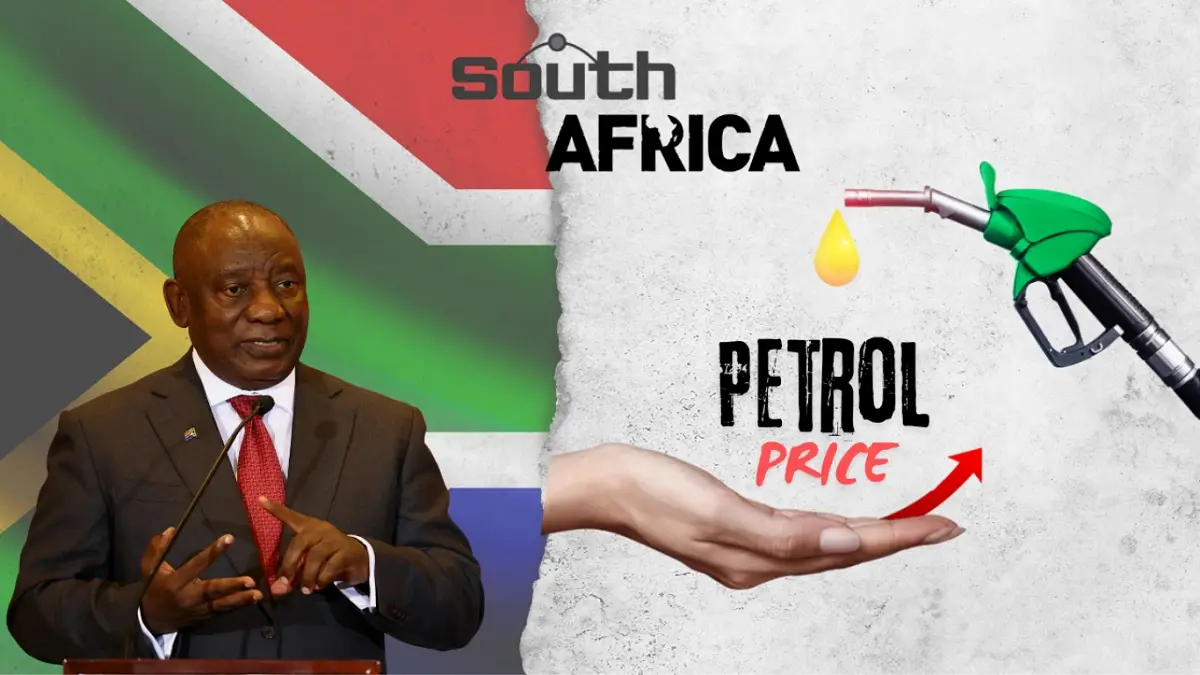
South African motorists are expected to face fuel price increases of up to R2.14 per litre for petrol and nearly R5.93 per litre for diesel in May, despite a sharp 73% decline in under-recoveries during April, according to the Central Energy Fund data (CEF).
Latest data for the review period from March 27 to April 30 shows that while initial price shocks have moderated, elevated global oil prices and persistent supply disruptions continue to exert upward pressure on local fuel costs.
Fuel Price Adjustments Narrow but Remain Elevated
At the beginning of April, petrol under-recoveries stood as high as R7.88 per litre, while diesel shortages reached R17.57 per litre. By the third week of April, these gaps had narrowed significantly, falling to between R1.82 and R2.14 per litre for petrol and approximately R5.93 per litre for diesel.
Based on current projections, petrol 93 is expected to rise by R1.82 per litre and petrol 95 by R2.14 per litre in May. Diesel prices are projected to increase by around R5.92 to R5.93 per litre, while illuminating paraffin could see a rise of R4.99 per litre.
The reduction in under-recoveries, down as much as 73% for petrol and over 66% for diesel, reflects some easing in early-month price shocks. However, the remaining shortfall continues to translate into a significant diesel fuel increase at the pump.
Oil Prices Drive Nearly Entire Cost Pressure
The CEF data indicates that international petroleum prices account for approximately 99.5% of the under-recovery, making global oil markets the dominant factor in domestic fuel pricing.
Oil prices have climbed back above $100 per barrel amid escalating geopolitical tensions in the Middle East. Concerns intensified after renewed military activity in the Strait of Hormuz, a key global shipping route that previously handled about one-fifth of global oil supply.
Disruptions in this corridor have constrained supply flows, keeping crude prices elevated and directly impacting import-dependent economies such as South Africa.
The South African rand has shown relative resilience despite global market volatility. After weakening beyond R17 to the US dollar at the onset of the Middle East conflict, the currency has stabilised around R16.50/$
As of April 24, the rand was trading at approximately R16.64/$, representing only a 0.4% decline. While this stability has helped cushion some of the impact of rising oil prices, it has not been sufficient to offset the surge in global energy costs.
Given South Africa’s reliance on imported fuel, exchange rate movements remain a key but secondary factor compared to international oil price fluctuations.
Fuel Levy Relief Adds Policy Uncertainty
A major variable influencing May’s final South Africa fuel prices is the future of the temporary fuel levy relief introduced by the National Treasury. The R3.00 per litre cut, implemented in April to shield consumers from sudden price spikes, is set to expire on May 6.
Finance Minister Enoch Godongwana has indicated that the government is considering extending the relief but warned that such measures carry significant fiscal costs. The initial intervention is estimated to cost R6 billion, with potential extensions raising the burden to between R10 billion and R12 billion.
Any extension must be budget-neutral, meaning the government would need to recover the cost through other fiscal measures within the current financial year.
If the R3.00 per litre relief is fully withdrawn, motorists could face substantially higher increases than currently projected. Petrol price hikes could rise from around R2 per litre to as much as R5 per litre, while diesel increases could jump from approximately R6 per litre to nearly R9 per litre.
Historical precedent suggests that the government may opt for a phased reintroduction of the levy, as seen in 2022 when fuel tax relief was gradually reinstated to soften the impact on consumers.
However, with fuel prices expected to remain under pressure due to ongoing geopolitical tensions and supply constraints, policymakers face limited options for mitigating the impact without straining public finances.
Market Outlook and Current Status
The trajectory of fuel prices in South Africa remains closely tied to developments in global energy markets, particularly the duration and intensity of the Middle East conflict. Prolonged disruptions in oil supply routes are likely to sustain elevated price levels.
While April’s data shows a meaningful reduction in under-recoveries, the persistence of high crude prices means that consumers will still face notable increases in May. The outcome will depend heavily on policy decisions regarding fuel levy relief and the evolution of geopolitical risks.
For now, South African motorists remain exposed to both international market volatility and domestic fiscal decisions, with higher fuel costs appearing unavoidable in the near term.