South Korea Unveils $7.1B Stimulus to Offset Iran War Supply Shock: Yonhap
South Korea announces a $7.1 billion stimulus package to counter supply chain disruptions and economic risks from the Iran war, accelerating budget spending and emergency measures.
 Tripti Srivastava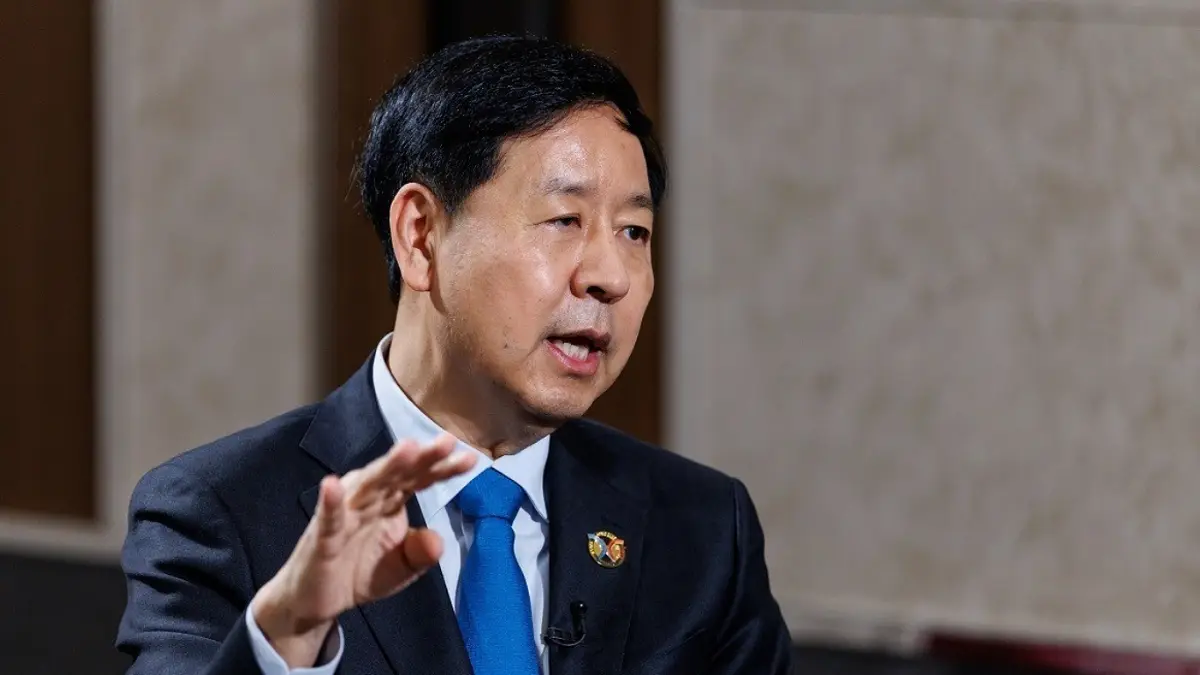
South Korea has announced a 10.5 trillion won ($7.1 billion) stimulus package to counter supply chain disruptions and economic risks stemming from the ongoing Iran conflict, with Finance Minister Koo Yun-cheol warning the crisis poses the “biggest risk” to the global economy, according to Yonhap News Agency.
The emergency fiscal response comes as rising geopolitical tensions linked to the US-Israeli war on Iran continue to disrupt global energy flows and trade routes, prompting Seoul to accelerate policy measures aimed at stabilising domestic markets and protecting economic activity.
Stimulus Package and Fiscal Measures
The 10.5 trillion won ($7.1 billion) package forms part of a broader supplementary budget designed to cushion households and businesses from the impact of rising oil prices and supply disruptions. Authorities plan to fast-track spending, expecting to disburse more than 85% of allocated funds within the first half of the year.
The relief programme will begin making payments on April 27, targeting sectors most exposed to energy cost pressures and global trade volatility. The government has also committed to maintaining an emergency economic response system until the trajectory of the Middle East conflict becomes clearer.
Officials said the fiscal intervention aims to mitigate inflationary pressures, stabilise consumption, and ensure continuity in industrial production amid ongoing uncertainty in global markets.
As part of preemptive measures, the government will release public stockpiles of automotive urea and urea solution by the end of the month to address potential shortages. These materials are critical for diesel vehicle emissions systems and industrial processes, making their availability essential for maintaining supply chain stability.
Authorities are also stepping up efforts to secure access to key energy imports, including crude oil and naphtha, while working to diversify supply sources. The measures aim to reduce exposure to disruptions linked to the Strait of Hormuz, a key global energy transit route affected by the conflict.
Finance Minister Koo emphasised that supply chain resilience has become a key determinant of national competitiveness, emphasising the necessity of proactive policy intervention in the face of external shocks.
Global Coordination and Trade Security
South Korea is increasing international coordination efforts to safeguard trade flows, including measures to ensure the safe passage of its vessels through critical maritime routes. The government is working with global partners to maintain stable logistics networks and prevent further escalation of supply disruptions.
The finance minister’s remarks were delivered on the sidelines of the Group of 20 (G20) Finance Ministers and Central Bank Governors meeting in Washington, where policymakers are assessing the economic fallout of the Middle East crisis.
In addition, Koo chaired an emergency economic meeting via video conference to align domestic policy responses with evolving global conditions, highlighting the urgency of coordinated action across ministries.
The stimulus measures follow mounting concerns over the broader economic impact of the Iran conflict, which has triggered volatility in energy markets and heightened uncertainty across global financial systems. Rising oil prices are expected to put pressure on inflation and industrial costs, particularly for import-dependent economies such as South Korea.
International institutions have already flagged the risks. The International Monetary Fund recently revised its global growth forecast downward to 3.1% from 3.3%, citing supply chain disruptions, inflationary pressures, and geopolitical instability.
Koo warned that prolonged conflict could necessitate further policy intervention, with the scale and duration of government response depending on how quickly tensions ease. He stressed that timely execution of fiscal measures will be critical in limiting economic damage.
Policy Response Amid Geopolitical Uncertainty
The South Korean government’s approach reflects a broader trend among major economies deploying fiscal tools to counter external shocks. By combining targeted relief spending with supply chain management and international coordination, authorities aim to sustain economic stability during a period of heightened global risk.
Officials reiterated that the government remains prepared to expand its response if conditions worsen, while continuing to closely monitor developments in energy markets and trade flows.
The latest measures highlight the increasing role of fiscal policy in addressing geopolitical disruptions, as governments seek to shield domestic economies from the cascading effects of global conflicts.