Late Street Artist Daku Leaves Final Political Message on Water Conservation in Delhi
Late street artist Daku leaves behind a powerful final message on water conservation in Delhi, highlighting environmental concerns through public art.
 SANJANA DUTTA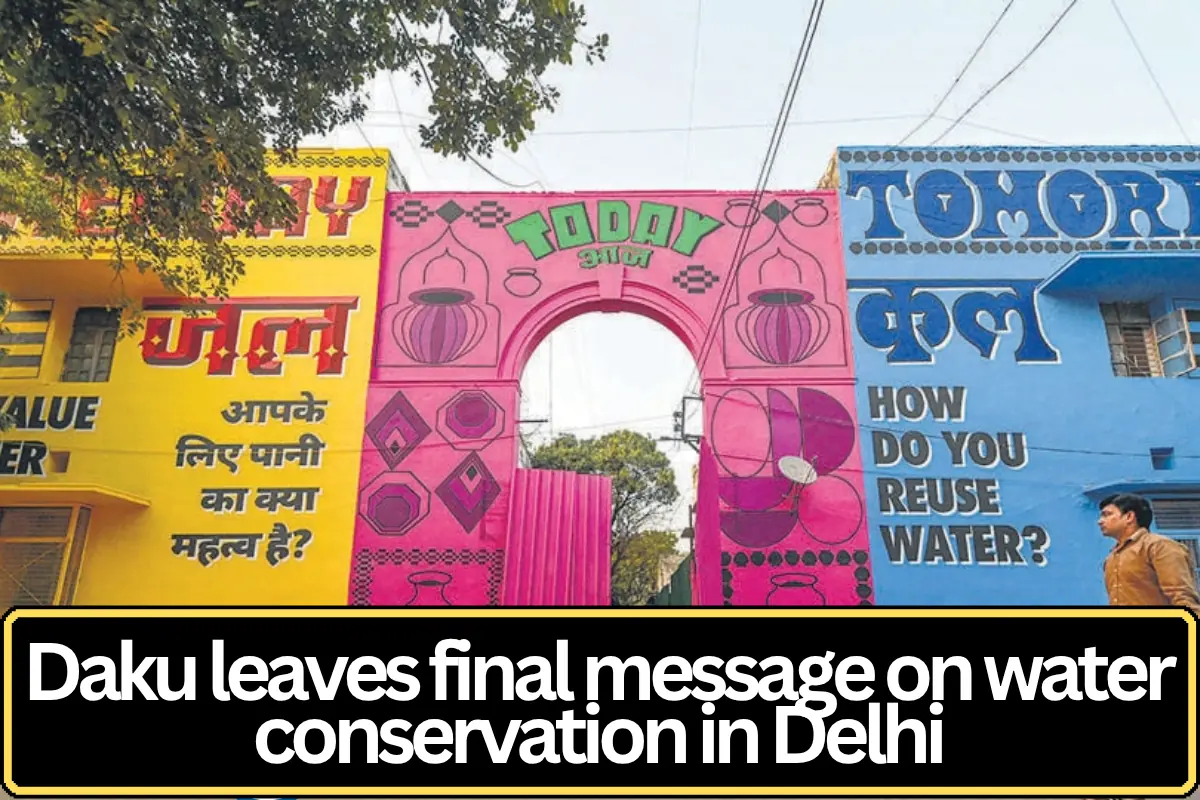
Artist’s Final Work Highlights Urgent Water Concerns
A prominent Delhi-based street artist known as Daku has left behind a final public message emphasizing water conservation, drawing attention to environmental challenges in the national capital. The artwork, completed shortly before his death, has emerged as a symbolic and poignant reminder of the city’s ongoing water crisis and the role of public awareness in addressing it.
The installation, located in a visible urban space, uses minimalist design and stark messaging to communicate the urgency of preserving water resources. Created in March 2026, the work has since gained attention from residents, environmental activists, and the art community, who view it as both a creative expression and a call to action.
A Legacy Rooted in Public Engagement
Daku, known for his conceptual and often politically charged street art, had built a reputation for using urban spaces to communicate social messages. His works frequently addressed themes such as climate change, urban living, and the passage of time, often blending simplicity with powerful symbolism.
His final piece continues this tradition, focusing on water scarcity—a growing concern in Delhi, where rising demand, depleting groundwater levels, and seasonal shortages have put increasing pressure on resources. The artwork’s message underscores the need for collective responsibility and sustainable practices.
Members of the local art community have described the work as deeply reflective of Daku’s artistic philosophy, which prioritized public accessibility and engagement over conventional gallery displays. By placing his message in a shared space, he ensured that it would reach a diverse audience.
Water Crisis in Delhi Remains a Key Issue
Delhi has long faced challenges related to water availability, with experts warning that the situation could worsen without significant intervention. Issues such as over-extraction of groundwater, pollution of water bodies, and uneven distribution systems have contributed to the crisis.
Authorities have implemented various measures to address these challenges, including rainwater harvesting initiatives, infrastructure upgrades, and awareness campaigns. However, gaps remain in implementation and public participation, making sustained efforts essential.
Daku’s artwork has reignited conversations around these issues, with observers noting that art can play a critical role in influencing public perception and encouraging behavioral change. The timing of the message has added to its impact, as the city approaches peak summer months when water shortages typically intensify.
Art as a Medium for Environmental Advocacy
Street art has increasingly become a platform for addressing social and environmental concerns, offering artists a way to engage directly with communities. In this context, Daku’s final message stands out as a compelling example of how creative expression can intersect with activism.
The simplicity of the installation allows viewers to interpret its meaning without the need for detailed explanation, making it accessible to a wide audience. This approach aligns with broader trends in public art, where clarity and immediacy are often used to convey complex issues.
Environmental advocates have welcomed the artwork, noting that it reinforces the importance of awareness in tackling resource challenges. They argue that such initiatives can complement policy measures by fostering a sense of shared responsibility among citizens.
Public Response and Interpretation
The artwork has drawn significant attention on social media, with images and interpretations circulating widely. Many viewers have described it as a fitting tribute to the artist’s legacy, highlighting both his creativity and his commitment to addressing pressing societal issues.
Residents who have visited the site have expressed a mix of admiration and reflection, with some noting that the message resonates strongly in a city where water scarcity affects daily life. The installation has also prompted discussions about the role of individual actions in conserving resources.
Art critics have pointed out that the work’s impact lies in its ability to provoke thought without prescribing solutions, encouraging viewers to consider their own relationship with water usage and sustainability.
Remembering the Artist Behind the Message
Daku’s contribution to India’s street art scene has been widely acknowledged, with his works often challenging conventional boundaries between art and public space. His ability to convey complex ideas through minimalistic designs earned him recognition both nationally and internationally.
Colleagues and admirers have described him as an artist who consistently sought to engage with real-world issues, using his craft to spark dialogue and reflection. His final piece is seen as a continuation of this approach, encapsulating his artistic vision and social concerns.
The circumstances surrounding his death have added a layer of poignancy to the artwork, transforming it into a lasting testament to his legacy. For many, the piece serves not only as a message about water conservation but also as a reminder of the artist’s enduring impact.
Broader Implications for Urban Sustainability
The attention generated by Daku’s final work has highlighted the broader challenges of urban sustainability, particularly in rapidly growing cities like Delhi. Experts emphasize that addressing water scarcity requires a combination of policy interventions, technological solutions, and community engagement.
Initiatives such as efficient water management systems, conservation practices, and public awareness campaigns are seen as essential components of a comprehensive strategy. The role of cultural and creative expressions in supporting these efforts is increasingly being recognized.
By bringing attention to the issue in a public and accessible manner, Daku’s artwork contributes to a wider conversation about sustainable living and environmental responsibility. It underscores the potential of art to influence attitudes and inspire action.
Continuing the Conversation
As discussions around water conservation continue, the impact of Daku’s final message is likely to persist. Community groups and environmental organizations have expressed interest in using the artwork as a starting point for further initiatives aimed at promoting awareness and engagement.
There have also been calls to preserve the installation as a cultural and environmental landmark, recognizing its significance both as a piece of art and as a statement on a critical issue. Such efforts reflect the growing appreciation for public art as a tool for social change.
The dialogue sparked by the artwork highlights the importance of collective action in addressing environmental challenges, reinforcing the idea that individual and community efforts can contribute to broader solutions.
Conclusion
The final work of street artist Daku stands as a powerful reminder of the urgent need for water conservation in Delhi, combining artistic expression with environmental advocacy.
Current Status
The artwork continues to draw attention and spark public discussion as residents and stakeholders reflect on its message and the broader challenges of water sustainability in the city.