Zuckerberg, Ellison, Huang and Brin to Join Trump-Led Tech Panel Focused on China Strategy
 Taniska Kumari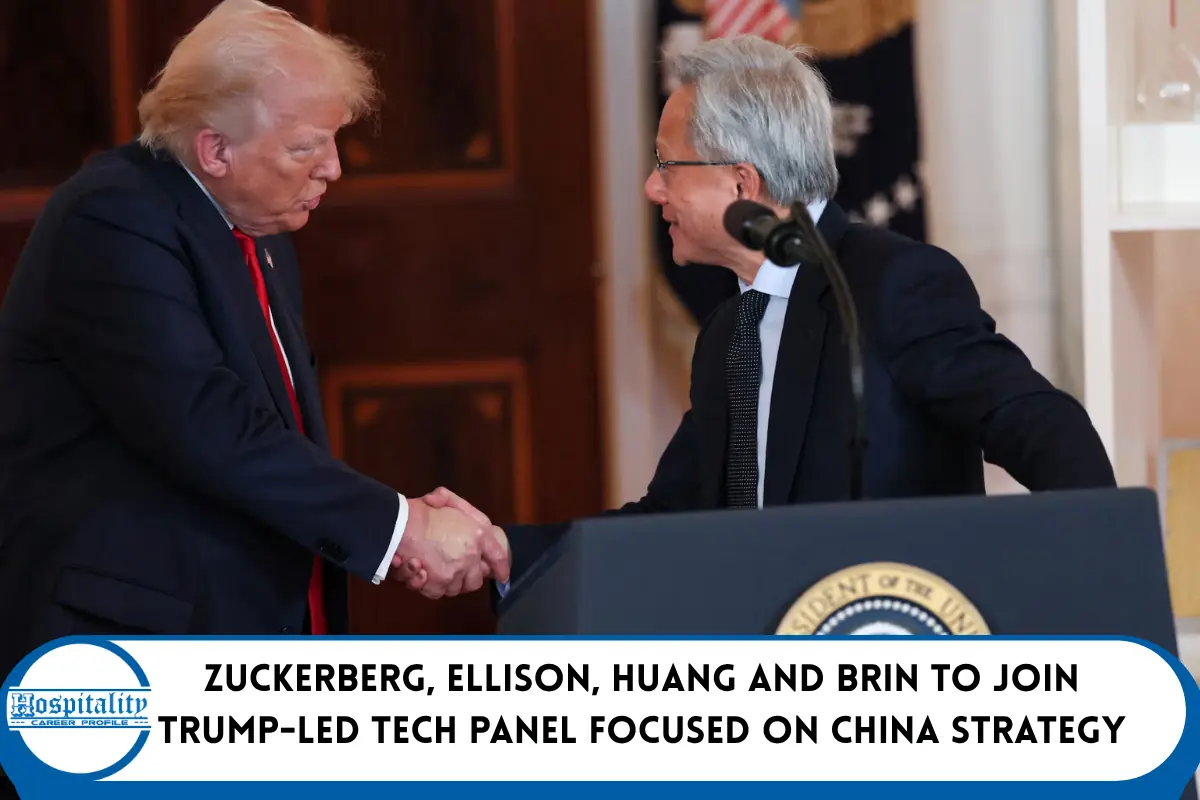
Recent reports say that Mark Zuckerberg, Larry Ellison, Jensen Huang, and Sergey Brin, who are all well-known technology leaders, will join a technology advisory panel led by former U.S. President Donald Trump. The goal of the panel is to help the U.S. compete better with China in important strategic areas. The project is expected to bring together important people from the tech industry to help with national security, supply chains, and new ideas.
High-Profile Tech Leaders Join Strategic Panel
The proposed panel will include some of the most influential figures in the global technology sector. Mark Zuckerberg, CEO of Meta Platforms, Larry Ellison, co-founder of Oracle, Jensen Huang, CEO of Nvidia, and Sergey Brin, co-founder of Google, are among those expected to participate.
The involvement of these leaders signals a significant effort to align government priorities with private sector expertise, particularly in areas such as artificial intelligence, semiconductors and cloud computing.
Focus on US-China Technology Competition
The panel’s primary objective is to address growing competition between the United States and China in advanced technologies. Policymakers have increasingly emphasized the importance of maintaining leadership in sectors such as AI, chip manufacturing and data infrastructure.
China’s rapid technological development has raised concerns in Washington, prompting efforts to strengthen domestic capabilities and reduce reliance on foreign supply chains. The panel is expected to provide recommendations on how to achieve these goals.
Strategic Areas of Discussion
Key topics likely to be discussed by the panel include semiconductor production, AI development, cybersecurity and critical infrastructure. The inclusion of leaders from companies heavily involved in these areas suggests a comprehensive approach to addressing technological challenges.
Nvidia, led by Jensen Huang, plays a crucial role in AI hardware, while Oracle and Google have strong positions in cloud computing and data services. Meta’s focus on digital platforms and AI also aligns with the panel’s objectives.
Role of Private Sector in Policy Making
The formation of this panel highlights the growing role of the private sector in shaping technology policy. By involving industry leaders, the initiative aims to leverage practical insights and real-world experience to inform decision-making.
This approach reflects a broader trend where governments collaborate with technology companies to address complex challenges, including innovation, security and economic growth.
Implications for the Tech Industry
The panel could have significant implications for the technology industry, particularly in terms of regulation, investment and international collaboration. Recommendations from the group may influence policies related to research funding, export controls and domestic manufacturing.
For companies involved, participation in the panel provides an opportunity to shape the direction of national technology strategy while aligning their business interests with government priorities.
Geopolitical Context
The initiative comes at a time of heightened geopolitical tension between the United States and China, with technology emerging as a central area of competition. Both countries are investing heavily in innovation and infrastructure to secure long-term economic and strategic advantages.
Efforts to build technological self-reliance and protect intellectual property have become key components of national policy, influencing decisions across multiple sectors.
Challenges and Considerations
While the panel represents a proactive approach to addressing technological challenges, it also raises questions about coordination between government and industry. Balancing innovation with regulation, as well as ensuring fair competition, will be critical considerations.
There may also be differing perspectives among participants on issues such as data privacy, global collaboration and market access, which could influence the panel’s recommendations.
Potential Outcomes
The panel is expected to produce strategic recommendations aimed at strengthening the United States’ position in key technology sectors. These may include initiatives to boost domestic manufacturing, support research and development, and enhance workforce skills.
If implemented, such measures could have long-term effects on the global technology landscape, shaping how companies operate and compete internationally.
Industry and Market Reaction
The announcement of the panel has generated interest across the technology and investment communities, with stakeholders closely watching how the initiative develops. Market participants are particularly focused on potential policy changes that could impact major technology companies.
While it remains early in the process, the involvement of leading industry figures has raised expectations about the panel’s ability to influence meaningful change.
Conclusion
The formation of a Trump-led technology panel featuring top industry leaders underscores the increasing importance of collaboration between government and the private sector as the United States seeks to strengthen its competitive position in the global technology race with China.