Tectonic Pump Brings Ancient Microbes to Seafloor in Subduction Zones
Study finds tectonic activity in subduction zones transports ancient microbes to the seafloor, enabling revival after millions of years.
 Shah Vaibhavi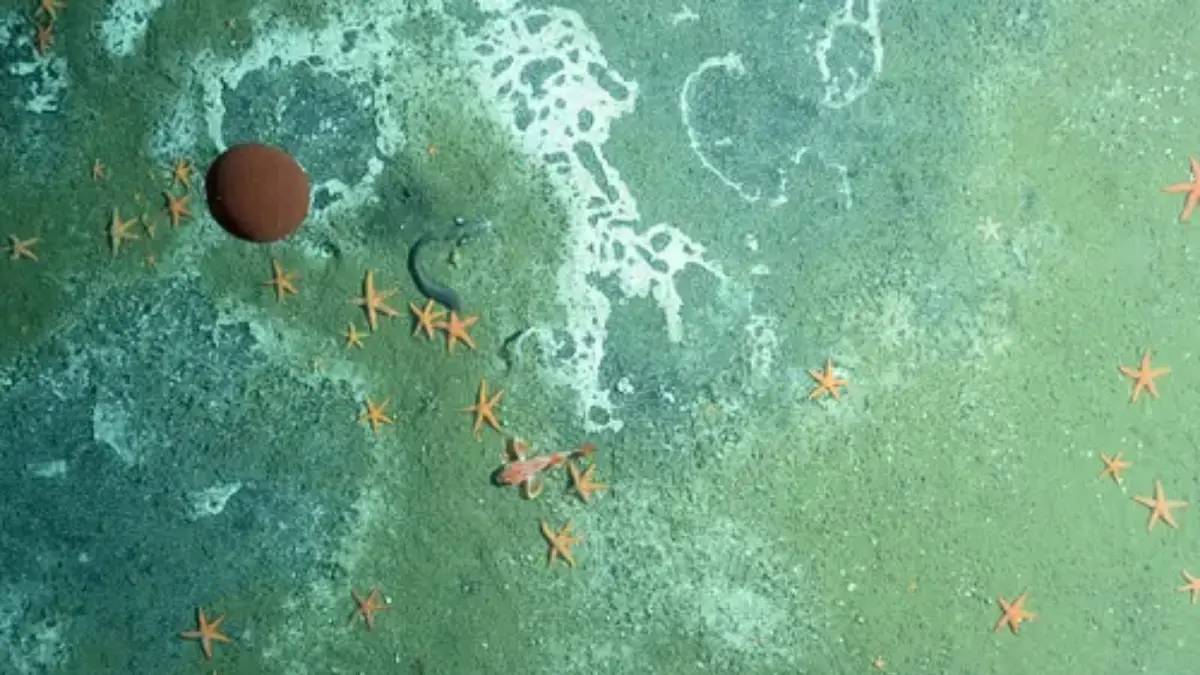
Global, 2026 — New research presented at the 2026 Seismological Society of America Annual Meeting shows that tectonic activity in subduction zones may transport long-buried microbes from deep beneath the ocean floor back to the seafloor, allowing them to revive and spread after remaining dormant for thousands to millions of years.
The study identifies a process described as a “tectonic pump,” where fault movement and fluid flow within subduction zones drive the upward migration of subseafloor microbes. These organisms, buried under kilometers of sediment, can remain inactive for extended geological timescales before being relocated to more favorable environments.
Fluid circulation moves microbes upward
Researchers used modeling to estimate the scale of fluid movement within subduction systems, concluding that more than 1 million gigatons of fluid could circulate per million years. This process has the potential to transport up to 10³⁰ microbial cells from deep sediment layers toward the seafloor.
The mechanism is driven by fault slip and associated pressure changes, which mobilize fluids through fractures and sediment layers. These pathways allow microbes embedded in deep sediments to move upward through the subduction wedge or diffuse gradually through surrounding materials.
In subduction zones, one tectonic plate descends beneath another, carrying sediment and microorganisms downward. While some microbes continue descending toward the mantle, others are redirected upward through fault networks, creating a circulation system that connects deep and shallow environments.
Dormant microbes revived at seafloor
Microorganisms buried deep beneath the ocean floor can survive in a dormant state for thousands to millions of years. These organisms possess specialized adaptations, including DNA repair systems and metabolic processes that enable them to persist under extreme conditions with limited energy resources.
However, long-term survival alone does not allow these microbes to reproduce or spread. The study indicates that once transported to shallower layers near the seafloor, they encounter conditions that enable reactivation, growth and dispersal.
This transition from deep dormancy to active life represents a critical phase in the microbial lifecycle, linking geological processes with biological activity over extended timescales. The full cycle, from burial to re-emergence, can take tens of millions of years.
Seismic activity linked to microbial distribution
Field observations from the Costa Rica subduction zone show a correlation between seismic activity and microbial abundance. Areas with higher seismic energy indices were found to contain greater proportions of microbial groups typically associated with deep subsurface environments.
These findings suggest that tectonic processes influence not only the movement of fluids but also the distribution of microbial communities. Both large earthquakes and smaller-scale movements, including slow slip events and aseismic creep, contribute to stress changes that drive fluid flow.
The study indicates that even low-intensity tectonic activity can facilitate microbial transport, expanding the role of subduction dynamics beyond catastrophic seismic events.
Cold seeps provide evidence of active transport
Cold seeps on the ocean floor offer observable evidence of fluid discharge from deep subsurface layers. These sites, where fluids escape through sediments, align with the proposed tectonic pumping mechanism and provide accessible locations for sampling microbial communities.
At these seep sites, researchers can analyze the composition of microbial populations and assess how they relate to subsurface processes. The presence of deep-origin microbes at these locations supports the idea that tectonic-driven transport is actively occurring.
Cold seeps therefore serve as natural observation points for studying the interaction between geological activity and biological systems, allowing scientists to test models of fluid movement and microbial migration.
Geological processes shape deep biosphere cycles
The research highlights a large-scale connection between Earth’s tectonic activity and the deep biosphere. By enabling the movement of microorganisms across extreme depths, subduction systems may play a key role in sustaining microbial diversity and facilitating long-term genetic persistence.
Genomic studies of deep-buried microbes indicate that mutations over time tend to preserve essential survival traits. The eventual return to surface environments allows these organisms to reproduce and potentially introduce genetic variation into active ecosystems.
The findings suggest that subduction zones act as dynamic systems linking burial, transport and reactivation of life beneath the ocean floor. This process extends the influence of tectonic activity beyond physical landscape changes to include biological cycles operating over millions of years.
By revealing how geological forces can redistribute life within the Earth’s crust, the study contributes to a broader understanding of how ecosystems function across extreme environments and long timescales.