Telecom Italia CEO Says Scaling Up Is Key to Strengthening Europe’s Telecom Sector
 Taniska Kumari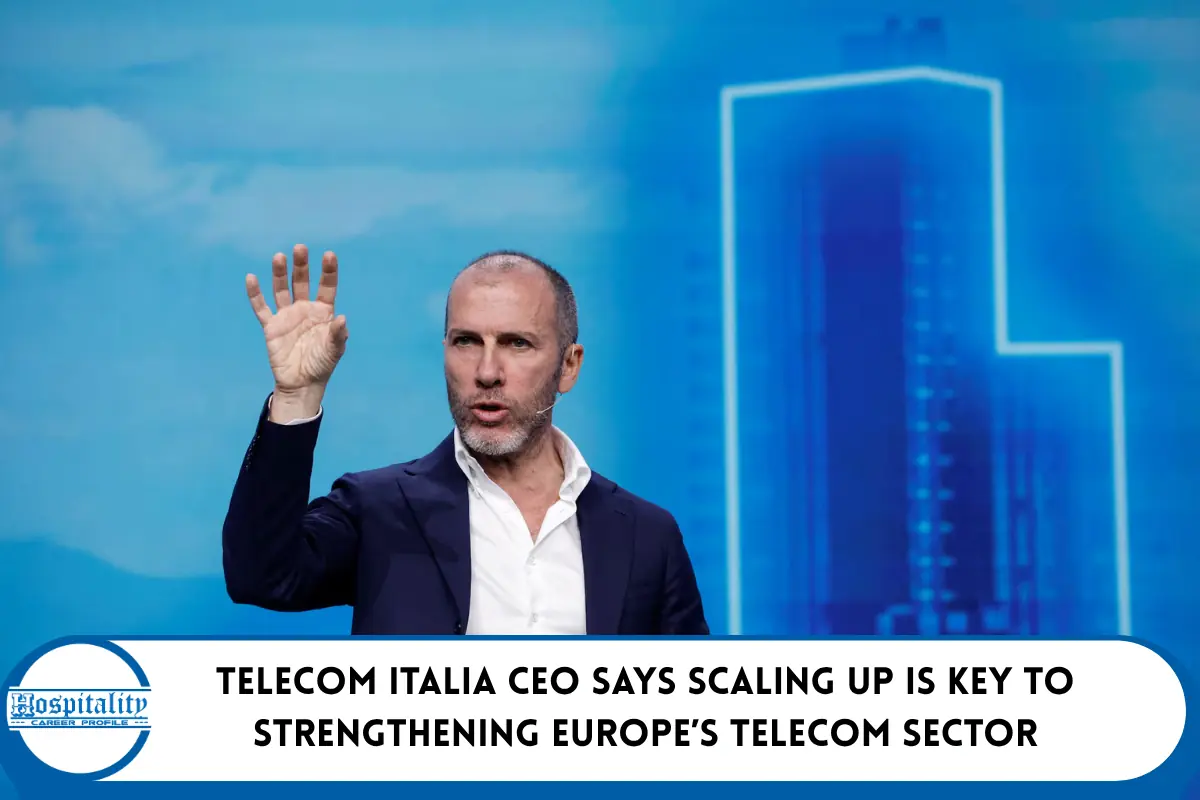
Telecom Italia CEO Pietro Labriola said that scaling up operations is essential to strengthening Europe’s telecom sector, highlighting the importance of consolidation, investment, and digital transformation during remarks reported in March 2026. Speaking about the challenges facing the industry, Labriola emphasized that fragmented markets and limited scale are hindering competitiveness in Europe compared to global counterparts.
Call for Industry Consolidation
Labriola stressed that Europe’s telecom sector remains highly fragmented, with multiple operators competing within individual markets. This fragmentation, he argued, limits the ability of companies to achieve economies of scale, invest in advanced infrastructure, and compete effectively with larger global players.
He pointed out that consolidation within the sector could enable telecom companies to pool resources, reduce costs, and accelerate innovation. By scaling up operations, firms would be better positioned to invest in next-generation technologies such as 5G networks, fiber infrastructure, and cloud-based services.
The CEO’s comments come amid ongoing discussions across Europe about the need for regulatory reforms to facilitate mergers and partnerships within the telecom industry.
Digital Business as a Growth Driver
Labriola highlighted that the future of telecom companies lies increasingly in digital services rather than traditional connectivity alone. He noted that digital business models, including cloud computing, cybersecurity, and enterprise solutions, are becoming central to revenue growth.
According to Labriola, telecom operators must evolve into digital service providers to remain competitive. This transition requires significant investment in technology platforms, data analytics, and artificial intelligence capabilities.
He also emphasized that customer expectations are changing rapidly, with businesses and consumers demanding more integrated and seamless digital experiences. Telecom companies must adapt to these expectations by offering innovative services that go beyond basic connectivity.
Challenges Facing the European Telecom Sector
The European telecom industry faces several structural challenges, including intense competition, regulatory constraints, and high capital expenditure requirements. These factors have contributed to lower profitability compared to telecom markets in regions such as the United States and Asia.
Labriola noted that regulatory frameworks in Europe often prioritize competition over scale, which can limit the ability of companies to grow and invest. While competition benefits consumers through lower prices, it can also reduce margins and discourage long-term investment in infrastructure.
He called for a balanced approach that supports both competition and the financial sustainability of telecom operators.
Investment in Infrastructure and Innovation
Scaling up operations, Labriola said, would enable telecom companies to increase investment in critical infrastructure. This includes expanding 5G networks, improving broadband connectivity, and enhancing network resilience.
He emphasized that such investments are essential for supporting Europe’s digital economy, including sectors such as manufacturing, healthcare, and finance. Reliable and high-speed connectivity is increasingly seen as a foundation for economic growth and innovation.
In addition to physical infrastructure, telecom companies must invest in software and digital platforms to support new services and business models.
Role of Partnerships and Collaboration
Labriola highlighted the importance of partnerships and collaboration within the telecom ecosystem. By working with technology companies, startups, and other stakeholders, telecom operators can accelerate innovation and bring new services to market more quickly.
Collaborations can also help companies share risks and costs associated with large-scale investments, particularly in areas such as network deployment and research and development.
The CEO noted that strategic alliances could play a key role in driving the industry’s transformation and enabling companies to compete on a global scale.
Global Competition and Market Dynamics
European telecom companies face increasing competition from global players, particularly in areas such as cloud computing and digital services. Companies in the United States and Asia often operate at larger scales, giving them a competitive advantage in terms of investment capacity and technological innovation.
Labriola warned that without scaling up, European operators risk falling behind in the global digital economy. He emphasized the need for a coordinated approach to strengthen the region’s position and ensure that it remains competitive.
The evolving market dynamics also highlight the importance of agility and adaptability in responding to changing customer needs and technological advancements.
Regulatory Environment and Policy Implications
The CEO’s comments have implications for policymakers and regulators across Europe. Encouraging consolidation and supporting investment in infrastructure may require changes to existing regulatory frameworks.
Labriola suggested that policymakers should consider measures to facilitate mergers, reduce regulatory burdens, and create an environment conducive to long-term investment. At the same time, maintaining fair competition and protecting consumer interests will remain important priorities.
The balance between regulation and growth will be a key factor in shaping the future of the telecom sector in Europe.
Future Outlook for Telecom Italia
Telecom Italia itself is undergoing transformation as it seeks to strengthen its position in the market. The company has been focusing on expanding its digital services, improving operational efficiency, and exploring strategic partnerships.
Labriola indicated that the company’s strategy aligns with the broader industry trend toward scaling and digitalization. By leveraging its capabilities and resources, Telecom Italia aims to remain competitive in an evolving market.
The company’s efforts reflect the broader challenges and opportunities facing telecom operators across Europe.
Conclusion
Pietro Labriola’s call for scaling up highlights the need for structural changes in Europe’s telecom sector, as companies seek to enhance competitiveness, invest in digital transformation, and support long-term growth in an increasingly globalized industry.