Tesla Halts New Model 3 Launch Plans in China as Shares Reverse Gains
Tesla will not release a new Model 3 in China, leading to a reversal in stock gains as investors react to shifting growth expectations.
 RUKAIYA KADIVAL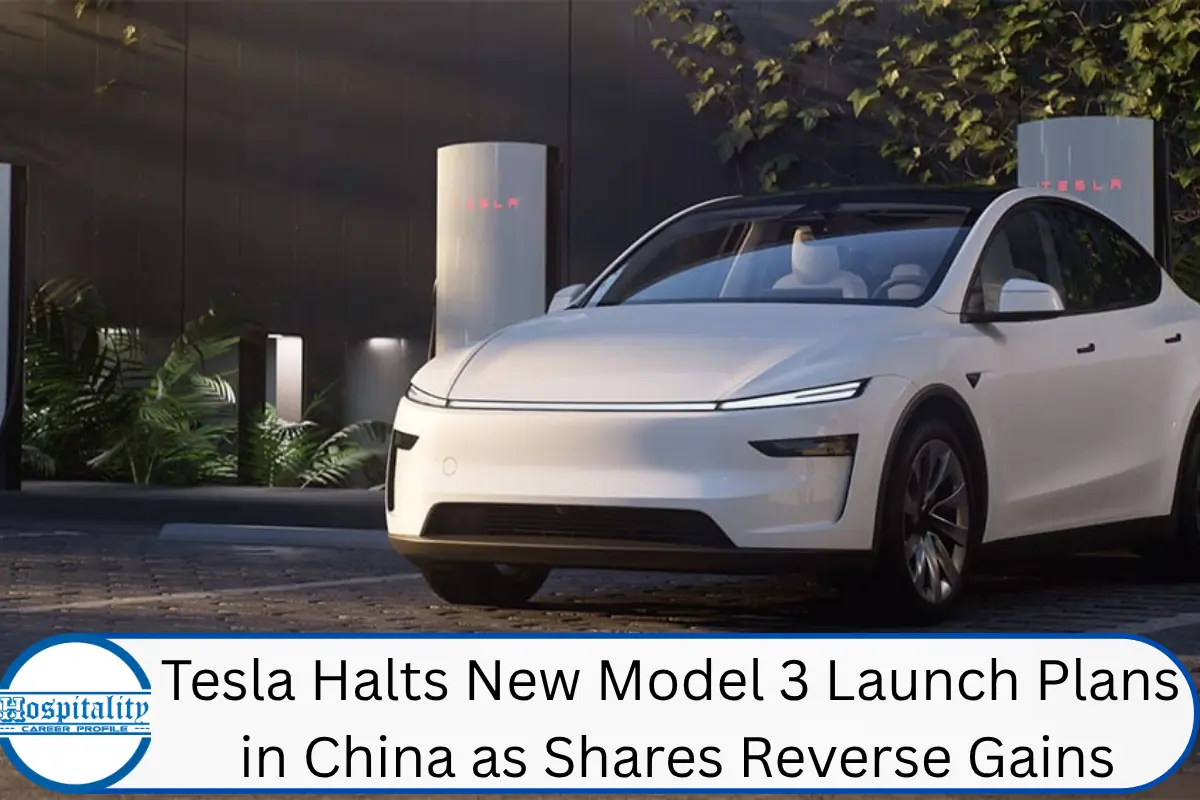
Tesla Halts New Model 3 Launch Plans in China as Shares Reverse Gains
Tesla has decided not to release a new version of its Model 3 sedan in China in the near term, according to reports on March 27, prompting a reversal in its stock gains as investors reassessed the company’s growth outlook in one of its most critical markets. The development comes as Tesla faces intensifying competition and evolving demand dynamics in China, the world’s largest electric vehicle market.
The decision affects Tesla’s strategy in China, where the Model 3 has been one of its key offerings. Market participants reacted quickly, with the company’s shares giving back earlier gains amid concerns that the absence of a refreshed model could impact sales momentum and market share in the region.
Strategic Pause in Key Market
China represents a crucial market for Tesla, accounting for a significant portion of its global deliveries and production through its Shanghai Gigafactory. The Model 3, along with the Model Y, has been central to Tesla’s success in the country, appealing to a broad base of consumers seeking premium electric vehicles.
By opting not to introduce a new Model 3 version at this stage, Tesla appears to be taking a cautious approach, potentially focusing on optimizing its existing lineup and managing production efficiency. Analysts suggest that the company may be waiting for more favorable market conditions or technological upgrades before launching a new variant.
The move highlights the challenges Tesla faces in balancing product innovation with market timing, particularly in a highly competitive environment.
Rising Competition in China’s EV Market
The Chinese electric vehicle market has become increasingly competitive, with domestic manufacturers rapidly expanding their product offerings and improving technological capabilities. Companies such as BYD, NIO, and XPeng have been introducing new models with advanced features, competitive pricing, and strong local brand recognition.
This competitive pressure has intensified the need for continuous product updates, making Tesla’s decision not to launch a new Model 3 noteworthy. Industry observers note that frequent model refreshes are becoming standard practice in China’s fast-moving EV sector.
Tesla’s ability to maintain its market position will depend on how effectively it navigates this competitive landscape while continuing to innovate.
Impact on Investor Sentiment
The news led to a shift in investor sentiment, with Tesla’s stock reversing earlier gains during the trading session. Investors had been anticipating potential product updates that could drive sales growth, particularly in China, where demand for electric vehicles remains strong.
The absence of a new Model 3 launch raised concerns about near-term growth prospects, prompting some investors to take profits. Market analysts indicated that expectations around product innovation play a significant role in shaping Tesla’s valuation and stock performance.
Despite the pullback, Tesla remains one of the most closely watched stocks in the global market, with its performance often reflecting broader trends in the electric vehicle sector.
Focus on Existing Models and Efficiency
Instead of introducing a new Model 3, Tesla may be focusing on improving production efficiency and optimizing its current vehicle lineup. Enhancements to manufacturing processes, cost reductions, and incremental updates to existing models could help the company maintain competitiveness without a full product overhaul.
The company has previously demonstrated its ability to implement continuous improvements through software updates and minor design changes, which can enhance vehicle performance and user experience without requiring entirely new models.
This approach may allow Tesla to balance innovation with cost management, particularly in a market where pricing and margins are under pressure.
Broader Market and Economic Factors
Global economic conditions and industry trends are also influencing Tesla’s strategy. Factors such as supply chain dynamics, raw material costs, and regulatory policies play a significant role in shaping decisions related to product launches and market expansion.
In China, government policies supporting electric vehicles have driven strong adoption, but the market has also seen price competition intensify as more players enter the space. These dynamics create both opportunities and challenges for Tesla as it seeks to maintain growth.
Additionally, fluctuations in consumer demand and economic conditions can impact the timing of new product introductions.
Long-Term Growth Outlook
Despite the short-term concerns, Tesla’s long-term growth prospects remain tied to its ability to innovate and expand its presence in key markets. The company continues to invest in new technologies, including battery advancements, autonomous driving capabilities, and energy solutions.
China is expected to remain a central component of Tesla’s global strategy, given its size and growth potential. Analysts believe that the company will eventually introduce new models or upgrades tailored to the market, even if the timeline has shifted.
The company’s ability to adapt to local market conditions and consumer preferences will be critical in sustaining its competitive edge.
Industry Implications
Tesla’s decision not to launch a new Model 3 in China may have broader implications for the electric vehicle industry, highlighting the importance of strategic timing and market positioning. Other automakers are likely to closely monitor Tesla’s approach as they plan their own product strategies.
The development also underscores the evolving nature of the EV market, where rapid innovation and competition require companies to continuously reassess their strategies. Balancing innovation, cost efficiency, and market demand remains a key challenge for all players in the sector.
As the industry continues to grow, strategic decisions such as this will play a significant role in shaping competitive dynamics.
Conclusion
Tesla’s decision to hold off on launching a new Model 3 in China has led to a pullback in its stock, reflecting investor concerns over growth momentum, while the company continues to navigate a highly competitive and rapidly evolving electric vehicle market.