Toyota Launches U.S.-Made Tundra and Highlander Models in Japan
Toyota has introduced U.S.-made Tundra and Highlander models in Japan, expanding its domestic lineup with globally manufactured vehicles.
 RUKAIYA KADIVAL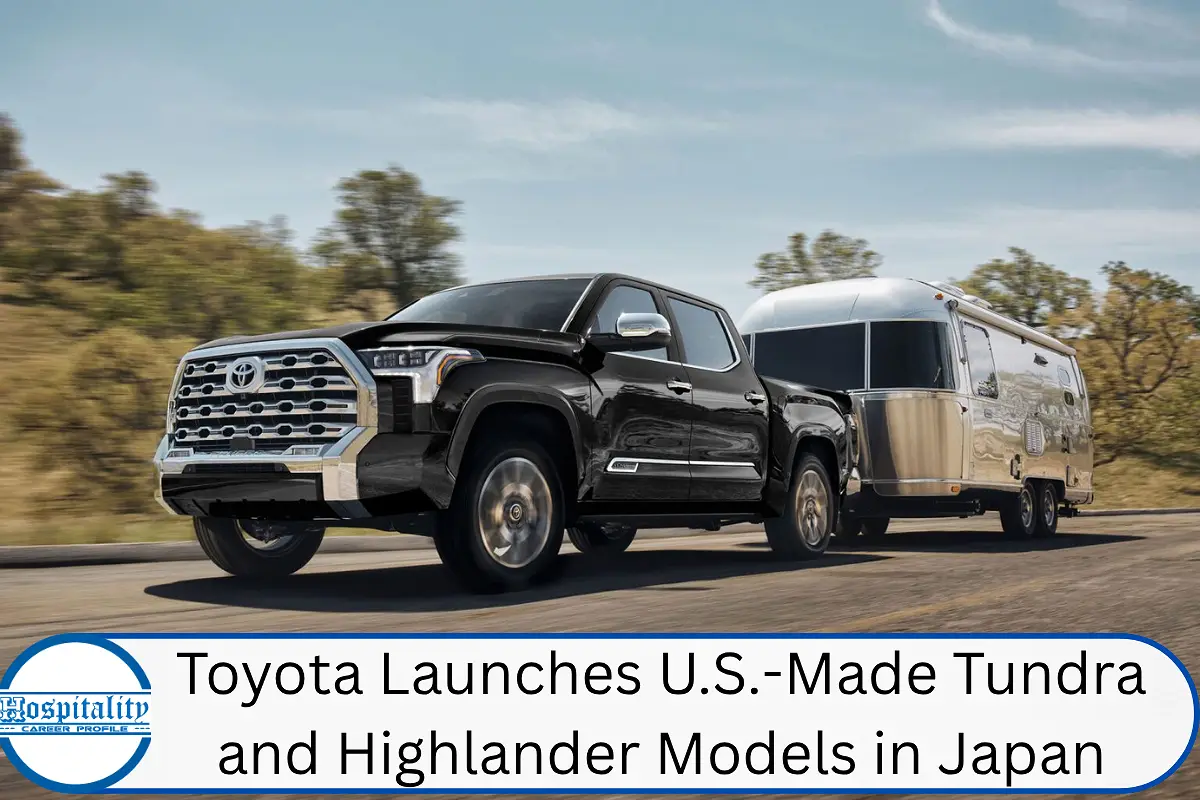
Toyota Launches U.S.-Made Tundra and Highlander Models in Japan
Toyota Motor Corporation has launched its U.S.-manufactured Tundra pickup truck and Highlander SUV in Japan, marking a strategic move to expand its domestic product lineup with globally produced models, the company announced in early April 2026. The launch aims to tap into growing demand for larger vehicles and diversify offerings in its home market.
The introduction of the Tundra and Highlander—both built in the United States—represents a shift in Toyota’s domestic strategy, bringing vehicles traditionally targeted at North American consumers into Japan. The move reflects changing consumer preferences and Toyota’s effort to leverage its global manufacturing network more effectively.
Expanding Product Offerings in Japan
Toyota’s decision to introduce these models in Japan comes as demand for larger sport utility vehicles and pickup trucks gradually increases, even in markets historically dominated by compact cars. By adding the Tundra and Highlander to its domestic lineup, Toyota is positioning itself to meet evolving customer expectations.
The Highlander, a midsize SUV, has been a strong performer in international markets, particularly in North America, due to its spacious design, family-oriented features, and hybrid options. Its introduction in Japan is expected to attract consumers seeking more versatile and premium utility vehicles.
The Tundra, a full-size pickup truck, represents a more niche offering in Japan, where pickup trucks are less common. However, the model is likely to appeal to specific customer segments, including enthusiasts, businesses, and buyers interested in lifestyle-oriented vehicles.
Leveraging Global Manufacturing Strength
The launch highlights Toyota’s ability to utilize its global manufacturing footprint to support different markets. Both the Tundra and Highlander are produced in the United States, underscoring the company’s integrated production strategy and cross-border supply chain capabilities.
By importing U.S.-made vehicles into Japan, Toyota can optimize production efficiency while offering a broader range of products without the need for additional domestic manufacturing capacity. This approach allows the company to respond more flexibly to market demand.
The move also demonstrates Toyota’s confidence in the quality and appeal of its globally produced vehicles, reinforcing its brand consistency across regions.
Responding to Changing Consumer Preferences
Consumer preferences in Japan have been gradually shifting, with increasing interest in SUVs and vehicles that offer greater space, comfort, and advanced features. While compact and fuel-efficient cars remain dominant, there is a growing segment of buyers seeking larger vehicles.
The introduction of the Highlander aligns with this trend, offering a blend of practicality and premium features. Meanwhile, the Tundra provides an option for consumers looking for a more rugged and distinctive vehicle, potentially expanding Toyota’s reach into new customer segments.
Automakers are increasingly adapting their product strategies to reflect these changes, and Toyota’s latest move is part of a broader industry trend.
Competitive Landscape
The Japanese automotive market remains highly competitive, with domestic manufacturers offering a wide range of vehicles tailored to local preferences. Toyota’s decision to introduce U.S.-made models adds a new dimension to this competition.
While the Highlander will compete in the growing SUV segment, the Tundra’s competition may be more limited due to the relatively small pickup truck market in Japan. However, its unique positioning could help differentiate Toyota’s offerings.
Other automakers are also expanding their SUV portfolios, increasing competition in this segment and driving innovation in design, technology, and performance.
Pricing and Market Positioning
Toyota is expected to position the Tundra and Highlander as premium offerings within its domestic lineup, reflecting their size, features, and import status. Pricing strategies will play a crucial role in determining their success in the Japanese market.
Imported vehicles often come with higher price tags due to logistics and regulatory costs, which may influence consumer adoption. However, Toyota’s strong brand reputation and customer loyalty could help mitigate these challenges.
The company may also focus on highlighting the unique features and capabilities of these models to justify their positioning and attract buyers.
Impact on Toyota’s Domestic Strategy
The launch of U.S.-made vehicles in Japan signals a broader shift in Toyota’s domestic strategy, emphasizing flexibility and global integration. By offering models from different production bases, the company can better respond to diverse customer needs.
This approach may also enable Toyota to test market reactions to different vehicle types and refine its product portfolio accordingly. The success of the Tundra and Highlander in Japan could influence future decisions on introducing additional global models.
The move reflects Toyota’s ongoing efforts to balance its traditional strengths with new opportunities in a changing automotive landscape.
Broader Industry Trends
The automotive industry is undergoing significant transformation, with shifts toward electrification, digitalization, and changing mobility preferences. At the same time, globalization continues to shape how automakers design, produce, and distribute vehicles.
Toyota’s decision to bring U.S.-made models to Japan highlights the increasing interconnectedness of global markets and the importance of leveraging international production capabilities.
As automakers navigate these changes, strategies that combine local market knowledge with global resources are likely to become more common.
Outlook for the New Models
The reception of the Tundra and Highlander in Japan will depend on factors such as pricing, marketing, and consumer awareness. While the Highlander may find broader appeal due to its alignment with current trends, the Tundra’s success will likely depend on niche demand.
Toyota is expected to monitor sales performance closely and adjust its strategy as needed. Feedback from customers and dealers will play a key role in shaping the future of these models in the Japanese market.
The launch represents an opportunity for Toyota to expand its domestic footprint while reinforcing its global brand presence.
Conclusion
Toyota’s introduction of U.S.-made Tundra and Highlander models in Japan marks a strategic effort to diversify its domestic lineup and adapt to evolving consumer preferences, as the company continues to integrate its global operations with local market needs.