Trump’s Iran Strategy Faces Mounting Political and Public Scrutiny in the U.S.
Growing political divisions and public skepticism in the United States challenge Donald Trump’s Iran strategy as tensions in the Middle East continue to escalate.
 SANJANA DUTTA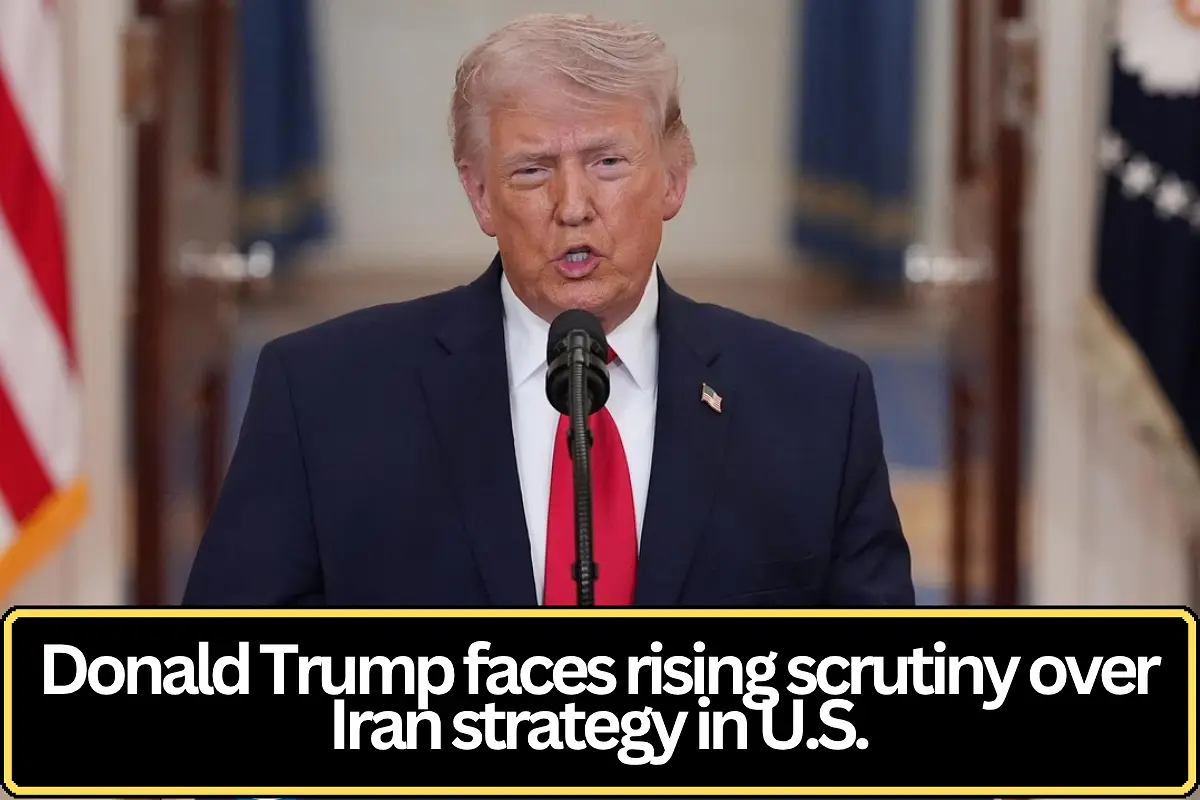
Trump’s Iran Strategy Faces Mounting Political and Public Scrutiny in the U.S.
WASHINGTON, April 4, 2026 — The United States is witnessing growing political divisions and public skepticism over former President Donald Trump’s strategy toward Iran, as tensions in the Middle East intensify and concerns mount over the long-term implications of a potential conflict.
Recent developments have placed Trump’s Iran approach under renewed scrutiny in Washington and across the country, with lawmakers, analysts, and voters questioning both the effectiveness and risks of escalating military and diplomatic pressure on Tehran. The debate comes amid a broader backdrop of instability in the region, with rising fears of disruption to global energy supplies and increased geopolitical uncertainty.
Deepening Political Divisions
The issue has exposed sharp divides within American politics. While some conservative leaders continue to back a hardline stance against Iran, arguing that strong measures are necessary to deter aggression, others within the same political spectrum have expressed concerns about the costs and consequences of a prolonged confrontation.
Opposition leaders and several moderates have also criticized the approach, warning that it risks entangling the United States in another protracted conflict in the Middle East. They have called for greater emphasis on diplomacy and multilateral engagement, suggesting that military escalation could undermine global stability and strain alliances.
The divisions are not limited to partisan lines. Analysts note that disagreements within political parties reflect broader uncertainty about how best to navigate a complex and evolving geopolitical landscape.
Public Opinion Shows Signs of Fatigue
Public sentiment appears increasingly cautious, with many Americans expressing reluctance to support another overseas conflict. Surveys and political commentary indicate that voters are weighing the potential economic and human costs of escalation, particularly at a time when domestic concerns such as inflation and economic stability remain pressing.
The prospect of disruptions in oil supply, especially through critical routes like the Strait of Hormuz, has added to public anxiety. Rising fuel prices and economic ripple effects could further influence voter attitudes, making foreign policy decisions a central issue in upcoming political debates.
Experts suggest that public fatigue with prolonged military engagements is shaping the discourse, with many citizens prioritizing domestic issues over international interventions.
Strategic and Economic Implications
The situation carries significant implications for global markets and international relations. Any escalation involving Iran could affect energy flows, trade routes, and diplomatic ties across the Middle East and beyond.
Economic analysts warn that instability in the region could lead to volatility in global oil prices, impacting economies worldwide. For the United States, this raises concerns about inflation and economic growth, further complicating the policy calculus.
On the strategic front, allies and partners are closely watching Washington’s actions. Divergent approaches between the United States and other major powers could reshape alliances and influence the balance of power in the region.
Calls for a Clearer Policy Direction
Amid the growing debate, policymakers and experts are calling for greater clarity in the administration’s objectives and strategy. Questions remain about the end goals of current policies, as well as the potential pathways to de-escalation.
Some analysts argue that a comprehensive approach combining diplomatic engagement, economic measures, and strategic deterrence may be necessary to address the challenges posed by Iran. Others emphasize the importance of avoiding actions that could inadvertently trigger a wider conflict.
The ongoing discussion reflects a broader struggle within U.S. foreign policy circles to balance assertiveness with caution, particularly in a region marked by longstanding tensions and complex dynamics.
Uncertain Path Ahead
As developments continue to unfold, the future of U.S. policy toward Iran remains uncertain. The interplay between political pressures, public opinion, and international considerations will likely shape the direction of decisions in the coming months.
With no immediate resolution in sight, the debate over how to handle Iran is expected to remain a central issue in American politics, highlighting the challenges of navigating foreign policy in an increasingly interconnected and volatile world.
For now, the situation underscores the delicate balance policymakers must strike as they seek to protect national interests while avoiding unintended consequences in a rapidly evolving global landscape.