Trump Confronts Presidency-Defining Choices as Iran Conflict Deepens
US President Donald Trump faces critical decisions as the Iran conflict escalates, shaping his presidency and global security dynamics.
 SANJANA DUTTA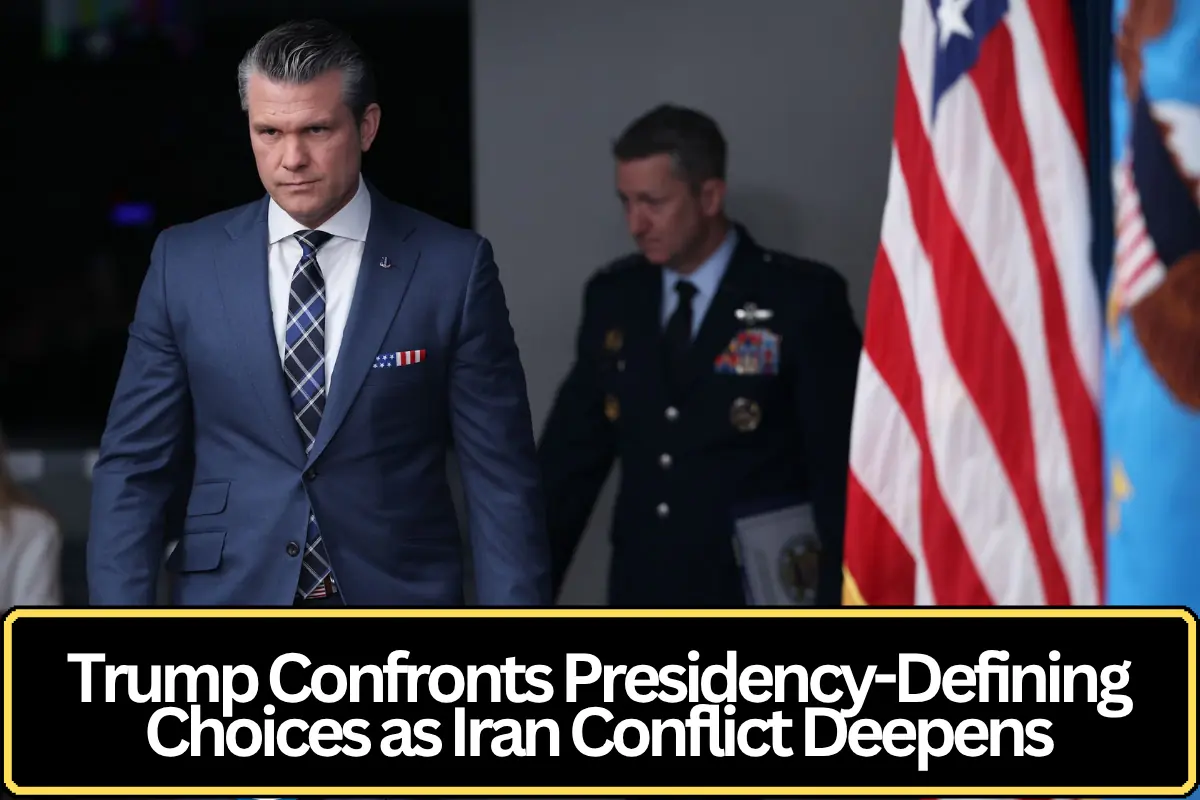
Trump Faces Critical Test as Iran Conflict Escalates
US President Donald Trump is confronting a series of presidency-defining decisions as the conflict with Iran intensifies in March 2026, placing pressure on his leadership, foreign policy strategy, and political standing. The escalating crisis, involving sustained military exchanges between Iran, Israel, and US-aligned forces, has raised urgent questions about the next steps Washington should take to manage the situation and avoid further regional destabilization.
The conflict, now entering a more volatile phase, has forced the administration to weigh military escalation against diplomatic engagement, while also addressing domestic concerns over costs, risks, and long-term objectives. These choices are expected to have far-reaching consequences for both US foreign policy and global stability.
Balancing Military Action and Diplomacy
At the center of the administration’s challenge is the decision of whether to intensify military operations or pursue diplomatic avenues to de-escalate tensions. Military officials have presented options that range from targeted strikes to broader strategic engagement, each carrying varying levels of risk and potential outcomes.
While a stronger military response could be seen as a demonstration of resolve, it also raises the possibility of wider regional conflict involving additional actors. On the other hand, diplomatic efforts may face obstacles given the current level of hostility and lack of trust between the parties involved.
Experts note that striking the right balance between these approaches will be crucial in determining the trajectory of the conflict and its impact on international relations.
Pressure From Congress and Allies
Domestically, Trump is facing increasing scrutiny from Congress, where lawmakers are demanding clarity on the administration’s strategy and objectives. Concerns have been raised about the legal basis for military actions, as well as the potential financial burden of prolonged engagement.
Some members of Congress are calling for greater oversight and explicit authorization for further military operations, emphasizing their constitutional role in decisions related to war. The debate reflects broader tensions between the executive branch and lawmakers over control of foreign policy.
Internationally, US allies, particularly in Europe, have expressed unease over being excluded from initial decision-making processes. Efforts to rebuild coordination and secure support are ongoing, but differences in approach could complicate collaboration.
Economic and Strategic Considerations
The economic implications of the conflict are adding another layer of complexity to the administration’s decision-making process. Rising defense spending, coupled with volatility in global energy markets, is contributing to concerns about inflation, budget deficits, and economic stability.
Analysts warn that prolonged military engagement could strain the US economy and have ripple effects across global markets. The need to protect critical infrastructure and maintain energy supply routes is also a key strategic priority.
Balancing these economic factors with security objectives is becoming increasingly challenging as the conflict continues to evolve.
Public Opinion and Political Stakes
Public sentiment in the United States is emerging as a significant factor in shaping the administration’s options. While some Americans support a firm stance against perceived threats, others are expressing concern about the risks of escalation and the potential human and financial costs of war.
Political analysts suggest that the conflict could have a lasting impact on Trump’s presidency, influencing public perception of his leadership and decision-making. The administration’s handling of the situation may also affect broader political dynamics, including upcoming policy debates and electoral considerations.
The challenge lies in maintaining public support while navigating a complex and rapidly changing geopolitical landscape.
Risks of Regional Escalation
The situation on the ground remains highly volatile, with ongoing military operations increasing the risk of broader regional involvement. Iran’s alliances and strategic capabilities, combined with the presence of US and allied forces in the region, create multiple potential flashpoints.
Any escalation could draw in additional countries, further complicating efforts to contain the conflict. Security experts warn that miscalculations or unintended incidents could quickly lead to a wider confrontation.
These risks underscore the importance of careful decision-making and effective communication among all parties involved.
Defining Moment for US Foreign Policy
The current crisis is widely seen as a defining moment for US foreign policy, with implications that extend beyond the immediate conflict. Decisions made in the coming weeks could shape the country’s approach to global security, alliances, and the use of military force.
Some analysts argue that the administration has an opportunity to demonstrate leadership by pursuing a coordinated and strategic response, while others caution that missteps could undermine US credibility and influence.
The outcome of this period will likely be a key factor in how Trump’s presidency is assessed in the context of international relations.
Outlook for the Coming Weeks
The next phase of the conflict will depend on a combination of military developments, diplomatic efforts, and political decisions in Washington. While there is still potential for de-escalation, the current trajectory suggests that tensions may continue to rise in the short term.
Policymakers are expected to remain engaged in intensive discussions as they evaluate options and respond to changing circumstances. The involvement of international partners and organizations may also play a role in shaping the outcome.
Observers emphasize that flexibility and strategic clarity will be essential in navigating the challenges ahead.
Conclusion
As the Iran conflict deepens, President Donald Trump faces a series of high-stakes decisions that will define his leadership and influence the broader course of global security.
Current Status
The United States continues to assess its next steps amid escalating tensions with Iran, with political, economic, and strategic pressures intensifying on the administration.