Trump Remarks on Robert Mueller’s Death Spark Political Debate in the United States
Donald Trump’s comments following the death of former FBI Director Robert Mueller have triggered political reactions and renewed debate over Mueller’s legacy in the United States.
 SANJANA DUTTA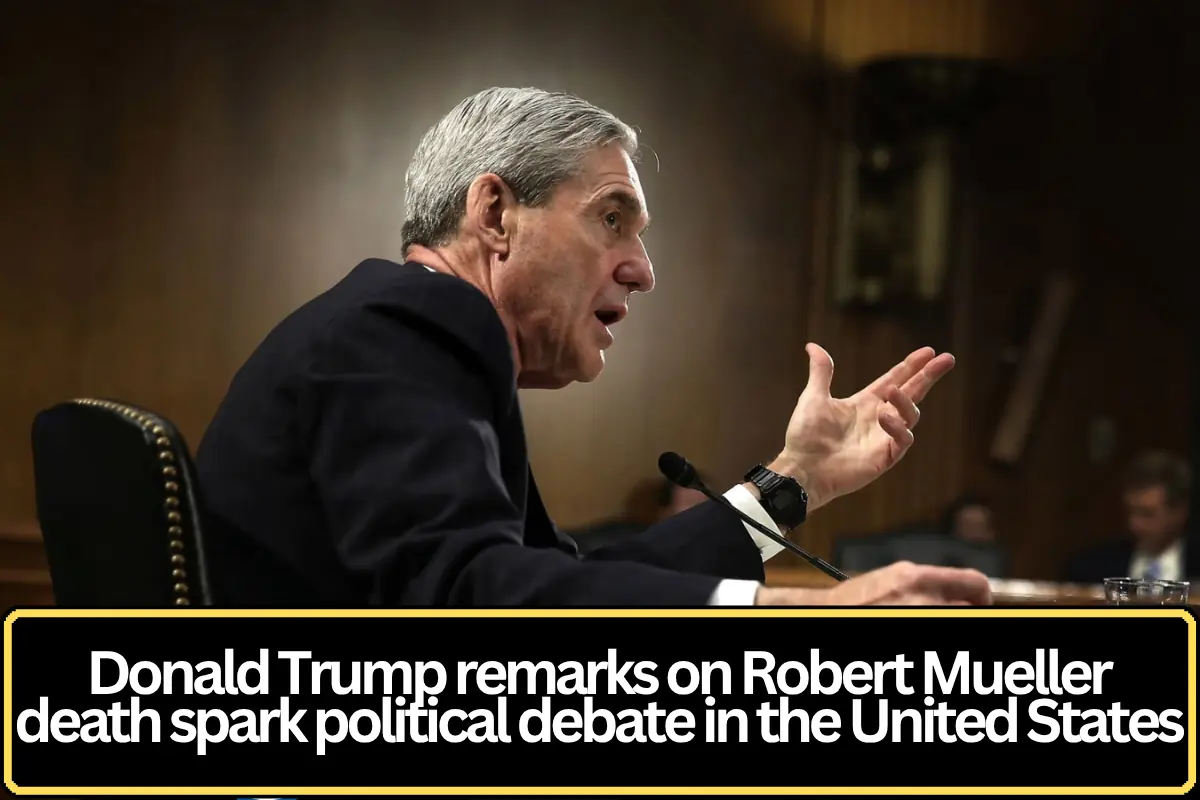
Controversy Follows Trump’s Reaction to Mueller’s Death
Former U.S. President Donald Trump has sparked controversy after publicly reacting to the death of former FBI Director Robert Mueller, making remarks that have drawn sharp political responses across the United States. The comments, made shortly after Mueller’s death was reported, have reignited debates about the former FBI chief’s legacy and his long-standing tensions with Trump.
Mueller, who served as FBI Director from 2001 to 2013 and later led the special counsel investigation into Russian interference in the 2016 presidential election, remained a central figure in modern U.S. political discourse. His passing prompted tributes from several political leaders and institutions, recognizing his decades of public service.
Trump’s Statement Draws Attention
Trump’s remarks, in which he expressed strong personal sentiments following Mueller’s death, quickly gained widespread attention. The former president has had a contentious relationship with Mueller, particularly due to the special counsel investigation that examined alleged ties between Trump’s campaign and Russia.
During and after the investigation, Trump frequently criticized Mueller’s work, describing it as politically motivated. His latest comments have been viewed by critics as a continuation of that stance, even in the context of Mueller’s death.
The reaction has underscored the enduring political divisions surrounding both figures and the broader issues tied to the investigation.
Mueller’s Career and Legacy
Robert Mueller was widely regarded as a respected law enforcement official with a long career spanning decades. Appointed as FBI Director shortly before the September 11 attacks in 2001, he oversaw the bureau during a critical period in U.S. history, focusing on counterterrorism and national security reforms.
After stepping down from the FBI, Mueller returned to public service in 2017 as special counsel, leading an investigation into Russian interference in the 2016 election. The probe examined possible coordination between Russian actors and members of Trump’s campaign, as well as potential obstruction of justice.
The investigation concluded without establishing a criminal conspiracy between the campaign and Russia but outlined several instances that raised questions about obstruction, leaving the final judgment to Congress.
Mueller’s work earned both praise and criticism, reflecting the deeply polarized political environment in which it unfolded.
Political Reactions Across the Spectrum
Trump’s comments have drawn mixed reactions from political leaders, analysts, and the public. Supporters of the former president have defended his right to express his views, often citing the contentious history between him and Mueller.
Critics, however, have described the remarks as inappropriate, arguing that they undermine the tradition of respecting public servants after their death. Several political figures emphasized Mueller’s contributions to national security and law enforcement, calling for a more measured tone in public discourse.
The incident has once again highlighted the sharp partisan divisions that characterize U.S. politics, particularly when it comes to figures associated with high-profile investigations.
Renewed Focus on the Russia Investigation
The controversy has also brought renewed attention to the Russia investigation and its lasting impact on American politics. Mueller’s report, released in 2019, remains a significant document in the political history of the United States, shaping debates about election integrity, foreign interference, and executive power.
Trump has consistently rejected the findings and criticized the investigation as a “witch hunt,” a position that continues to resonate with his political base. Conversely, critics argue that the report highlighted serious concerns about foreign influence and presidential conduct.
The differing interpretations of Mueller’s work continue to influence political narratives and public opinion.
Broader Implications for Political Discourse
The episode underscores broader questions about the tone and nature of political discourse in the United States. Public reactions to Mueller’s death and Trump’s comments reflect ongoing tensions over how political figures are remembered and discussed.
Experts note that such moments often serve as a reflection of deeper societal divisions, particularly in an era marked by intense political polarization. The way leaders communicate during sensitive events can shape public perception and influence the overall political climate.
The incident has prompted discussions about the need for civility and respect in political communication, even amid strong disagreements.
Media and Public Response
Media coverage of the controversy has been extensive, with outlets highlighting both Mueller’s career achievements and the political reactions to Trump’s remarks. Public responses on social media have been equally divided, reflecting the broader partisan landscape.
Some commentators have used the moment to revisit Mueller’s contributions to law enforcement and national security, while others have focused on the political conflicts that defined his later years.
The discussion has extended beyond immediate reactions, contributing to ongoing debates about leadership, accountability, and the role of institutions in American democracy.
Looking Ahead
As the political debate continues, the focus is likely to remain on Mueller’s legacy and the broader implications of the Russia investigation. The controversy surrounding Trump’s comments may also influence future discussions about political conduct and public statements by leaders.
Observers suggest that such incidents highlight the enduring influence of past events on current political dynamics, particularly in a highly polarized environment.
The episode serves as a reminder of the complex interplay between individual actions, institutional roles, and public perception in shaping political narratives.
Conclusion
Donald Trump’s remarks following Robert Mueller’s death have reignited political divisions and renewed scrutiny of both figures’ roles in recent U.S. history.
Current Status
Political reactions continue to unfold as leaders and the public respond to the controversy surrounding Trump’s comments and reflect on Mueller’s legacy.