Trump Warns China Over Warships as Iran Conflict Raises Global Tensions
Donald Trump warned China over the presence of Chinese warships near the Middle East amid the escalating Iran conflict, raising concerns about widening geopolitical tensions and military involvement.
 SANJANA DUTTA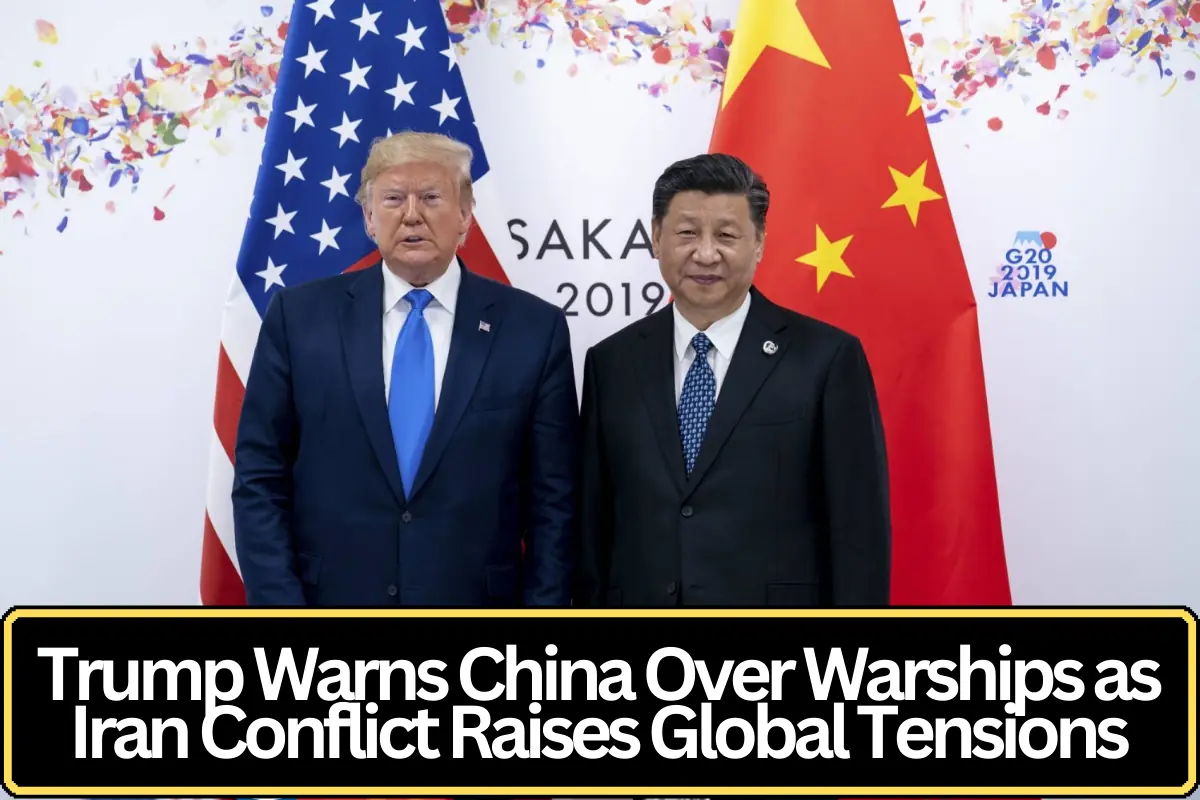
Trump Issues Warning Over Chinese Naval Presence
U.S. President Donald Trump warned China over the reported presence of Chinese warships near the Middle East as the conflict involving Iran continues to intensify, raising concerns about the possibility of a broader geopolitical confrontation. The warning, issued on March 17, 2026, came as military activity across the region increased and global powers closely monitored developments linked to the ongoing hostilities involving Iran.
Trump’s remarks focused on the potential implications of Chinese naval deployments in waters connected to the Middle East conflict zone. The statement signaled Washington’s concern that the crisis could expand beyond regional actors and draw in major global powers, complicating diplomatic efforts and increasing the risk of military escalation.
Escalating Tensions Around the Iran Conflict
The warning comes amid intensifying hostilities in the Middle East following a series of military strikes and retaliatory attacks involving Iran and its adversaries. The conflict has already triggered widespread international concern due to its impact on regional stability, global energy markets, and international shipping routes.
Military analysts note that the involvement or presence of additional global powers in the region could further complicate an already volatile situation. Naval deployments by major countries are often interpreted as strategic signals intended to protect national interests, monitor developments, or deter potential threats.
In recent weeks, several nations have increased surveillance and security measures in waters connected to the Persian Gulf and surrounding maritime routes. These waterways remain crucial for global oil shipments and commercial trade.
Concerns Over Chinese Warships in Strategic Waters
Reports indicating that Chinese warships had moved closer to areas affected by the conflict drew attention from policymakers in Washington. The deployment of naval vessels by China in such a sensitive region is viewed by some analysts as a demonstration of Beijing’s growing strategic reach and interest in protecting its economic and energy interests.
China has extensive economic ties with countries in the Middle East and relies on energy imports from the region. As a result, Beijing has frequently emphasized the importance of stability and secure maritime routes for international trade.
However, the presence of Chinese naval forces near a conflict zone involving U.S. allies has raised questions about how major powers might respond if the crisis expands.
U.S. Strategic Concerns and Global Power Rivalry
The warning issued by Trump reflects broader concerns in Washington regarding strategic competition with China. In recent years, the United States and China have increasingly competed for influence across multiple regions, including the Indo-Pacific, Africa, and the Middle East.
Military analysts say that naval deployments can serve multiple purposes, including protecting shipping routes, gathering intelligence, and signaling geopolitical influence. Such actions often carry symbolic importance, particularly during periods of international tension.
For the United States, maintaining a strong presence in strategic waterways has long been a key component of its global security strategy. The emergence of other powers operating naval forces in those same regions can therefore raise strategic questions for policymakers.
Impact on Global Security Dynamics
The presence of additional military forces near an active conflict zone can increase the complexity of international security dynamics. Experts note that the involvement of multiple major powers in a region experiencing military confrontation raises the risk of miscalculations or unintended escalation.
Diplomatic channels are often used to manage such risks, ensuring that communication between countries remains open even during periods of tension. Military coordination and established protocols can also help reduce the likelihood of direct confrontation between rival powers.
Nevertheless, the possibility that a regional conflict could evolve into a broader geopolitical crisis remains a major concern for international policymakers.
Economic and Energy Implications
The Middle East plays a critical role in the global energy system, with several of the world’s most important oil and gas shipping routes located in the region. Any escalation that disrupts these routes could have significant economic consequences worldwide.
Countries including China, Japan, India, and many European nations depend heavily on energy supplies transported through maritime passages connected to the Persian Gulf. As a result, the stability of these routes is closely tied to global economic performance.
Market analysts have already reported fluctuations in oil prices amid uncertainty surrounding the conflict. Energy traders are monitoring the situation closely for signs of disruption to infrastructure or shipping lanes.
China’s Position on the Conflict
China has historically advocated diplomatic solutions to regional conflicts and has often emphasized the importance of negotiation and dialogue. Beijing has maintained relationships with multiple countries in the Middle East and has frequently called for de-escalation when tensions rise.
However, China’s expanding economic interests and overseas investments have also led it to increase its presence in international maritime security operations. Naval deployments in distant regions are sometimes presented as efforts to protect trade routes and ensure the safety of commercial shipping.
These developments reflect the evolving role of China as a global power with growing responsibilities and strategic interests beyond its immediate region.
Diplomatic Efforts to Prevent Wider Conflict
International leaders have increasingly called for restraint as the Iran conflict continues to evolve. Diplomatic initiatives aimed at preventing further escalation remain a central focus for governments concerned about regional and global stability.
Multilateral organizations and international partners are encouraging dialogue among the parties involved in the conflict. Analysts say sustained diplomatic engagement will be necessary to reduce tensions and prevent the crisis from expanding into a wider confrontation involving additional states.
The situation has also renewed discussions about the need for international cooperation in maintaining security in global shipping lanes and managing geopolitical competition among major powers.
Broader Strategic Implications
The developments surrounding Chinese warships and the U.S. response highlight the increasingly interconnected nature of global security issues. Conflicts that begin as regional disputes can quickly attract attention from major powers with economic or strategic interests in the affected areas.
Observers note that the Middle East has historically been a focal point of global geopolitical competition due to its energy resources and strategic location linking Europe, Asia, and Africa.
As the conflict continues, governments and analysts around the world are watching closely to determine whether diplomatic efforts can contain the crisis or whether it will expand into a broader geopolitical confrontation.
Current Status
Trump’s warning to China over the presence of warships near the Middle East conflict zone underscores growing global concern that the escalating Iran crisis could draw in major powers and further destabilize international security dynamics.