US Imposes 100% Tariff on Patented Pharma Imports, India Faces Mixed Impact
The United States has imposed a 100% tariff on patented pharmaceutical imports, a move expected to reshape global trade and have mixed implications for India’s drug industry.
 Akanksha jain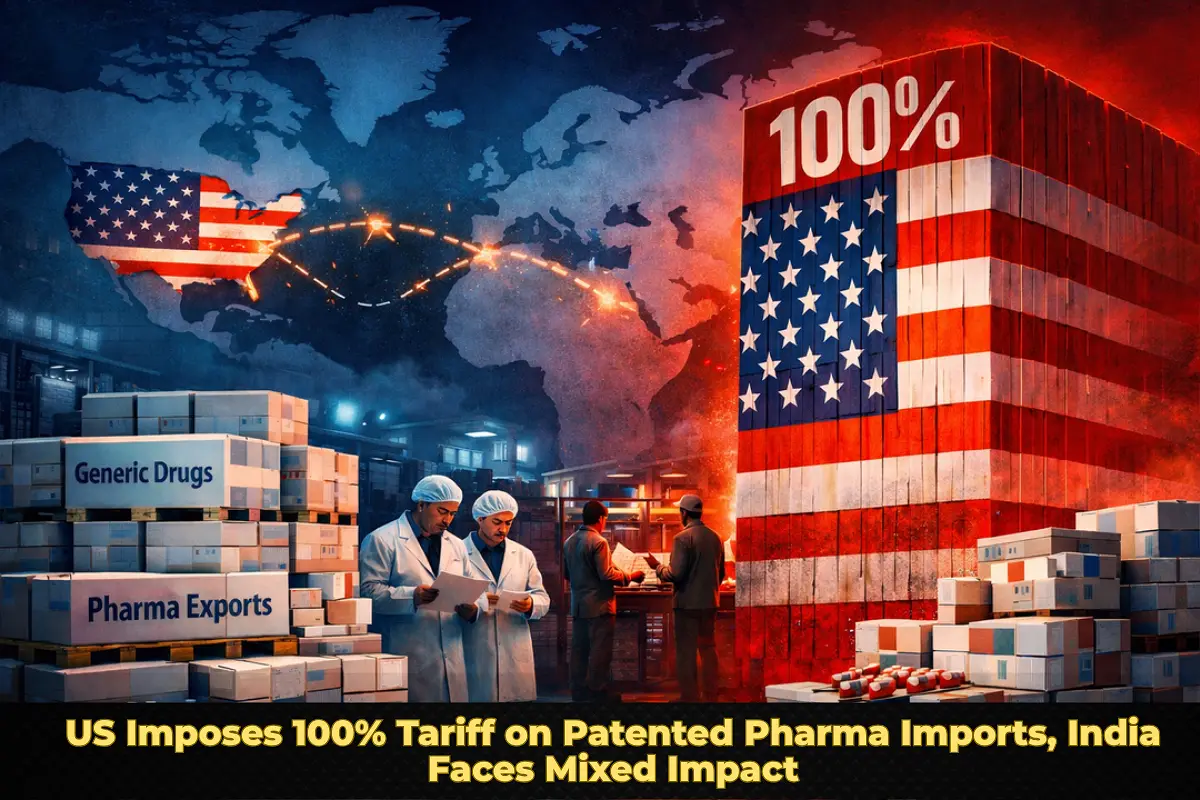
The US Imposes a 100% Tariff on Patented Pharma Imports; India Faces a Mixed Impact.
The United States has imposed a 100% tariff on imported patented pharmaceutical products, a major policy shift announced in early April 2026 aimed at boosting domestic manufacturing and reducing dependence on foreign drug supplies. The move is expected to have far-reaching consequences for global pharmaceutical trade, with India—one of the world’s largest drug exporters—facing a mixed impact.
The tariff applies specifically to high-value patented medicines, which are typically developed by multinational pharmaceutical companies and exported to the US market. US authorities said the decision is part of a broader effort to strengthen domestic production capabilities, address supply chain vulnerabilities, and manage drug pricing pressures.
Policy Aimed at Strengthening Domestic Industry
US officials stated that the tariff is intended to encourage local manufacturing of innovative drugs and reduce reliance on imports for critical treatments. The policy comes amid growing concerns about supply chain disruptions experienced during recent global health crises and geopolitical tensions.
By imposing steep tariffs on imported patented drugs, the US government aims to incentivize pharmaceutical companies to invest in domestic production facilities. The measure is also expected to support job creation and technological development within the country’s healthcare sector.
However, the policy has raised concerns among industry stakeholders about potential increases in drug prices and limited access to certain specialized treatments.
Impact on Global Pharmaceutical Trade
The tariff is likely to disrupt established global supply chains, particularly for patented medicines that are often manufactured in specialized facilities outside the United States. Pharmaceutical companies may need to reassess their production and distribution strategies to mitigate the financial impact of the new policy.
Analysts expect multinational drugmakers to consider shifting some manufacturing operations to the US or exploring alternative markets to offset potential losses. The move could also trigger similar protectionist measures in other countries, further reshaping the global pharmaceutical landscape.
Trade experts noted that the policy represents a significant departure from the traditionally open trade environment in the pharmaceutical sector.
Mixed Implications for India
India, a major exporter of pharmaceutical products to the United States, is expected to experience both challenges and opportunities as a result of the tariff. While the measure primarily targets patented drugs, India’s pharmaceutical industry is largely focused on generic medicines, which are not directly affected by the policy.
This could provide a relative advantage for Indian generic drug manufacturers, as demand for lower-cost alternatives may increase in response to higher prices for patented medicines. Indian companies may be able to expand their market share in the US by offering affordable substitutes.
At the same time, Indian firms involved in the development or export of patented or specialty drugs could face reduced competitiveness due to the tariff. Companies with partnerships or licensing agreements involving patented products may also be impacted.
Pricing and Access Concerns
Healthcare experts have raised concerns that the tariff could lead to higher drug prices in the United States, particularly for advanced therapies that lack generic alternatives. Patients and healthcare providers may face increased financial burdens if costs are passed on by pharmaceutical companies.
Insurers and government healthcare programs may also need to adjust reimbursement strategies to manage rising expenses. The policy’s long-term impact on patient access to innovative treatments remains uncertain.
Critics argue that while the tariff may support domestic manufacturing, it could inadvertently limit the availability of certain life-saving medicines in the short term.
Industry Response and Strategic Adjustments
Pharmaceutical companies are expected to respond by reevaluating their supply chains, pricing strategies, and investment plans. Some firms may accelerate plans to establish or expand manufacturing operations within the United States to avoid tariff costs.
Others may focus on optimizing production in existing facilities or increasing efficiency to absorb the additional financial burden. Strategic partnerships and collaborations could also play a role in navigating the new trade environment.
Industry groups have called for dialogue between governments and stakeholders to address concerns and ensure that patient access to medicines is not compromised.
Broader Economic and Policy Context
The tariff decision reflects a broader trend of economic nationalism and efforts to secure critical industries, including healthcare and pharmaceuticals. Governments around the world are increasingly prioritizing domestic capabilities in response to global uncertainties.
In the US, the move aligns with ongoing initiatives to reduce drug prices and improve healthcare affordability, although its effectiveness in achieving these goals remains a subject of debate. Policymakers face the challenge of balancing economic objectives with public health considerations.
For India, the policy highlights the importance of diversifying export markets and strengthening domestic innovation capabilities.
Future Outlook
The long-term impact of the tariff will depend on how pharmaceutical companies and global markets adapt to the new policy environment. Shifts in manufacturing, pricing, and trade flows are likely in the coming years.
Indian pharmaceutical firms may benefit from increased demand for generics but will need to navigate challenges related to innovation and regulatory compliance. Continued investment in research and development could help position the industry for sustained growth.
Global stakeholders will be closely monitoring developments to assess the broader implications for healthcare systems and international trade.
Conclusion
The US decision to impose a 100% tariff on patented pharmaceutical imports marks a significant shift in trade policy, creating both opportunities and challenges for India while reshaping dynamics in the global pharmaceutical industry.