US Conservatives Split Over Iran War as Divisions Surface at CPAC Gathering
Divisions among US conservatives over the Iran war have become increasingly visible, with disagreements surfacing prominently during the CPAC gathering.
 SANJANA DUTTA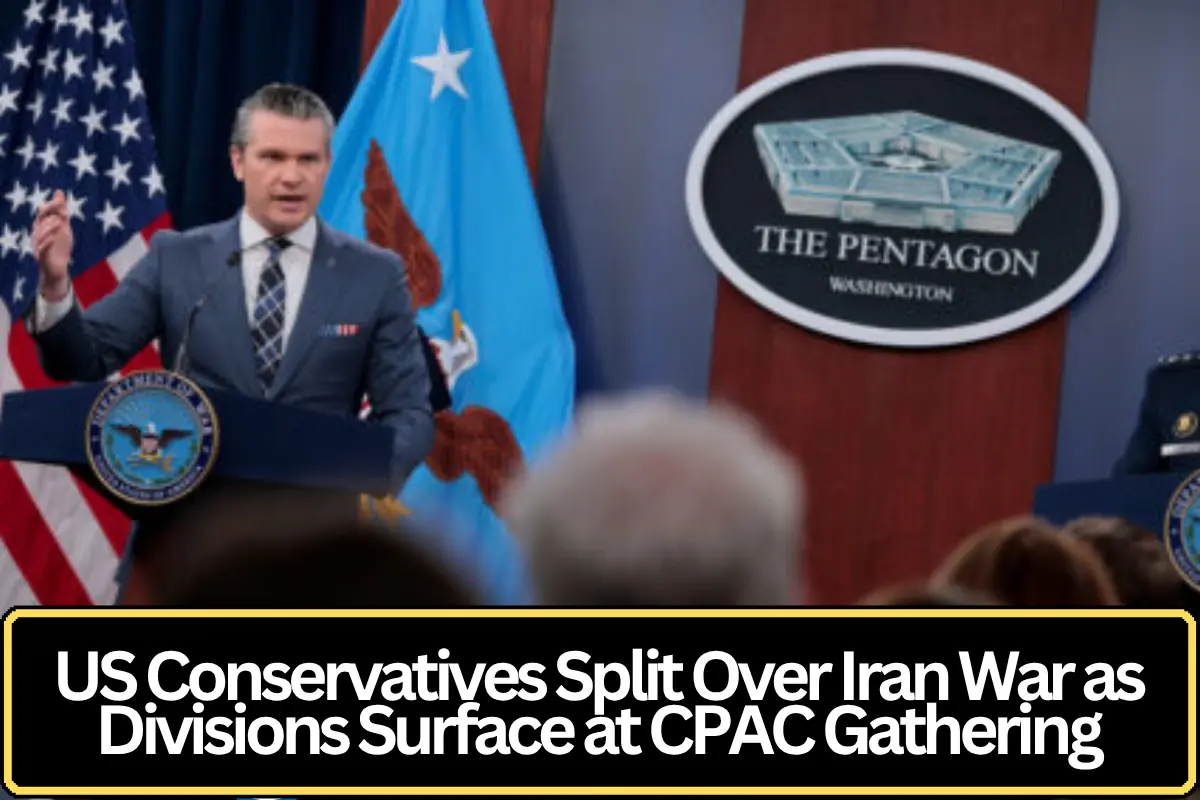
Conservative Divide Emerges Over Iran War at CPAC
WASHINGTON, March 25, 2026 — Deep divisions within the American conservative movement over the ongoing war with Iran came into sharp focus this week as influential figures gathered at the Conservative Political Action Conference (CPAC), highlighting a growing rift over foreign policy, national security, and the direction of the Republican Party.
The disagreements, which have been simmering since the conflict began, were openly expressed during panel discussions, speeches, and media appearances at the high-profile gathering. While some conservatives strongly backed military action as necessary to counter threats from Iran, others voiced skepticism, warning against prolonged entanglement in another costly overseas conflict.
Clash Over Interventionism
At the heart of the divide is a fundamental disagreement over the role of the United States in global conflicts. Traditional hawkish conservatives argued that confronting Iran militarily is essential to maintaining American strength and deterring adversaries in the Middle East.
Supporters of the war framed the conflict as a necessary response to escalating tensions and security concerns, emphasizing the importance of projecting power and defending allies in the region. They warned that a failure to act decisively could embolden hostile actors and undermine US credibility on the world stage.
In contrast, a growing faction within the conservative movement has adopted a more restrained approach, questioning the strategic value of the war and raising concerns about its long-term consequences. These voices argued that the United States should avoid becoming deeply involved in another protracted conflict, particularly given the economic and human costs.
Rise of Non-Interventionist Voices
The debate at CPAC underscored the increasing influence of non-interventionist conservatives, who have gained traction in recent years by advocating for a foreign policy focused on domestic priorities and limited overseas commitments.
Speakers aligned with this perspective criticized what they described as a pattern of interventionist policies that have led to extended military engagements with uncertain outcomes. They called for a reassessment of US strategy, urging policymakers to prioritize diplomacy and avoid escalation.
This shift reflects broader changes within the Republican base, where skepticism toward foreign interventions has grown, particularly among younger voters and those concerned about fiscal responsibility.
Political Implications for Republican Leadership
The divisions over the Iran war pose a significant challenge for Republican leaders, who must navigate competing viewpoints within their party while addressing a complex international crisis. The lack of consensus risks complicating efforts to present a unified stance on national security issues.
Some party figures attempted to strike a balance, acknowledging the legitimacy of differing perspectives while emphasizing the need for cohesion. However, the intensity of the debate suggested that reconciling these positions may prove difficult in the near term.
Political analysts noted that the disagreements could have broader implications for upcoming elections, as candidates seek to align themselves with factions that resonate with their constituencies. The issue is likely to remain a focal point in campaign messaging and policy discussions.
Impact on Public Opinion
The internal conservative debate mirrors broader divisions among the American public regarding the Iran war. Polls and public commentary indicate mixed views, with some supporting military action and others expressing concern about the risks of escalation.
At CPAC, several speakers highlighted the importance of public sentiment, arguing that policymakers must take into account the views of voters who are increasingly wary of foreign conflicts. This dynamic adds another layer of complexity to decision-making at both the political and strategic levels.
The visibility of these debates at a major political gathering underscores the extent to which the issue has permeated public discourse.
Economic and Strategic Concerns
Beyond ideological differences, the war has also raised practical concerns about its economic and strategic impact. Critics pointed to the financial burden of sustained military operations, as well as potential disruptions to global energy markets and trade.
Supporters, however, argued that the costs of inaction could be even greater, citing the potential for instability in key regions and the long-term consequences of failing to address security threats.
This tension between short-term costs and long-term strategic considerations has become a central theme in the debate, shaping arguments on both sides.
Foreign Policy at a Crossroads
The discussions at CPAC reflect a broader moment of introspection within the conservative movement about the future of US foreign policy. As global dynamics evolve, there is increasing pressure to redefine priorities and adapt to new challenges.
The Iran war has brought these questions to the forefront, forcing conservatives to confront differing visions of America’s role in the world. Whether the party leans toward a more assertive or restrained approach remains an open question.
Observers suggest that the outcome of this debate could have lasting implications for US policy, influencing decisions not only in the current conflict but also in future international engagements.
Conclusion
The open divisions among conservatives over the Iran war highlight the complexities of navigating foreign policy in a changing political landscape.
Current Status
As the conflict continues, debates within the conservative movement remain unresolved, with no clear consensus emerging on the path forward.