US May Release $6 Billion Iranian Assets in Qatar Amid Strait of Hormuz Talks
The US may release $6 billion in frozen Iranian assets held in Qatar, linked to Strait of Hormuz security talks, though Washington denies the claim.
 Tripti Srivastava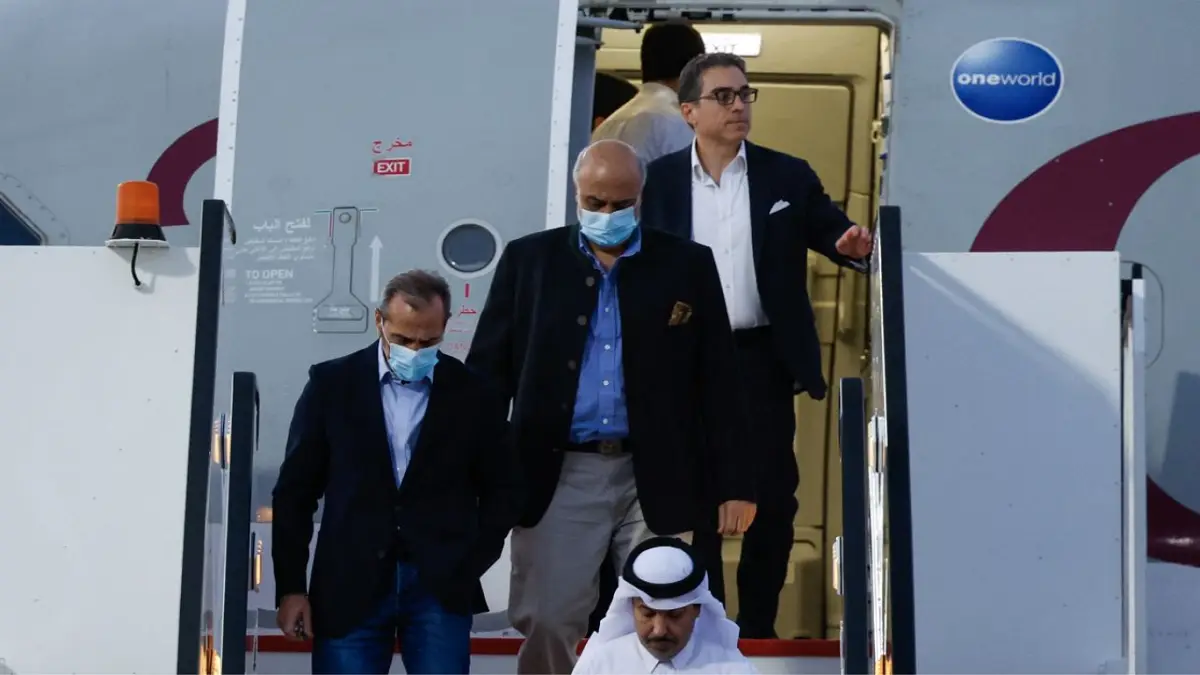
The United States has reportedly agreed to release up to $6 billion in frozen Iranian assets held in Qatar and other foreign banks, according to Iranian sources, signalling potential progress in sensitive negotiations tied to Strait of Hormuz security, though Washington has denied the claim.
The development, disclosed by unnamed Iranian officials on April 11, highlights the financial and geopolitical stakes surrounding ongoing discussions, as global markets remain on edge over energy supply risks linked to Middle East tensions.
Conflicting Claims Over Asset Release
A senior Iranian source told Reuters that Washington had agreed to unfreeze Iranian funds as part of broader negotiations, describing the move as evidence of “seriousness” in talks between the two sides. The source indicated that the release of assets was one of Tehran’s key demands conveyed during diplomatic exchanges.
However, a U.S. official quickly denied the assertion, underscoring ongoing uncertainty and conflicting narratives surrounding the status of the funds. The lack of official confirmation leaves the outcome of negotiations unclear.
The discussions are reportedly taking place in Islamabad, with both sides addressing a range of economic and security concerns amid heightened regional tensions.
While the primary Iranian source did not disclose the value of the assets, a second official indicated that approximately $6 billion in funds could be involved. Authorities in Qatar have not publicly commented on the matter, but they believe that these funds are held in Qatari bank accounts.
The funds originate from Iranian oil sales to South Korea and were initially frozen in 2018 after the United States reinstated sanctions on Tehran. The sanctions followed the withdrawal from a nuclear agreement and led to significant restrictions on Iran’s access to international financial systems.
The financial scale of the assets underscores their importance for Iran’s economy, particularly as the country continues to face constraints in accessing foreign exchange reserves.
Link to Strait of Hormuz Security
The potential release of funds is reportedly tied to ensuring safe passage through the Strait of Hormuz, a critical global shipping route for oil and gas. The waterway handles a significant portion of global energy trade, making its security a key concern for international markets.
According to the Iranian source, the unfreezing of assets is directly connected to guarantees around navigation safety in the strait, suggesting that financial concessions may be part of broader efforts to stabilise energy flows.
Any disruption in the Strait of Hormuz could have far-reaching consequences for global energy prices, supply chains, and inflation, amplifying the importance of negotiations between the two countries.
The $6 billion in question was originally expected to be released in 2023 as part of a prisoner exchange agreement between the United States and Iran. Under that arrangement, funds were transferred from South Korean banks to accounts in Qatar for humanitarian purposes.
The agreement involved the release of five U.S. citizens detained in Iran and five Iranian nationals held in the United States. At the time, U.S. authorities emphasised that the funds would be strictly limited to purchases of food, medicine, and other essential goods under Treasury oversight.
However, the funds were subsequently frozen again following geopolitical developments in October 2023, when tensions escalated in the region. U.S. officials reiterated that they could restrict access to the funds indefinitely depending on policy decisions.
Geopolitical and Financial Implications
The reported discussions highlight the intersection of financial policy and geopolitical strategy, particularly in the context of sanctions enforcement and energy security. The potential release of funds could ease economic pressure on Iran while serving as a negotiating tool in broader diplomatic efforts.
At the same time, the situation reflects the complexity of international banking arrangements involving sanctioned entities, where funds can be held, transferred, or restricted based on shifting political considerations.
Markets are closely monitoring developments, as any agreement affecting the Strait of Hormuz or Iran’s financial access could influence global oil prices and investor sentiment.
For now, with conflicting statements from both sides, the status of the frozen assets remains uncertain, leaving open questions about the trajectory of negotiations and their potential impact on global economic stability.