US Public Opinion Divided as Iran War Shapes Voter Sentiment Ahead of Elections
American voters remain divided over the Iran war, with public opinion shaping political discourse and influencing the electoral landscape ahead of upcoming elections.
 SANJANA DUTTA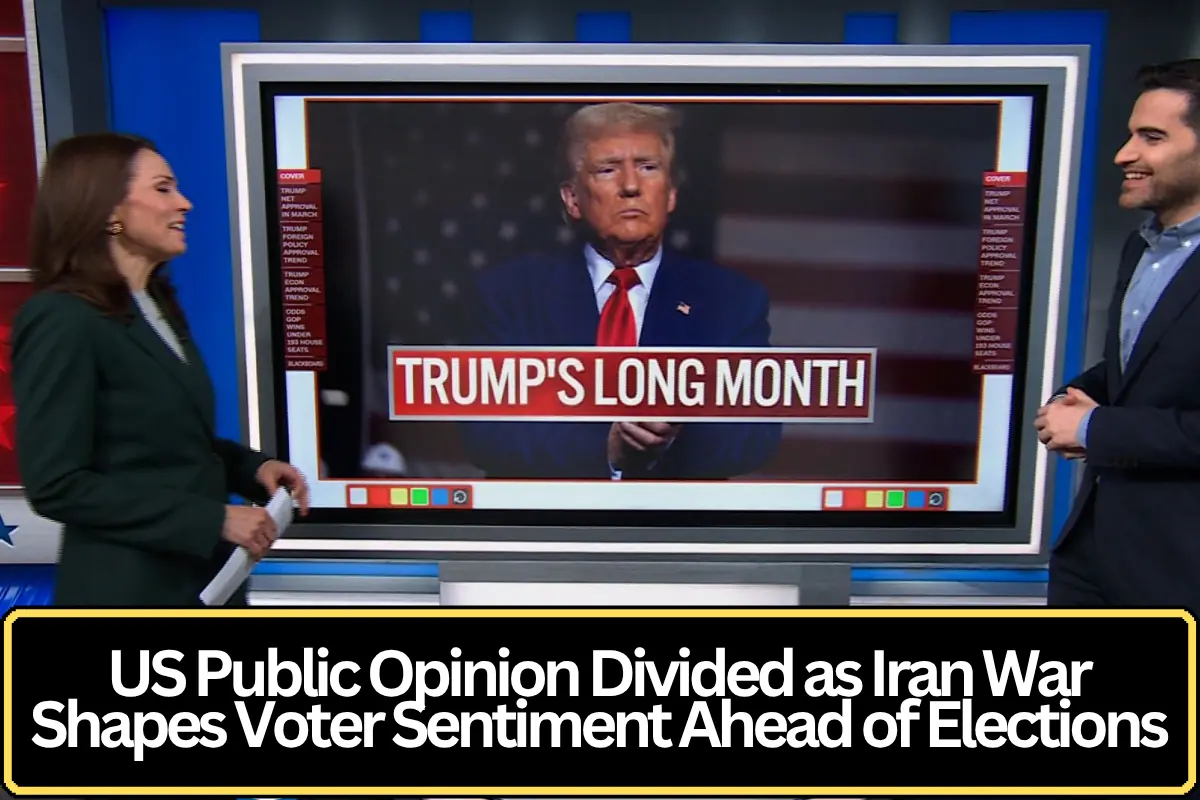
Voter Sentiment Splits Over Iran War
WASHINGTON, March 25, 2026 — American voters are increasingly divided over the ongoing war with Iran, with public opinion emerging as a critical factor shaping political discourse and electoral strategies ahead of upcoming elections. The conflict, now a central issue in national debate, has exposed sharp differences in how voters view US foreign policy, military engagement, and global leadership.
Recent surveys and political analysis indicate that while some Americans support the war as a necessary measure to address security threats, a significant portion of the electorate remains skeptical, raising concerns about the risks of escalation and the long-term consequences of military involvement.
Support Rooted in Security Concerns
Among voters who back the war effort, the dominant argument centers on national security. Supporters believe that military action against Iran is justified to counter perceived threats and maintain stability in a volatile region. Many also view the conflict as a demonstration of US strength and a deterrent against adversaries.
This segment of the electorate tends to align with more traditional views of American global leadership, emphasizing the importance of maintaining a strong military presence and responding decisively to challenges abroad. For these voters, the war represents a necessary step to protect national interests.
Political campaigns appealing to this group have framed the conflict as part of a broader strategy to ensure security and uphold international commitments, reinforcing narratives of strength and resolve.
Growing Skepticism and War Fatigue
At the same time, a substantial number of voters are expressing doubts about the war, reflecting a broader sense of fatigue with prolonged military engagements. Critics question whether the conflict will achieve its intended objectives and warn of the potential for a drawn-out and costly involvement.
Concerns about economic impact, including rising energy prices and increased government spending, have also contributed to skepticism. For many voters, the financial burden of the war is a significant consideration, particularly in the context of domestic economic challenges.
This perspective has gained traction among younger voters and those who favor a more restrained foreign policy, emphasizing diplomacy and multilateral engagement over military intervention.
Political Impact on Election Strategies
The divide in public opinion is influencing how political candidates and parties approach the issue in their campaigns. With no clear consensus among voters, leaders are adopting varied strategies to address the conflict while appealing to their respective constituencies.
Some candidates have taken a firm stance in support of the war, seeking to capitalize on concerns about national security. Others have positioned themselves as critics of the conflict, advocating for de-escalation and a shift toward diplomatic solutions.
This divergence is expected to shape campaign messaging, debates, and policy proposals in the lead-up to elections, making the Iran war a defining issue in the political landscape.
Regional and Demographic Differences
Public opinion on the war is not uniform across the United States, with regional and demographic factors playing a significant role in shaping views. Certain regions with strong military ties or strategic interests in defense industries have shown higher levels of support for the conflict.
In contrast, urban areas and younger demographics tend to exhibit greater skepticism, reflecting differing priorities and perspectives on foreign policy. These variations add complexity to the political calculus for candidates seeking broad appeal.
Understanding these dynamics is crucial for political strategists, as they navigate a fragmented electorate with diverse viewpoints on a highly consequential issue.
Media Influence and Information Landscape
The role of media coverage in shaping public opinion has also been significant, with news outlets, social media platforms, and political commentary contributing to the broader discourse. The framing of the conflict, the portrayal of its progress, and the emphasis on certain aspects have all influenced how voters perceive the war.
Competing narratives have emerged, reflecting ideological divides and differing interpretations of events. This has led to a complex information environment in which voters must navigate multiple perspectives to form their opinions.
The impact of media on public sentiment underscores the importance of communication strategies in shaping perceptions of the conflict.
Economic and Global Implications
Beyond domestic politics, the war’s economic and global implications are also influencing voter attitudes. Rising oil prices, market volatility, and concerns about international stability have made the conflict a matter of everyday relevance for many Americans.
Voters are increasingly aware of how global events can affect domestic conditions, leading to a more interconnected view of foreign policy and economic well-being. This awareness is shaping expectations for government action and accountability.
As the conflict continues, its broader impact is likely to remain a key factor in public opinion and political decision-making.
Foreign Policy Debate Intensifies
The Iran war has reignited debates about the direction of US foreign policy, with voters and policymakers grappling with fundamental questions about the country’s role in the world. The divide in public opinion reflects differing visions of how the United States should engage with global challenges.
Some advocate for a more assertive approach, emphasizing leadership and intervention when necessary, while others call for restraint and a focus on domestic priorities. These competing perspectives are shaping the broader political conversation.
The outcome of this debate will likely have lasting implications for US foreign policy beyond the current conflict.
Conclusion
The split in American public opinion over the Iran war highlights the complexity of balancing national security, economic concerns, and voter sentiment in a rapidly evolving political landscape.
Current Status
As the conflict continues, public opinion remains divided, with voter sentiment playing an increasingly influential role in shaping political strategies and policy decisions.