Venezuela Begins Partial Release of Political Prisoners After Amnesty Law as Rights Debate Intensifies
Venezuela has begun freeing political prisoners under a newly approved amnesty law, with first releases underway amid debate over implementation, justice, and remaining detainees.
 SANJANA DUTTA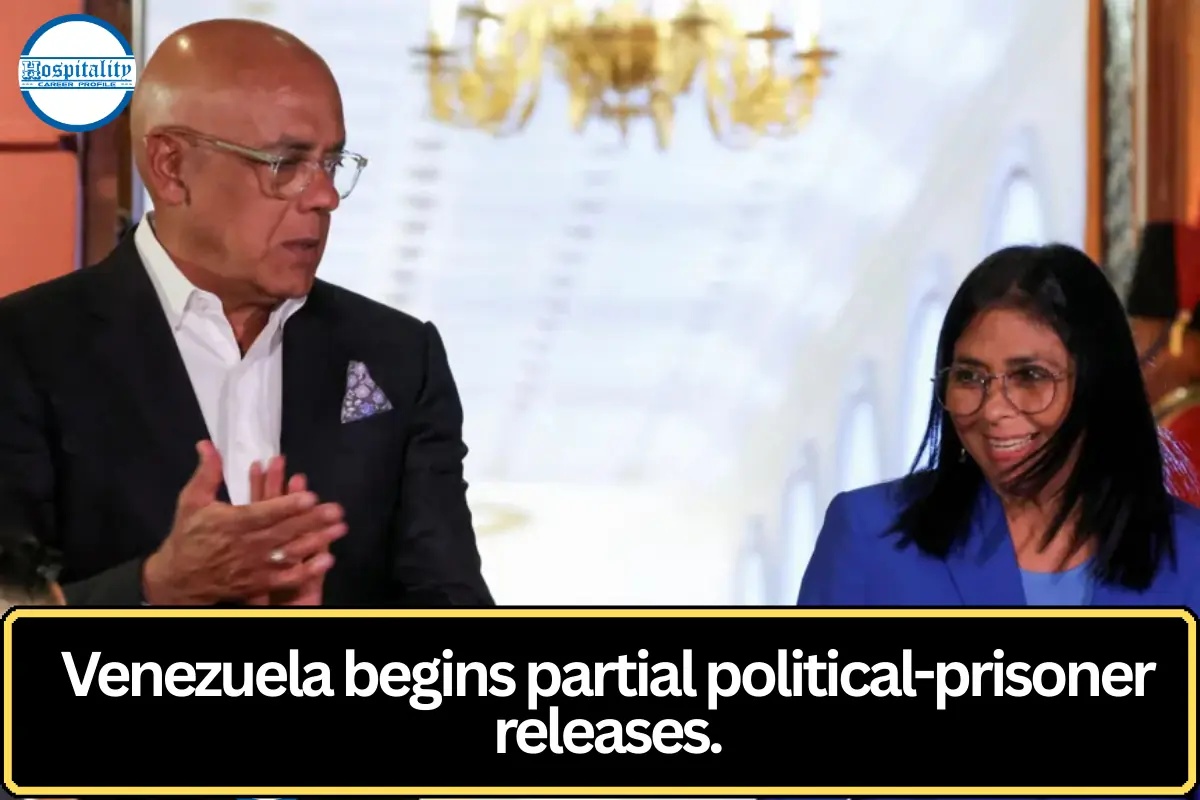
Partial Release of Political Prisoners Begins in Venezuela After New Amnesty Law
Venezuela has commenced the release of political prisoners following the implementation of a recently approved amnesty law, a major development in the country’s ongoing political and human rights landscape. The first group freed under the new law has begun leaving detention facilities, marking a shift after years of international scrutiny and internal calls for justice.
The amnesty law, passed by the Venezuelan National Assembly with overwhelming support, is designed to provide legal relief to individuals detained for political reasons, including charges widely viewed by critics as politically motivated. The releases have occurred while a broader debate continues over the law’s scope, its implementation, and the fate of hundreds of other detainees still held in custody.
Overview of the Amnesty Law and Its Activation
The Venezuelan legislature’s approval of the amnesty measure came after months of political negotiation and pressure from both domestic and international communities. The law purports to cover a wide range of cases, including charges related to protests, political activism, dissent against state authorities, and other offences linked to political expression.
Under the terms of the legislation, individuals convicted or charged with politically related offences are eligible for release or reduction of sentences, provided they meet specified criteria. The law also includes provisions intended to protect future political expression by clarifying the limits of criminal liability in politically charged contexts.
First Releases and Immediate Reactions
The initial phase of releases has focused on a group of detainees who were held under conditions that many rights advocates described as particularly harsh. Among those freed were opposition figures, activists, and individuals whose cases drew attention from human rights organisations and advocacy groups.
The physical liberation of these individuals has been met with emotional scenes at detention centres, where released detainees were greeted by family members, supporters, and advocates who have long campaigned for their freedom. Many described their release as a moment of relief and vindication after prolonged legal battles and periods of incarceration.
However, even as joyous reunions took place, some families expressed concern over the uncertainty surrounding others still detained — highlighting that the process is far from complete.
Chain of Events Leading to the Law’s Passage
The amnesty law’s approval followed sustained pressure on Venezuela’s government and justice system over human rights and political freedoms. Over recent years, governments, international organisations, and civil society groups have repeatedly called attention to the country’s political prisoner situation, citing hundreds held under charges seen as politically motivated.
Various advocacy groups documented cases they believe represent suppression of legitimate political dissent, sparking international appeals for legal reform and prisoner releases. This context played a significant role in shaping public debate and legislative action leading up to the law’s enactment.
Internal and External Advocacy Efforts
Within Venezuela, families of detainees, political organisations, and civil rights activists organised vigils, protests, and legal campaigns seeking relief for those held in detention. These efforts often highlighted allegations of unfair treatment, inadequate legal representation, and extended pretrial confinement.
Meanwhile, regional and global bodies issued statements urging compliance with international human rights standards, emphasising the importance of due process and proportionality in handling politically charged cases. These external voices contributed to a broader environment that accelerated legislative attention to amnesty and legal reform.
Humanitarian and Legal Complexities
Although the amnesty law has enabled initial releases, its implementation has also highlighted legal and humanitarian complexities. Not all political detainees are immediately eligible for release — factors such as the nature of charges, judicial discretion, and procedural requirements influence eligibility.
Many families report that access to legal counsel and timely information regarding their loved ones remains limited, complicating the application and verification process. Some detainees may need to submit formal petitions or meet specific legal criteria before being considered for release.
Role of the Judiciary and Administrative Barriers
Judicial authorities have been tasked with interpreting and applying the law’s provisions, a process that has involved reviewing case files, determining eligibility, and coordinating logistical aspects of prisoner release. In some cases, courts have encountered administrative hurdles, leading to calls for clearer guidelines and expedited procedures.
Critics argue that delays or lack of transparency can undermine the law’s intent, prolonging detention for individuals whose cases should be eligible under the new framework. Others within the legal community have urged greater clarity to avoid arbitrary application of the amnesty provisions.
Remaining Detentions and International Criticism
Despite the release of the first wave of individuals, a significant number of political prisoners remain in detention. Human rights groups estimate that hundreds more are still held — some awaiting trial, while others serve sentences for politically related convictions.
The partial nature of the releases has drawn attention from both advocacy groups and foreign governments, many of which have called for the law’s full implementation and the unconditional release of all eligible detainees. Critics also emphasise the need for systemic reform to address broader concerns over political persecution and judicial independence.
International Standards and Commentary
International human rights entities have repeatedly underscored the importance of aligning national legal practices with global norms on political freedom and due process. While acknowledging the positive step represented by the amnesty law, several organisations have pressed for more comprehensive measures to prevent recurrence of politically motivated detentions.
These calls echo longstanding concerns about the role of criminal charges in suppressing free speech and political dissent — issues that remain sensitive within Venezuela’s political context.
Political and Social Impact
The release of political prisoners carries considerable social and political ramifications. At home, freed detainees often return to public life with renewed platforms — using their experiences to advocate for justice, reform, and democratic engagement. Their reintegration also influences public debate, galvanising voices on both sides of the political spectrum.
Within Venezuela’s broader political landscape, these developments may shape electoral dynamics, civil society participation, and relationships between opposition groups and governing authorities. Some analysts believe that the releases could contribute to a recalibration of political alignments, especially if further amnesty measures or legal reforms are enacted.
Public Sentiment and Reconciliation Efforts
Public reaction has been mixed. For many citizens, the release of political prisoners is seen as a hopeful sign of change and a step toward greater respect for individual rights. Others remain cautious, noting that legal and political obstacles still pose challenges to full reconciliation and equitable justice.
Community leaders and social commentators have called for dialogue initiatives aimed at healing divisions and creating pathways for inclusive political participation. Such efforts are viewed as critical to consolidating trust and reducing polarization in a society marked by years of contentious political conflict.
Conclusion
Venezuela’s partial release of political prisoners following a new amnesty law marks a significant moment in the nation’s ongoing political evolution. The first group of freed detainees represents both hope and complexity — signalling progress in addressing human rights concerns while highlighting the work that remains to be done.
As authorities, civil society, and international partners continue to engage with the implementation process, the broader implications of these developments will unfold in Venezuela’s political and social arenas. The law’s impact will ultimately be measured not only by the number of releases but also by lasting changes in legal practice, democratic engagement, and respect for fundamental freedoms.