West Bengal Politics Witnesses Sharp Decline in Public Discourse Ahead of 2026 Assembly Elections
Political discourse in West Bengal faces growing criticism ahead of the 2026 Assembly elections, with concerns over polarization, rhetoric and campaign intensity shaping the electoral landscape.
 SANJANA DUTTA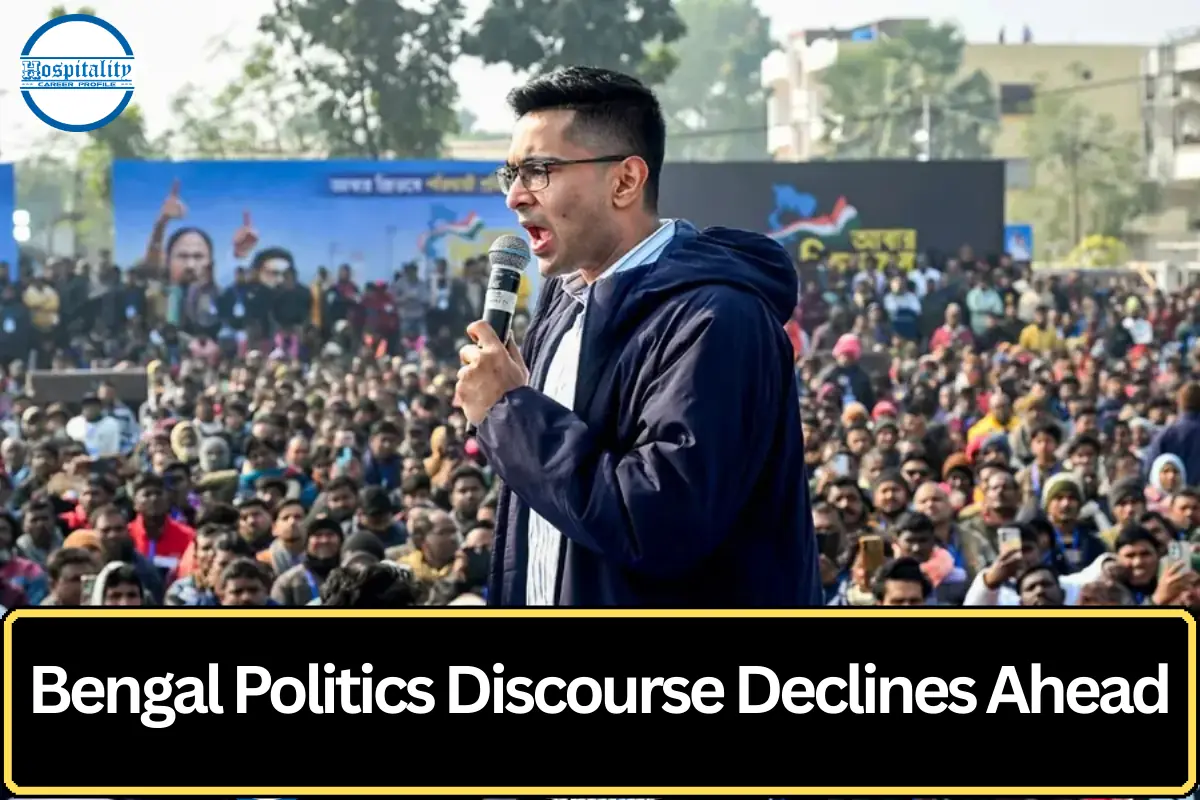
Political Climate Intensifies in West Bengal Ahead of 2026 Elections
As West Bengal moves closer to the 2026 Assembly elections, political observers and civil society groups are expressing concern over what they describe as a steady decline in the quality of public discourse. The state's political arena, historically marked by ideological debates and policy-driven campaigns, is increasingly being characterized by sharp rhetoric, personal attacks, and heightened polarization.
With major political parties accelerating preparations for the electoral contest, campaign strategies are becoming more aggressive. Public rallies, digital outreach, and televised debates have amplified the tone of confrontation, shifting focus away from governance priorities and developmental agendas.
Escalating Rhetoric Across Party Lines
In recent months, exchanges between leading political figures have intensified. Statements made during public meetings and press briefings have frequently drawn criticism for being confrontational rather than issue-oriented. Analysts note that competitive electoral dynamics have contributed to a narrative driven more by political positioning than constructive engagement.
The growing use of strong language in campaign speeches has also sparked debate about its long-term impact on democratic values. Observers argue that while robust criticism is integral to democracy, sustained personal attacks risk undermining public trust in institutions.
Campaign Strategies Shift Toward Polarization
Political strategists across parties are recalibrating their messaging to consolidate core voter bases. This approach, however, has often resulted in sharper divisions along ideological and social lines. Issues related to identity, governance record, economic performance, and law and order are being framed in increasingly adversarial terms.
Election analysts suggest that competitive margins in previous polls have heightened the stakes, prompting parties to adopt assertive campaign narratives. While such strategies may mobilize supporters, they also contribute to a more charged political environment.
Impact on Public Debate and Civic Engagement
The shift in tone has influenced public discussions across media platforms. Television debates and social media exchanges frequently mirror the intensity of political speeches. Online discourse, in particular, has seen an increase in partisan commentary, further deepening divides among supporters of rival parties.
Civil society representatives have urged political leaders to refocus attention on substantive issues such as employment, infrastructure development, healthcare access, and education reform. They argue that sustained attention to policy discussions would strengthen democratic participation and voter awareness.
Role of Digital Platforms
Digital media has become a central battleground for political messaging in West Bengal. Parties are leveraging online campaigns to reach younger voters and expand outreach beyond traditional rallies. However, the rapid dissemination of unverified information and inflammatory statements has complicated efforts to maintain constructive dialogue.
Experts emphasize the importance of responsible communication practices to prevent misinformation and ensure informed voter participation. Calls for ethical campaigning standards have grown louder as the election timeline approaches.
Historical Context of Political Debate in the State
West Bengal has long been regarded as a politically active state with a strong tradition of public debate. From student movements to grassroots mobilization, the state’s political culture has historically involved vigorous yet ideologically grounded exchanges.
However, recent developments suggest a departure from that legacy. Critics argue that campaign narratives are increasingly shaped by immediate electoral calculations rather than long-term governance frameworks. The emphasis on confrontational rhetoric has raised questions about whether political engagement is losing depth.
Major Parties Intensify Preparations
Leading political parties have begun mobilizing cadres and organizing statewide outreach initiatives. Strategy meetings, district-level gatherings, and policy announcements are being rolled out in preparation for the election cycle.
Each party is seeking to frame the electoral contest around its core themes. Governance achievements, administrative performance, economic management, and social welfare programs are being highlighted as central planks of campaign messaging. Simultaneously, opposition parties are focusing on accountability, transparency, and alternative policy proposals.
Focus on Youth and First-Time Voters
With a significant number of young and first-time voters expected to participate in the 2026 elections, parties are tailoring outreach efforts to address issues affecting this demographic. Employment generation, digital infrastructure, and skill development programs feature prominently in campaign discussions.
Political leaders are also emphasizing education and entrepreneurship initiatives as part of their broader electoral strategies. The effectiveness of these efforts may influence voter sentiment in key constituencies.
Governance Record Under Scrutiny
As the campaign gains momentum, governance performance over the past term is coming under close examination. Public discussions have centered on economic growth indicators, social welfare implementation, industrial investment, and law enforcement.
Rival parties are offering contrasting assessments of administrative achievements and shortcomings. This scrutiny reflects the competitive nature of the electoral landscape, where performance narratives play a critical role in shaping voter perceptions.
Development Versus Political Messaging
Observers note that while development issues remain central to voter concerns, they are sometimes overshadowed by headline-grabbing exchanges between leaders. Infrastructure projects, urban expansion plans, and rural development schemes are discussed, but often within a broader context of political rivalry.
Policy experts suggest that detailed debate on fiscal planning, public spending efficiency, and long-term economic strategy could enhance the quality of electoral engagement.
Electoral Environment and Law Enforcement
Authorities are closely monitoring the evolving political climate to ensure peaceful campaigning. Law enforcement agencies have emphasized their commitment to maintaining order during rallies and public events. Preparatory measures for secure polling processes are also underway.
Past elections in the state have witnessed intense competition, making administrative preparedness a priority. Officials have reiterated that safeguarding voter participation and upholding democratic norms remain central objectives.
Civil Society Calls for Responsible Campaigning
Several civic groups and academic institutions have urged political stakeholders to adopt a more issue-driven approach. They advocate for structured debates, transparent manifestos, and constructive engagement on matters affecting everyday life.
Public forums and community discussions are being organized to encourage dialogue beyond partisan narratives. These initiatives aim to foster informed decision-making and reduce polarization.
Media’s Role in Shaping Narrative
Media coverage significantly influences public perception of the electoral climate. Balanced reporting and fact-based analysis are essential to ensuring that voters receive comprehensive information. Journalists and editors face the challenge of navigating competitive political messaging while maintaining professional standards.
The proliferation of digital platforms further complicates this task, as information spreads rapidly across networks. Media literacy campaigns have been suggested as a tool to enhance critical engagement with political content.
Looking Ahead to 2026
With several months remaining before the Assembly elections, the political atmosphere in West Bengal is expected to intensify further. Parties are likely to refine their campaign narratives, release detailed manifestos, and expand voter outreach efforts.
Analysts believe that the trajectory of public discourse will significantly shape the electoral outcome. A shift toward issue-based engagement could recalibrate campaign dynamics, while continued polarization may reinforce existing divides.
Ultimately, the 2026 elections will test not only the strength of political alliances but also the resilience of democratic dialogue in the state. As campaigning unfolds, voters will assess competing visions for governance, economic development, and social progress.
Conclusion
The evolving political landscape in West Bengal reflects both the vibrancy and the challenges of competitive democracy. While heightened rhetoric has drawn attention to the intensity of the upcoming electoral contest, concerns about declining discourse highlight the need for renewed focus on substantive debate.
As political leaders continue preparations for 2026, the tone and content of public engagement will play a crucial role in shaping the state’s democratic trajectory. The coming months are expected to determine whether electoral competition can coexist with constructive and policy-driven dialogue.